Red Hill: The Fuel Crisis That Threatened Pearl Harbor's Water
For nearly eighty years, twenty enormous fuel tanks sat hidden inside a ridge above Pearl Harbor on the Hawaiian island of Oahu. In late 2021, jet fuel from those tanks reached the drinking water serving tens of thousands of military families, touching off a public health crisis that would end with an order to drain and permanently close one of the largest fuel depots the United States ever built. The story of the Red Hill Bulk Fuel Storage Facility is still unfolding, and for many of the families on the affected water line, questions about their long term health remain open.
What Red Hill Is
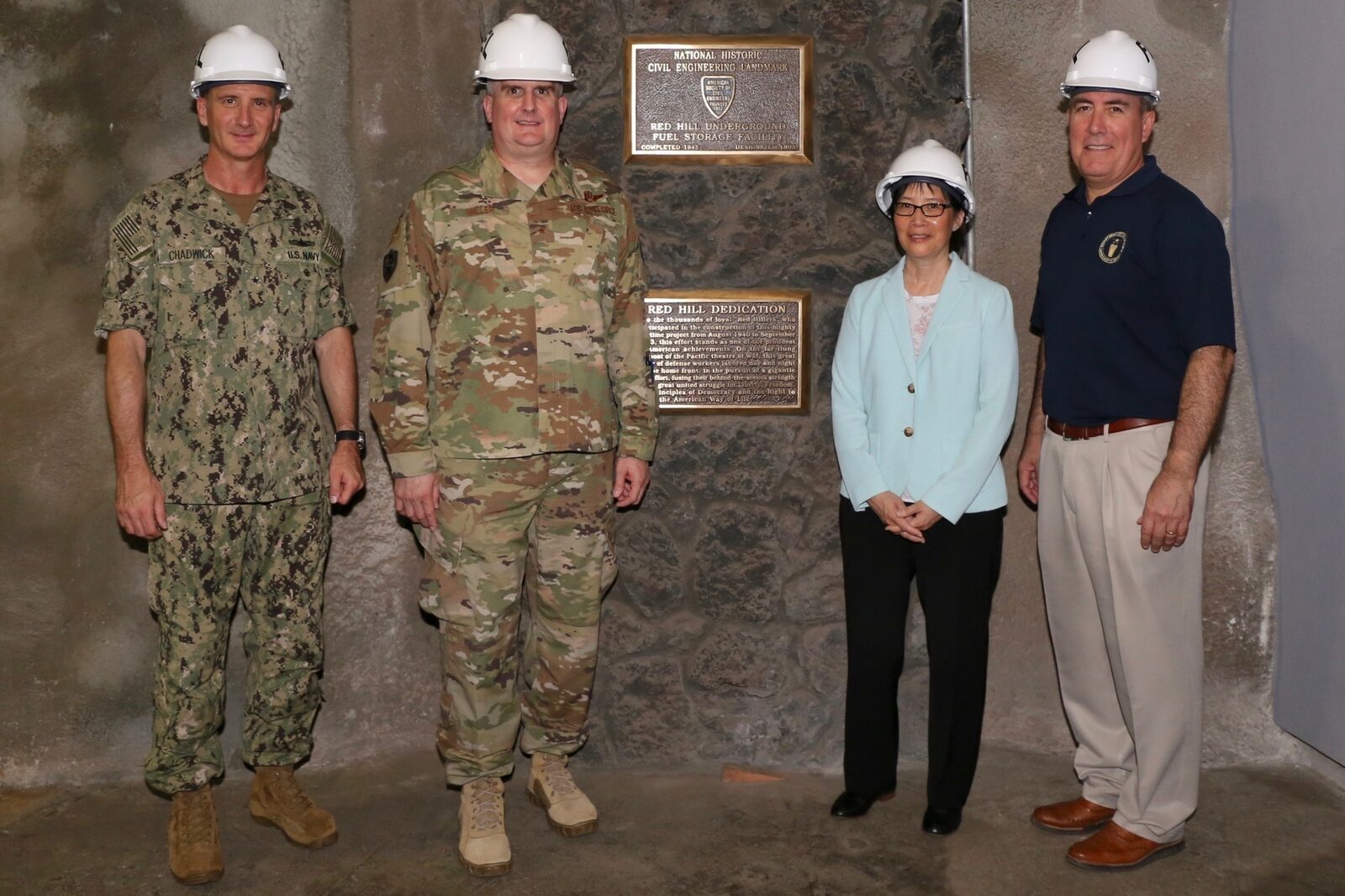
Red Hill is a World War II era complex of twenty underground steel lined fuel tanks bored into volcanic rock above Joint Base Pearl Harbor-Hickam. Built in the 1940s, each tank measures roughly 100 feet across and 250 feet tall, and together the facility could hold about 250 million gallons of fuel. According to local water officials, the tanks sit only about 100 feet above the groundwater aquifer that supplies a large share of urban Honolulu's drinking water, a setup that environmental advocates and the Honolulu Board of Water Supply had warned about for years. That single fact, fuel stored directly above a sole source aquifer, sits at the heart of everything that followed. You can read more about the broader installation on our overview of Joint Base Pearl Harbor-Hickam.
The 2021 Spill
The crisis traces back to two events. On May 6, 2021, the U.S. Environmental Protection Agency reports that a pressure surge during a routine fuel transfer caused a pipeline joint to fail, releasing more than 19,000 gallons of JP-5 jet fuel. Much of that fuel drained into a fire suppression system line, where it remained until that drain line ruptured on November 20, 2021, sending fuel toward the Red Hill drinking water well. The EPA's account of the fuel releases describes how the contamination then entered the Navy water distribution system. The Hawaii Department of Health and the Hawaii Poison Center soon began receiving complaints from residents who noticed a fuel odor in their tap water, and sampling later confirmed petroleum contamination.
Families Get Sick
The Navy system that drew from the tainted well served roughly 93,000 people, including service members, their families, and civilians across about 9,700 households. Many reported a sheen on their water or a strong chemical smell, and many fell ill. The Agency for Toxic Substances and Disease Registry conducted multiple Assessment of Chemical Exposures investigations. According to the Department of Veterans Affairs summary, an early assessment found that nearly 90 percent of participants reported at least one new or worsening symptom, and a later survey found that about 80 percent of respondents reported one or more symptoms in the prior 30 days. Commonly described effects included headaches, nausea, vomiting, eye and throat irritation, and skin rashes. The Hawaii Department of Health issued a drinking water advisory on November 30, 2021, and lifted it zone by zone between February and March 2022 as flushing and testing progressed.
The response involved relocating large numbers of families into hotels and temporary housing while the water system was flushed and restored. An Interagency Drinking Water System Team led the restoration effort. Researchers and physicians have noted that the long term effects of short term jet fuel exposure through drinking water are not fully understood, and several monitoring efforts were created to follow affected residents over time. The University of Hawaii established a Red Hill Independent Health Registry to enroll potentially impacted individuals for ongoing study.
The Order to Defuel and Close
Public pressure mounted quickly. The Hawaii Department of Health issued an emergency order directing the Navy to address the facility, and in March 2022 Defense Secretary Lloyd Austin ordered Red Hill to be defueled and permanently closed. Draining the tanks safely was an enormous undertaking. According to the Hawaii Department of Health, the Joint Task Force completed defueling in early 2024, with roughly 104 million gallons of fuel removed. Even so, officials stressed the work is far from over. As Department of Health Deputy Director Kathleen Ho put it, there is still much work to be done to permanently close the facility and remediate the environment. Remaining tasks include removing tens of thousands of gallons of residual sludge, cleaning the tanks, and addressing contamination that reached the soil and aquifer, a project the Navy expects to take years.
What It Means for Affected Families
For service members, veterans, and family members who were on the Navy water line, the path forward centers on documentation and ongoing care. The VA encourages affected individuals to enroll in registry evaluations through a local Environmental Health Coordinator, and the Department of Defense created a Red Hill roster in its exposure tracking database so VA and DoD providers can see the exposure record when treating patients. The VA also states that it encourages affected individuals to file a claim for disability compensation, with each claim considered on a case by case basis. Petroleum and jet fuel exposures are not currently tied to the same automatic presumptions that govern some other military toxic exposures, so understanding how the claims process works matters. Our guides on filing a VA disability claim for toxic exposure and on presumptive conditions explain the basics, and the exposure check tool can help you organize where and when you were exposed.
Red Hill joins a long list of cases, including Camp Lejeune, where contaminated water on a military installation has been associated with reported health harms long after the fact. The science on the lasting effects of the 2021 Red Hill exposure continues to develop, and concerns about chemicals such as PFAS from firefighting foam at military sites add to the broader picture of water safety on bases. Families who believe they were affected may find it useful to keep records of their address, the dates they used the water, and any symptoms they experienced, and to review our resources page for help connecting with care and benefits. This article is informational and is not medical or legal advice.
Bases mentioned in this article
This page is for informational purposes only and is not medical or legal advice. Consult a qualified professional about your health or benefits.
Discussion
No approved comments yet.