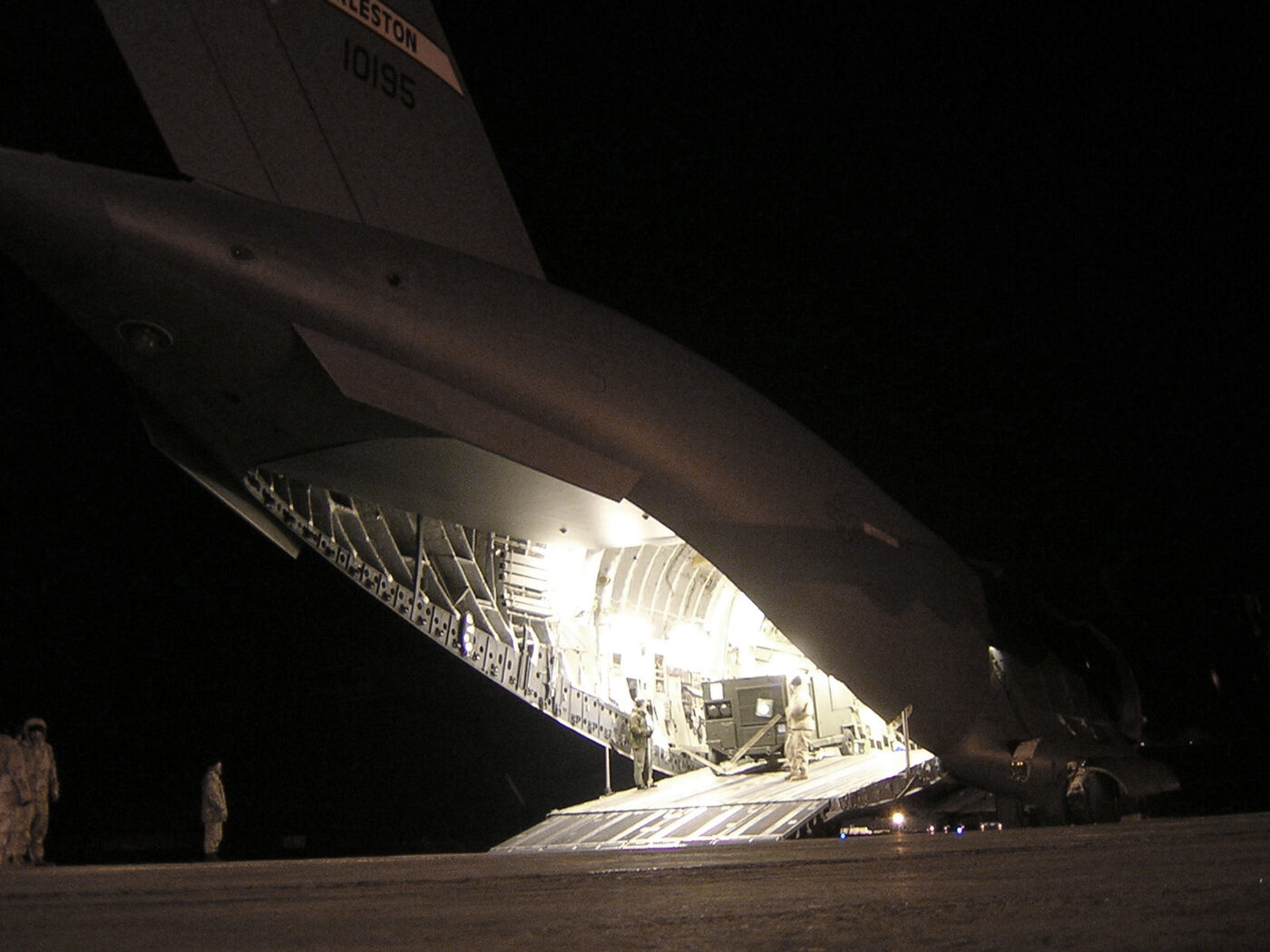
K2: Toxic Exposure at Karshi-Khanabad Air Base
For the U.S. service members who deployed to Karshi-Khanabad Air Base, known almost universally as K2, the assignment was a forward staging post for the war in Afghanistan. The former Soviet air base in southeastern Uzbekistan, about one square mile in size and also known as Camp Stronghold Freedom, was used by U.S. forces from October 2001 until November 2005, when the United States left after Uzbekistan ordered it out. About 15,000 to 16,000 service members served there, by VA and Department of Defense counts, many of them living in tents on ground that the military's own surveys found to be contaminated.
In the years since, many of those veterans have reported cancers and other serious illnesses and have asked a hard question: did the ground they lived on make them sick? The honest answer is that the hazards are well documented, the research on long-term health effects is mixed and still developing, and, importantly, many of the cancers K2 veterans worry about are already covered by presumptions under the PACT Act. Here is what the records show and what K2 veterans can do now.
A base built on documented hazards
According to DoD, environmental and occupational health assessments conducted at the base in November 2001, 2002, and 2004, declassified in July 2020 after a House Oversight subcommittee investigation, documented a layered set of hazards:
- Jet fuel. Widespread underground plumes of jet fuel from a leaking Soviet era fuel distribution system, usually 1 to 3 meters below the surface. Many veterans recall a tar-like "black goo" that pooled when they dug, which DoD attributes to these plumes.
- Asbestos. Localized areas of surface soil contaminated with asbestos, which was also present in some roof tiles. The VA says it was not detected in air samples.
- Depleted uranium. Low level radioactive depleted uranium in a restricted area, which DoD says was likely waste from Soviet missiles destroyed at the site before U.S. forces arrived. The VA says there is no evidence that enriched uranium was present.
- Dust and particulate matter. Periodically high levels of dust driven by seasonal storms.
- Volatile organic compounds. Vapors from jet fuel, which the VA says did not exceed military exposure guidelines or other health exposure criteria in the samples taken.
That last point comes with a caveat. In January 2022, the CDC's Agency for Toxic Substances and Disease Registry (ATSDR), working under an agreement with the VA required by a 2020 law, compared historical K2 samples against modern health based screening levels. It flagged benzene, naphthalene, kerosene, and coarse particulate matter in the air, along with several metals and solvents in water or soil, as potential contaminants of concern. ATSDR stressed that exceeding a screening level does not mean a health effect will occur, and that the K2 data cover only limited areas and times. The site also shares a hazard with other bases: our guide to jet fuel exposure in military service explains what is and is not known about fuel exposure in general.
Chemical weapons have been a persistent concern. McClatchy reported in December 2019 that U.S. Central Command directed an intelligence review of hazards at the base after Uzbek workers preparing it for U.S. forces fell ill in October 2001. In June 2002, initial field tests reported trace nerve and blister agents in the base's hardened aircraft shelters. DoD says more specific confirmatory testing was negative and attributes the early results to false positives, and the VA states that environmental assessments confirmed the absence of chemical warfare agents and ionizing radiation at K2. Many veterans remain skeptical of how complete those assessments were, which is part of why they pressed for a fuller accounting.
What the research on cancer shows
The research so far points in more than one direction, and it is worth understanding each piece.
The first study (2015). A U.S. Army Public Health Command study compared active duty service members deployed to K2 with personnel stationed in South Korea. It found a statistically higher rate of malignant melanoma (about 3.7 times) and of cancers of the lymphatic and hematopoietic tissues (the blood forming system), excluding non-Hodgkin lymphoma and leukemia (about 5.6 times). Overall cancer rates were not significantly elevated, and each finding rested on fewer than 10 cases. The VA and DoD caution that these results should not be viewed as definitive evidence of an association with service at K2.
The DoD study of eight cancers (2025 and 2026). Congress required a larger DoD study in the National Defense Authorization Act for Fiscal Year 2021. Conducted by Johns Hopkins researchers and reported to Congress in June 2025, with results published in the Journal of the National Cancer Institute in 2026, it examined more than 15,000 K2 veterans through 2022. It found no link between K2 deployment and seven of the eight cancers studied. The exception was non-Hodgkin lymphoma: longer time at K2 was associated with higher odds, about 78 percent higher for deployments of 180 days or more. An association like this does not prove that K2 caused any individual's cancer, and the authors called for continued monitoring.
Broader health and mortality. A 2024 DoD study found no significant difference in overall death rates through 2019 between those who served at K2 and those who did not. The VA's own K2 Surveillance Program, which tracks nearly all K2 veterans, published its first peer reviewed results in late 2025 and found no overall increase in illness or death compared with similar veterans. The VA says it will keep repeating these analyses for at least the next decade.
Taken together, the evidence is mixed: different studies have flagged different cancers, and broad surveillance has not found an overall rise in illness or death. That is why researchers on all sides say longer follow-up is needed. It is also why the benefits picture below matters more for most K2 veterans than any single study.
Advocacy and congressional oversight
Public attention to K2 grew out of veteran-led advocacy. The Stronghold Freedom Foundation, named for the base's wartime designation, describes itself as a nonprofit representing U.S. citizens affected by the toxic conditions at K2, including veterans, family members, contractors, and federal employees. Its efforts, along with McClatchy's reporting, helped prompt congressional scrutiny.
On February 27, 2020, the House Oversight Subcommittee on National Security, chaired by Rep. Stephen Lynch, held a hearing on K2 hazardous exposures. Retired Air Force Master Sergeant Paul Widener Jr. and retired Army Chief Warrant Officer 2 Scott Welsch, both cancer patients, testified alongside Kim Brooks, the widow of Lt. Col. Timothy Brooks, who died of cancer. Widener told the subcommittee that K2 members "were told repeatedly that no significant risk from hazards existed." A follow-up hearing in November 2020 examined how the VA and DoD were responding. Rep. Mark Green of Tennessee, himself a K2 veteran, introduced the K2 Veterans Toxic Exposure Accountability Act of 2020 with Lynch as the original cosponsor. It would have required a DoD study of K2 exposures, a VA registry, and a process for VA to decide which conditions should be presumed service connected. That bill did not become law on its own, but Congress later required the DoD study described above.
Where K2 fits in the PACT Act and VA rules
This is the most important section for K2 veterans and families. The PACT Act, signed August 10, 2022 (Public Law 117-168), lists Uzbekistan as a covered location for service on or after September 11, 2001. Veterans who served there are presumed to have been exposed to burn pits and other airborne hazards, and a long list of conditions is presumed to be service connected for them. Under the law and VA regulations effective in January 2025, the presumptive conditions include:
- Cancers: melanoma, lymphoma of any type, acute and chronic leukemias, multiple myeloma (including MGUS), myelodysplastic syndromes, myelofibrosis, bladder and ureter cancers, kidney cancer, brain cancer and glioblastoma, pancreatic cancer, and any type of head, neck, respiratory, gastrointestinal, or reproductive cancer.
- Respiratory conditions: asthma diagnosed after service, COPD, chronic bronchitis, constrictive or obliterative bronchiolitis, emphysema, granulomatous disease, interstitial lung disease, pleuritis, pulmonary fibrosis, sarcoidosis, and chronic sinusitis and rhinitis.
In practice, this means a K2 veteran diagnosed with one of these conditions generally does not have to prove that K2 caused it. That includes melanoma and the blood cancers that K2 research has focused on. VA also states that K2 veterans who meet basic eligibility requirements can enroll in VA health care without first filing a disability claim.
Beyond the PACT Act, the VA has taken several K2 specific steps:
- Registry. The VA says K2 veterans are now automatically enrolled in the redesigned Airborne Hazards and Open Burn Pit Registry.
- Depleted uranium testing. K2 veterans are eligible for a free urine test for depleted uranium, scheduled through a VA Environmental Health Coordinator.
- A K2 presumptive review. In November 2024, VA announced plans to assess the research and claims data on K2 exposures and took public comments to inform decisions on presumptive benefits. In October 2025, it published its response: it did not create new presumptions specific to K2 and said that, to date, it had found no evidence of increased disease or mortality risk tied to K2 service. VA says its K2 Surveillance Program will keep tracking K2 veterans' health for 10 or more years, and VA has said a final report to Congress on K2 health effects is due by 2030.
- Pending proposals. In August 2024, VA announced plans to treat K2 service like Persian Gulf service for chronic multisymptom illness and to formally recognize K2 exposures as toxic exposure risk activities, and it published a related proposed rule in October 2024. As of September 2026, neither change had been finalized in regulation. VA also said it would train claims processors on K2 exposures and add an extra review before deciding K2 claims.
For conditions that are not presumptive, a K2 veteran can still file a claim and show a direct link to service, which usually requires a medical opinion. Our explainer on TERA medical opinions covers how the VA evaluates those claims.
What K2 veterans should do now
If you deployed to Karshi-Khanabad between 2001 and 2005, these steps are worth taking whether or not you have symptoms today.
- Enroll in VA health care. K2 veterans who meet basic eligibility requirements can enroll without filing a disability claim first. If you are enrolled, ask about a toxic exposure screening.
- Check your registry record and ask about testing. Confirm your record in the Airborne Hazards and Open Burn Pit Registry, where VA says K2 veterans are now enrolled automatically, and contact a VA Environmental Health Coordinator to schedule the free depleted uranium urine test. DoD says K2 service alone does not call for extra medical screening, so talk with your provider about any health concerns.
- If you have a presumptive condition, file a claim. Document your K2 dates and your diagnosis. Our step-by-step guide to filing a VA disability claim for toxic exposure walks through the process, and the exposure check tool can help you organize the basics.
- If you have cancer, understand the rating. Our explainer on how the VA rates cancer covers how active cancer and its aftermath are rated, and the disability calculator can estimate compensation.
- Families have options too. Survivors of K2 veterans who died of a service connected condition, including a presumptive cancer, may be eligible for survivor benefits. Veterans who cannot work because of service connected illness can check the TDIU checker.
If a claim was denied in the past, especially before the PACT Act took effect, it may be worth filing again under the current rules; our appeals helper and resources can guide next steps. This article is general information, not medical or legal advice, and individual eligibility depends on the facts of each case.
This page is for informational purposes only and is not medical or legal advice. Consult a qualified professional about your health or benefits.
Discussion
No approved comments yet.