Jet Fuel Exposure in Military Service: What Veterans Should Know
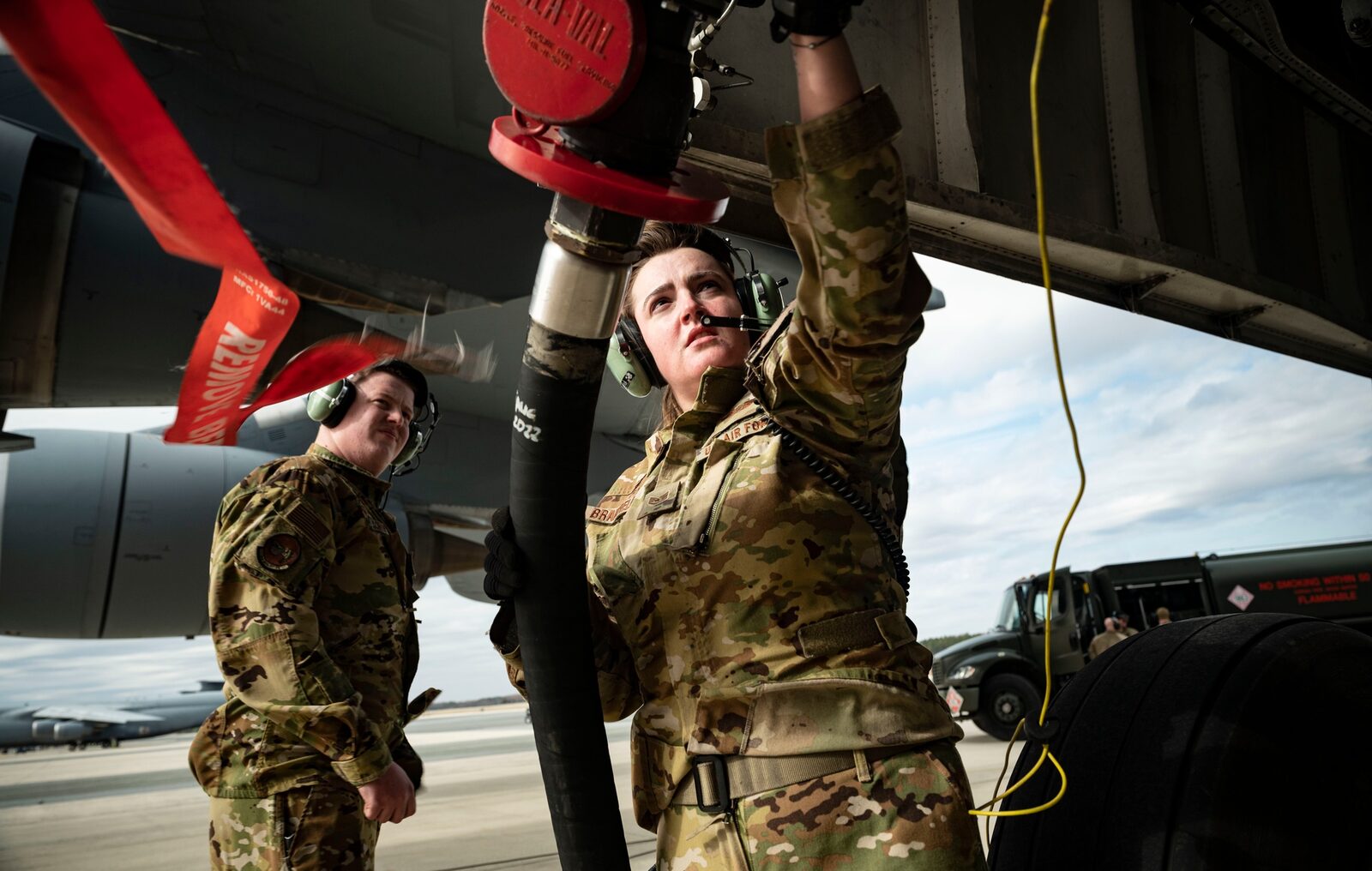
Jet fuel was part of the working environment for many service members. Fuel specialists transferred it. Aircraft maintainers worked around tanks, lines, engines, and spills. Flight-line crews, firefighters, generator operators, and other personnel could also come into contact with fuel or its vapors.
That history can raise difficult questions years later, especially after a cancer diagnosis or another serious illness. Federal agencies agree that jet fuel can cause short-term effects at sufficient exposure levels. The evidence about long-term disease is much less certain. VA's current position is that available studies are too limited to confidently connect military jet-fuel exposure with a particular long-term health condition.
This article explains what the official record does and does not establish. It is educational information, not a diagnosis and not medical or legal advice.
Jet fuel is a family of mixtures
"Jet fuel" does not describe one fixed chemical. Military personnel have worked with several formulations across different eras and settings. VA's summary of its report to Congress identifies four commonly discussed fuels:
- JP-4 entered military use in the 1950s. Its use later declined as less flammable alternatives became available.
- JP-5 has a higher flash point and is used in naval aviation, including aboard aircraft carriers.
- JP-8 became the standard military aviation fuel during the 1990s and remains widely used.
- Jet A is primarily a commercial aviation fuel and also serves as the base fuel for JP-8.
These kerosene-based fuels contain many hydrocarbons, and their precise composition varies with the crude oil, refining process, and additives. That variability is one reason a broad statement about "jet fuel exposure" can hide important differences in the actual fuel, concentration, route, and duration involved.
Which military duties may have involved exposure?
VA says potential exposure may have occurred while fueling aircraft, transporting fuel, maintaining storage tanks, fueling generators, tending burn pits, or responding to accidental spills. Fuel may enter the body through inhalation, skin contact, or accidental swallowing.
A military job title can provide useful context, but it cannot establish the circumstances of an individual exposure by itself. Two people with the same specialty may have worked at different installations, around different fuels, with different ventilation and protective equipment. Relevant occupations may include fuel specialists, aircraft mechanics, some avionics technicians, and military firefighters, along with personnel assigned to fuel storage, flight-line, generator, or tank-maintenance duties.
The location can matter as much as the occupation. VA separately identifies drinking-water and environmental concerns involving the Red Hill fuel release in Hawaii, a leaking underground fuel system at Karshi-Khanabad Air Base, and a fuel component among the contaminants found in the Camp Lejeune water system. Those situations have different facts and should not be treated as one generic exposure event.
What is known about short-term effects
Short-term effects are the clearer part of the evidence. VA's 2026 materials describe symptoms reported after contact with fuel or concentrated vapors, including skin or eye irritation, headache, dizziness, nausea, and breathing difficulty. NIOSH also notes that high concentrations can affect the nervous system and that fuel-tank maintenance presents an enclosed-space hazard.
Those observations do not mean that every headache, rash, or breathing problem near an aircraft was caused by fuel. They also do not show what will happen years later. VA's review found that the available research does not establish whether early symptoms predict chronic respiratory, neurological, or cancer outcomes.
What the cancer evidence actually says
VA's review found some scientific information suggesting associations between occupational jet-fuel exposure and kidney or bladder cancer. The same review emphasizes that the evidence is limited by small studies, imprecise exposure estimates, short follow-up, and difficulty separating fuel from smoking or other workplace chemicals.
The ATSDR toxicological profile for JP-5, JP-8, and Jet A reaches a similarly cautious conclusion. It found no reliable human studies adequate to assess whether those fuels cause cancer. Some worker studies reported associations, but participants often encountered several fuel types and additional substances, and investigators frequently lacked reliable exposure concentrations.
The careful conclusion is not that jet fuel has been shown to cause kidney or bladder cancer. It is also not that the possibility has been ruled out. Current federal reviews identify a signal worth further study while stating that the evidence cannot yet establish a confident causal connection.
Can a blood or urine test prove an old exposure?
ATSDR says individual fuel chemicals and their breakdown products can sometimes be measured in blood or urine. Those results have major limits. The same chemicals can come from other sources, including ordinary gasoline fumes, and the measured levels cannot predict whether a health effect will occur. Jet-fuel components and metabolites also leave the body fairly quickly, so testing generally must happen within days of exposure.
For a veteran evaluating an exposure from years or decades ago, a current blood or urine test therefore cannot reconstruct the past event. Service records, occupational history, locations, incident documentation, medical records, and firsthand statements may provide more useful historical context.
Health care and exposure documentation
VA advises veterans with jet-fuel health concerns to speak with a health care provider or a VA Environmental Health Coordinator. An enrolled veteran can also request a Military Environmental Exposures Assessment. During that clinical evaluation, a specially trained VA clinician reviews the veteran's exposure history, discusses health concerns, and records a summary in the electronic health record.
A Military Environmental Exposures Assessment is not a disability examination and is not required to file a claim. VA says it may still help by documenting deployment and exposure history for the veteran's care team. It should not be confused with the shorter VA toxic exposure screening or with a compensation and pension examination.
How VA considers a disability claim
VA's jet-fuel page says disability claims involving this exposure are considered case by case. Jet-fuel exposure by itself is not listed as a stand-alone presumption on VA's current evidence page. A veteran may still qualify for a separate presumption based on a diagnosed condition and qualifying service, location, or exposure category. The site's presumptive conditions guide can help distinguish those routes.
For an original direct-service-connection claim, VA generally looks for evidence of a current disability, an event or exposure during service, and a link between the two. VA says that link usually requires medical records or a medical opinion, although lay evidence may also be accepted for facts a veteran or witness is competent to describe.
Section 1168 of Title 38 may also matter. When a claim contains evidence of a disability and participation in a toxic exposure risk activity, and the existing evidence is not enough to establish service connection, the law generally requires VA to provide an examination and obtain a medical opinion. The statute includes an exception when VA determines there is no indication of an association. Our article on TERA medical opinions explains that process and its limits.
Building an accurate exposure history
Because the scientific record and individual duty conditions are both complicated, precision is more useful than a broad statement that someone "worked around fuel." A practical exposure history may include:
- The fuel and task, if known. Identify aircraft fueling, tank entry, line maintenance, spill response, generator work, fuel transport, or another activity without guessing at details you do not remember.
- Dates and locations. Record installations, units, deployments, ships, work areas, and approximate periods.
- Frequency and route. Describe whether contact was occasional or routine and whether it involved vapor, soaked clothing, direct skin contact, an enclosed space, or a documented spill.
- Protective conditions. Note ventilation, gloves, respiratory protection, training, and whether those safeguards were consistently available.
- Records and witnesses. Locate personnel and medical records, duty descriptions, incident reports, evaluations, photographs, or statements from people who directly observed the work or event.
VA can obtain relevant federal records when processing a standard claim, but a veteran should identify the records and facilities clearly. A VA-accredited representative can help organize an individual claim. The site's toxic-exposure claim guide, military occupation pages, and exposure check provide general starting points.
The bottom line
Military jet-fuel exposure is real, and its short-term hazards are well recognized. The long-term evidence is still incomplete. Federal reviews have identified possible associations that deserve continued study, including signals involving kidney and bladder cancer, but they do not establish that jet fuel caused a particular veteran's illness.
Veterans do not need to minimize a credible exposure history, and they should not be told that an uncertain association is settled science. The most useful approach is to document the service circumstances accurately, discuss health concerns with a qualified clinician, and evaluate any benefits claim under the evidence rules that apply to the individual case.
Primary sources
- VA Public Health: Jet Fuels
- VA: What Veterans Should Know About Jet Fuel Exposure, 2026
- VA summary of the congressionally mandated jet-fuels report
- ATSDR Toxicological Profile for JP-5, JP-8, and Jet A Fuels
- NIOSH: Control of Exposure to Jet Fuel
- VA: Evidence Needed for Your Disability Claim
- VA Military Environmental Exposures Assessments
- 38 U.S.C. § 1168, Medical nexus examinations for toxic exposure risk activities
Bases mentioned in this article
This page is for informational purposes only and is not medical or legal advice. Consult a qualified professional about your health or benefits.
Discussion
No approved comments yet.