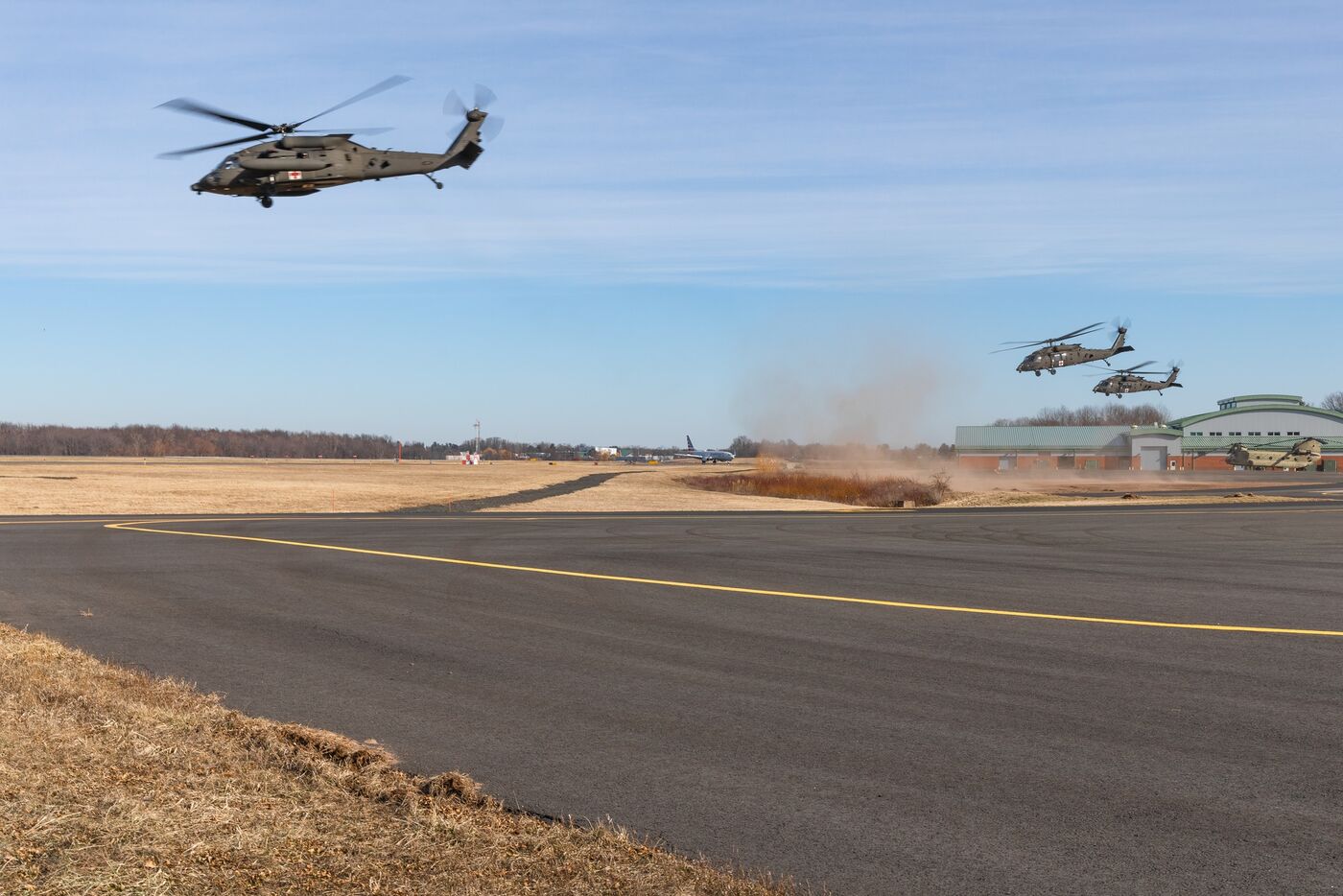
Windsor Locks Army Aviation Support Facility
The Windsor Locks Army Aviation Support Facility (AASF) is a Connecticut Army National Guard aviation installation located in Windsor Locks, Connecticut, within the Bradley International Airport complex in the northern part of the state. The facility supports the readiness, maintenance, and training of Army National Guard aviation units, hosting helicopter and fixed-wing elements such as components of the 142nd and 104th Aviation Regiments, the 14th Civil Support Team, and an Operational Support Airlift detachment. As an aviation support facility, its role centers on keeping aircraft and aircrews mission ready, which historically included on-site fire protection and emergency response capabilities common to airfields. The installation sits alongside other Connecticut Army National Guard sites in the Windsor Locks area, including Camp Hartell and a Combined Support Maintenance Shop. Like many aviation facilities tied to airport operations, it has drawn attention in recent years for environmental sampling related to past firefighting practices.
Environmental investigations at the facility have raised concerns about potential exposure to certain persistent chemicals associated with firefighting foam and routine aviation operations. The contaminants of interest reflect decades of standard practices at military airfields rather than any single documented incident.
- AFFF (aqueous film-forming foam): AFFF is a firefighting foam developed to suppress fuel fires and was widely used at military airfields for fire suppression and training. At the Windsor Locks facility, the use of this foam in connection with aviation fire protection has been identified as a likely source of groundwater contamination. Because the foam contains fluorinated compounds, its historical use has been associated with concerns about persistent residues entering soil and groundwater.
- PFAS (per- and polyfluoroalkyl substances): PFAS are a large family of synthetic chemicals known for their persistence in the environment and in the human body. Testing at the facility reported groundwater PFAS levels reaching approximately 4,588 parts per trillion, levels that prompted further review under state and federal programs. Research has associated certain PFAS exposures with a range of potential health effects, and study in this area is ongoing.
- PFOS (perfluorooctane sulfonate): PFOS is one of the individual PFAS compounds historically found in older firefighting foam formulations. Its presence at the facility is linked to the same legacy foam use, and it has been associated in scientific literature with concerns about potential long-term health effects.
- PFOA (perfluorooctanoic acid): PFOA is another PFAS compound associated with industrial and firefighting products. It is among the substances of concern in the groundwater investigations at the facility, and exposure to it has been the subject of continued health research and regulatory attention.
The facility is not listed on the National Priorities List (Superfund). Instead, contamination concerns are being addressed through the Department of Defense environmental restoration process, which follows the federal cleanup framework under CERCLA to investigate releases and determine appropriate actions based on risk. Connecticut agencies, including the Department of Energy and Environmental Protection (DEEP) and the state Interagency PFAS Task Force, have also been involved in reviewing PFAS contamination at military and airport sites statewide. Investigation and monitoring at the facility remain part of broader state and federal efforts to assess PFAS exposure.
Veterans, Guard members, and others who served or worked at the Windsor Locks Army Aviation Support Facility may wish to stay informed as environmental reviews continue. Those with questions about possible exposure or related health concerns are encouraged to speak with the U.S. Department of Veterans Affairs and to keep records of their service. Staying aware of updates from official sources can help individuals make informed decisions about their health.
Were you stationed at a contaminated site?
The PACT Act of 2022 added more than 20 presumptive conditions for toxic exposure, including many cancers, and there is no deadline to file a VA claim.
This page is for informational purposes only and is not medical or legal advice. Consult a qualified professional about your health or benefits.
Discussion
No approved comments yet.