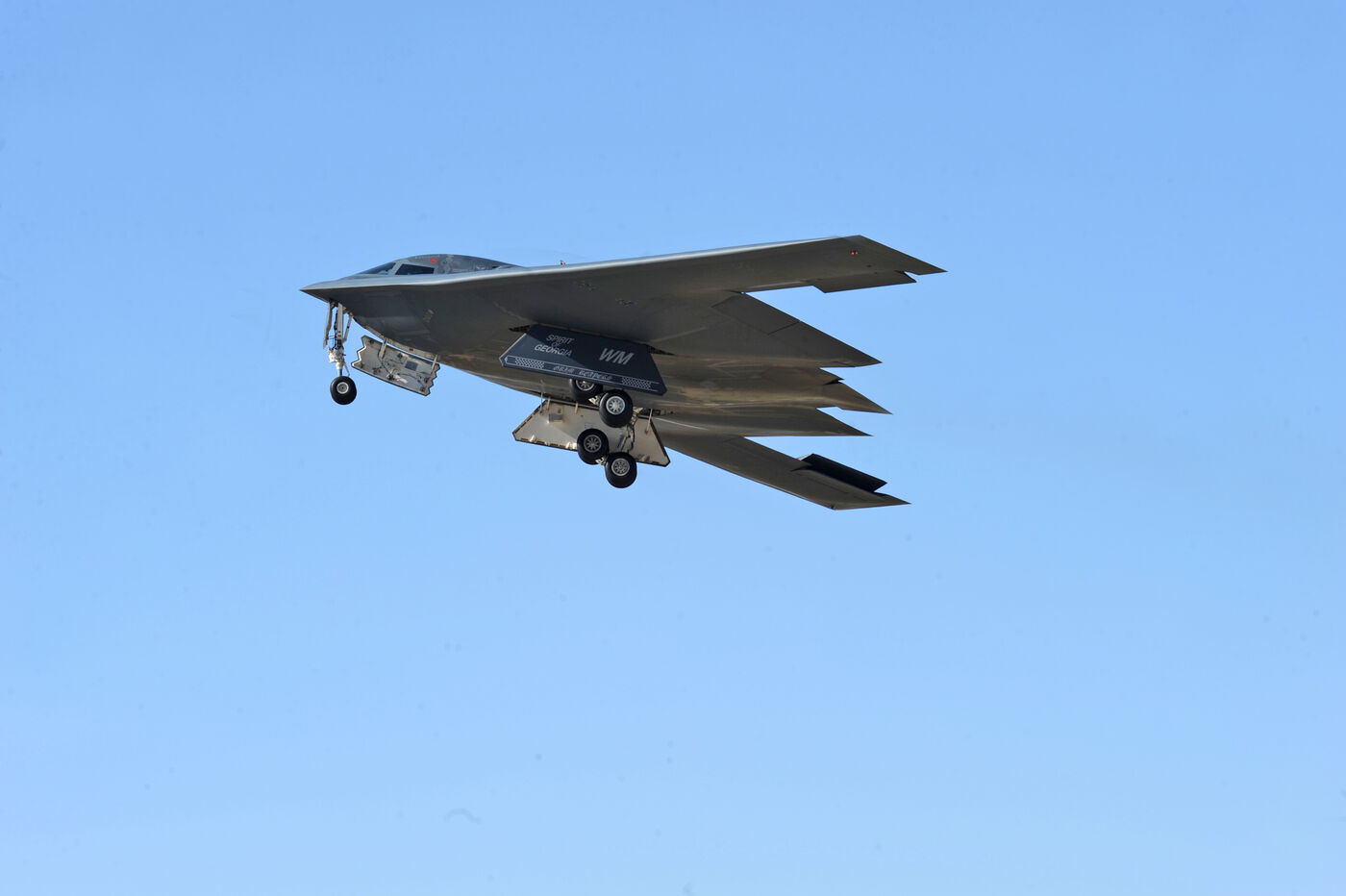
Whiteman Air Force Base
Whiteman Air Force Base is an active United States Air Force installation located roughly two miles south of Knob Noster, Missouri, about 70 miles east-southeast of Kansas City. The site was established in 1942 as Sedalia Glider Base and trained glider pilots during World War II before being placed on inactive status, then reactivated in the early 1950s. It was renamed Whiteman Air Force Base in 1955 in honor of 2nd Lieutenant George Whiteman, a Sedalia native who was among the first American casualties of the attack on Pearl Harbor. Today the base is home to the 509th Bomb Wing under Air Force Global Strike Command and hosts the nation's only fleet of B-2 Spirit stealth bombers, supporting long-range strategic and conventional strike missions.
Like many long-operating military airfields, Whiteman has been the subject of environmental concerns tied to its history of aircraft operations, fire training, and industrial activity. Reporting and state oversight have identified several contaminated sites on the installation, including areas where firefighting foam was used. The contaminants below have been documented in connection with the base, and there are concerns about potential exposure for those who lived or worked nearby.
- PFAS: PFAS (per- and polyfluoroalkyl substances) are a large family of synthetic chemicals valued for their resistance to heat, water, and oil. At Whiteman they have been associated with groundwater near fire training areas where foam-based firefighting materials were historically used. Research has associated PFAS exposure with a range of potential health effects, and these compounds persist in the environment for long periods.
- PFOS: PFOS (perfluorooctane sulfonate) is one of the most studied PFAS compounds and has been listed by the Missouri Department of Natural Resources as an emerging contaminant of concern detected in groundwater at the base. PFOS has been associated in studies with effects on the immune system, thyroid, and other functions.
- PFOA: PFOA (perfluorooctanoic acid) is another PFAS compound reported in connection with firefighting foam use at Whiteman. Reporting has described elevated PFOA levels in sampling on and around the installation, and the chemical has been associated in research with concerns about potential long-term health effects.
- AFFF: AFFF (aqueous film forming foam) is a firefighting foam used to suppress fuel fires and was applied during fire training and emergency response at Whiteman over many decades. AFFF historically contained PFOS and PFOA, and its repeated use is understood to be the primary pathway by which these compounds reached soil and groundwater at the base.
Whiteman Air Force Base is not listed on the National Priorities List as a federal Superfund site. Environmental cleanup is carried out by the U.S. Air Force under the Defense Environmental Restoration Program, using a process based on the federal CERCLA framework. According to the Missouri Department of Natural Resources, eight active contaminated sites remain (reduced from a larger number originally identified), with remedies in place at most and continued investigation, monitoring, and periodic five-year reviews at others. Base drinking water sampling in 2016 and 2021 reported PFAS as non-detected, and institutional controls limit new drinking water wells on the installation.
Veterans, family members, and others who spent time at Whiteman Air Force Base may wish to stay informed as monitoring and cleanup continue and as federal guidance evolves. Anyone with questions about possible exposure or related health concerns is encouraged to speak with the U.S. Department of Veterans Affairs and a personal healthcare provider, who can offer guidance based on individual circumstances.
Were you stationed at a contaminated site?
The PACT Act of 2022 added more than 20 presumptive conditions for toxic exposure, including many cancers, and there is no deadline to file a VA claim.
This page is for informational purposes only and is not medical or legal advice. Consult a qualified professional about your health or benefits.
Discussion
No approved comments yet.