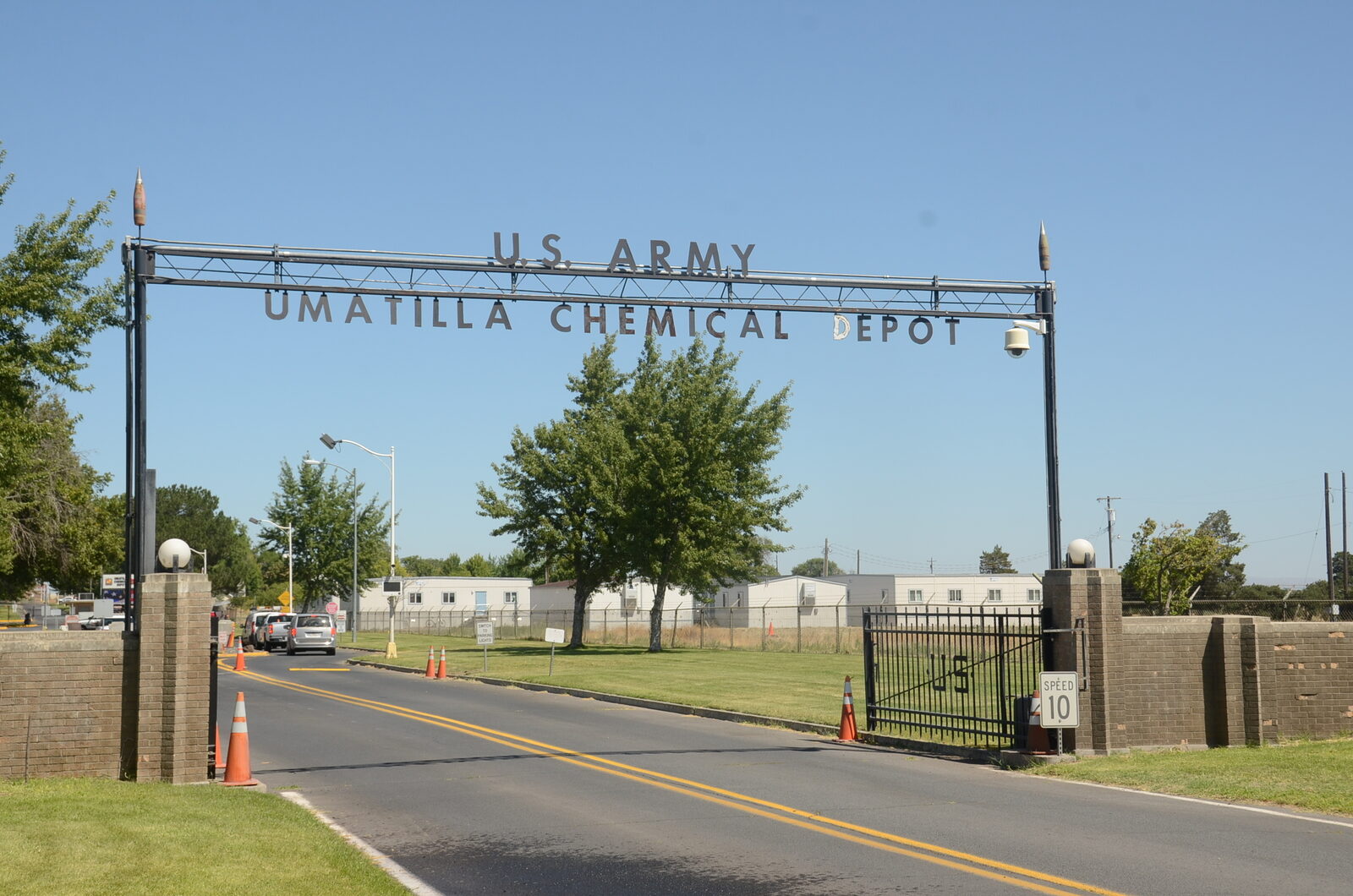
Umatilla Chemical Depot
Umatilla Chemical Depot, originally established as the Umatilla Ordnance Depot in 1941, was a roughly 20,000 acre Army installation near Hermiston in northeastern Oregon. For decades its mission was to store and maintain military supplies and conventional munitions, and beginning in 1962 it also stored a portion of the nation's chemical weapons stockpile, including nerve and blister agents. Those chemical munitions were destroyed in an on-site incineration program that concluded in 2011, and the depot formally closed in 2012 under the Base Realignment and Closure process. Today much of the former depot property is being transferred for redevelopment and conservation uses.
There are concerns about potential carcinogenic and other health hazards at Umatilla Chemical Depot due to past exposure to environmental contaminants in soil and groundwater:
- Explosive compounds (TNT and RDX): From the 1950s until 1965, the Army washed out munitions at the depot and discharged an estimated 85 million gallons of explosives-laden wastewater into two unlined lagoons. This practice allowed TNT, RDX, and related compounds such as HMX and dinitrotoluene (DNT) to seep into the soil and into a groundwater plume estimated at about 350 acres. The EPA has concluded there is suggestive evidence of carcinogenic potential for RDX, and exposure to TNT has been associated with potential effects on the liver and blood, so contact with contaminated soil or groundwater may potentially be linked to health concerns.
- Heavy metals: Munitions handling and washout operations also left heavy metals, including lead, in soils at the site. Lead exposure has been associated with neurological, kidney, and developmental effects, and certain heavy metals are recognized or suspected carcinogens. Lead-contaminated soil at the depot was addressed through on-site solidification and stabilization.
The Umatilla Army Depot (Lagoons) site was added to the EPA's National Priorities List of Superfund sites in 1987. Cleanup work has included a pioneering bioremediation effort that used composting and microbes to treat explosives-contaminated soil, completed in 1996 and described as the first production-scale bioremediation of explosives-contaminated soil in the United States, along with stabilization of lead-contaminated soil and a groundwater pump-and-treat system using granular activated carbon that has operated since 1997. EPA five-year reviews have found the remedies functioning as intended, and groundwater treatment and monitoring continue, along with ongoing work to address unexploded ordnance in some areas.
It is important to note that while there are concerns about potential exposure to explosives residues and heavy metals at Umatilla Chemical Depot, establishing a definitive link between service at the depot and any specific illness can be complex and depends on individual circumstances. Research into the long-term health effects of these contaminants is ongoing. Veterans and civilian workers who served at the installation may wish to stay informed about cleanup developments, document their service history, and consult the Department of Veterans Affairs or a qualified healthcare provider with any health questions or concerns.
Were you stationed at a contaminated site?
The PACT Act of 2022 added more than 20 presumptive conditions for toxic exposure, including many cancers, and there is no deadline to file a VA claim.
This page is for informational purposes only and is not medical or legal advice. Consult a qualified professional about your health or benefits.
Discussion
No approved comments yet.