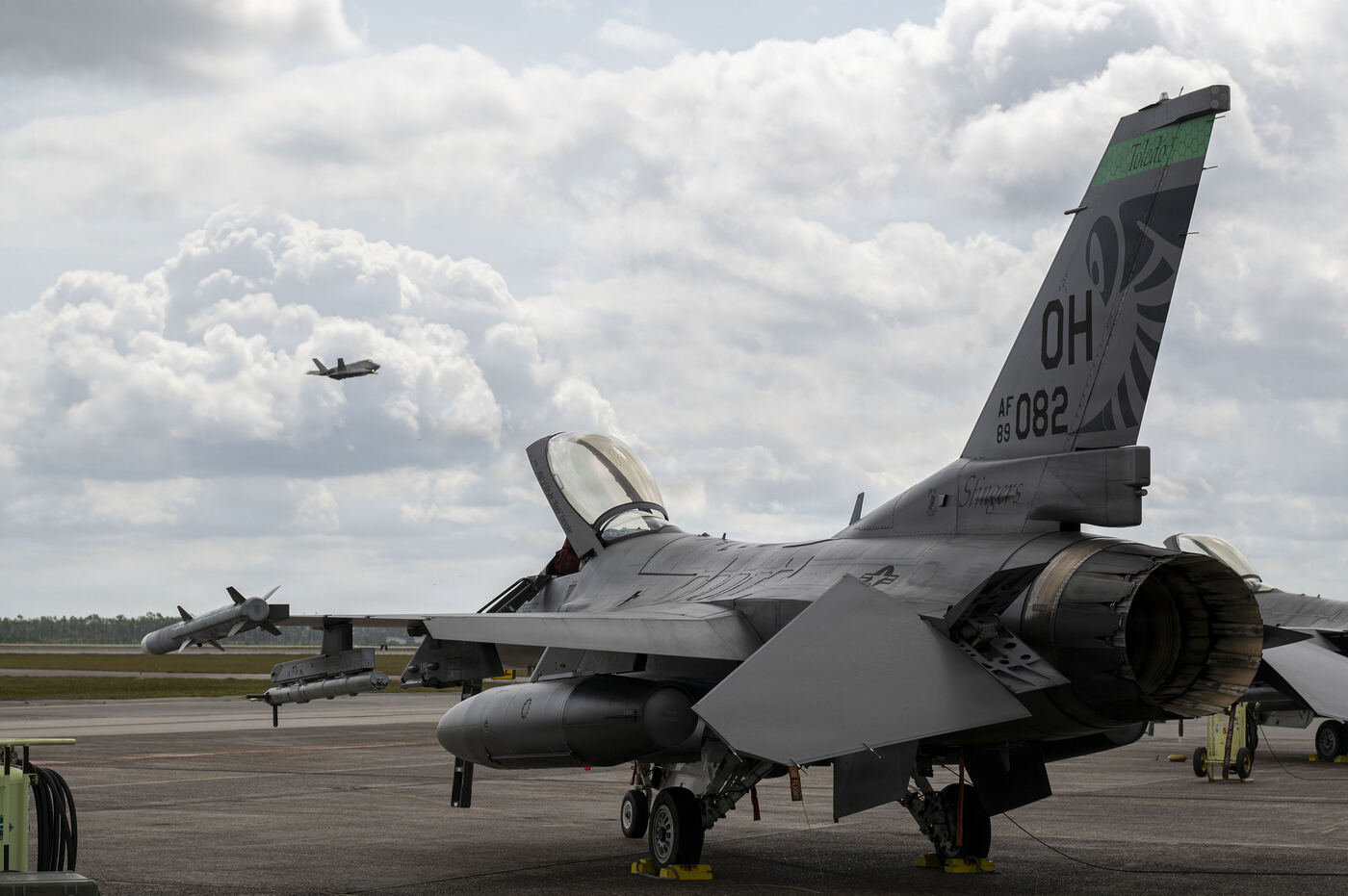
Tyndall Air Force Base
Tyndall Air Force Base occupies roughly 29,000 acres on a narrow peninsula about 12 miles southeast of Panama City, Florida. The installation opened in December 1941 as Tyndall Field, a flexible gunnery school that trained thousands of aerial gunners during World War II, and it became an Air Force base in 1948. In the decades since, Tyndall has served as a center for air defense and fighter training, including as home of the 325th Fighter Wing and a primary training location for F-22 Raptor pilots and maintenance personnel. After sustaining severe damage from Hurricane Michael in October 2018, the base has been undergoing an extensive rebuilding effort while continuing its flying mission.
Alongside that long operational history, Tyndall has a documented record of environmental contamination. Decades of activities, including landfill operations, firing ranges, pesticide application, and firefighting training, left pollutants in soil, sediment, groundwater, and surface water across multiple areas of the installation. The EPA placed Tyndall on the Superfund National Priorities List in 1997, and several groups of contaminants have raised concerns about potential exposure for service members, families, and civilian workers who spent time on base.
- PFAS (per- and polyfluoroalkyl substances) are a large family of synthetic chemicals, often called "forever chemicals" because they break down very slowly in the environment. At Tyndall, PFAS contamination is linked to historic firefighting foam use, and groundwater readings at former firefighting training areas have been reported at levels around 900,000 parts per trillion, far above current federal advisory levels. PFAS exposure has been associated in some studies with certain cancers, thyroid conditions, and immune system effects, although research is ongoing.
- PFOS (perfluorooctane sulfonate) is one of the most studied PFAS compounds and a key ingredient in older military firefighting foams. The Florida Department of Environmental Protection has confirmed preliminary sampling for PFOS at Defense Department facilities in the state, and exposure to PFOS has been associated with potential health concerns including kidney and liver effects.
- PFOA (perfluorooctanoic acid) is a related PFAS compound under investigation at Florida military installations where foam was historically discharged. PFOA has been classified by some health agencies as a likely human carcinogen, and concerns about potential exposure through groundwater remain part of the ongoing investigation at Tyndall.
- AFFF (aqueous film-forming foam) was used for decades at Tyndall for fire emergencies, training exercises, and equipment testing. AFFF is the primary source of PFAS contamination at the base, and the state of Florida is coordinating with the Department of Defense on the investigation of these historic discharges.
- Heavy metals, including lead, have been documented in soil and sediment at several of the base's operable units, along with polycyclic aromatic hydrocarbons. Lead-contaminated soil at Tyndall has been addressed through excavation and off-site disposal, and long-term exposure to lead and other metals has been associated with neurological and other health concerns.
Tyndall was added to the National Priorities List in 1997, and after years of negotiation the Air Force, EPA Region 4, and the Florida Department of Environmental Protection signed a Federal Facility Agreement on September 20, 2013, establishing enforceable cleanup schedules. The cleanup is organized into numerous operable units, with some landfill excavations completed, others ongoing, and several areas still under investigation. PFAS source areas are being evaluated separately under the Department of Defense's cleanup program, with state coordination, and that work remains in progress.
Veterans and family members who served at Tyndall may wish to follow EPA and Florida DEP findings as investigations continue. Anyone with questions about possible exposure or related health conditions can speak with the VA about registry exams, documentation, and available benefits.
Were you stationed at a contaminated site?
The PACT Act of 2022 added more than 20 presumptive conditions for toxic exposure, including many cancers, and there is no deadline to file a VA claim.
This page is for informational purposes only and is not medical or legal advice. Consult a qualified professional about your health or benefits.
Discussion
No approved comments yet.