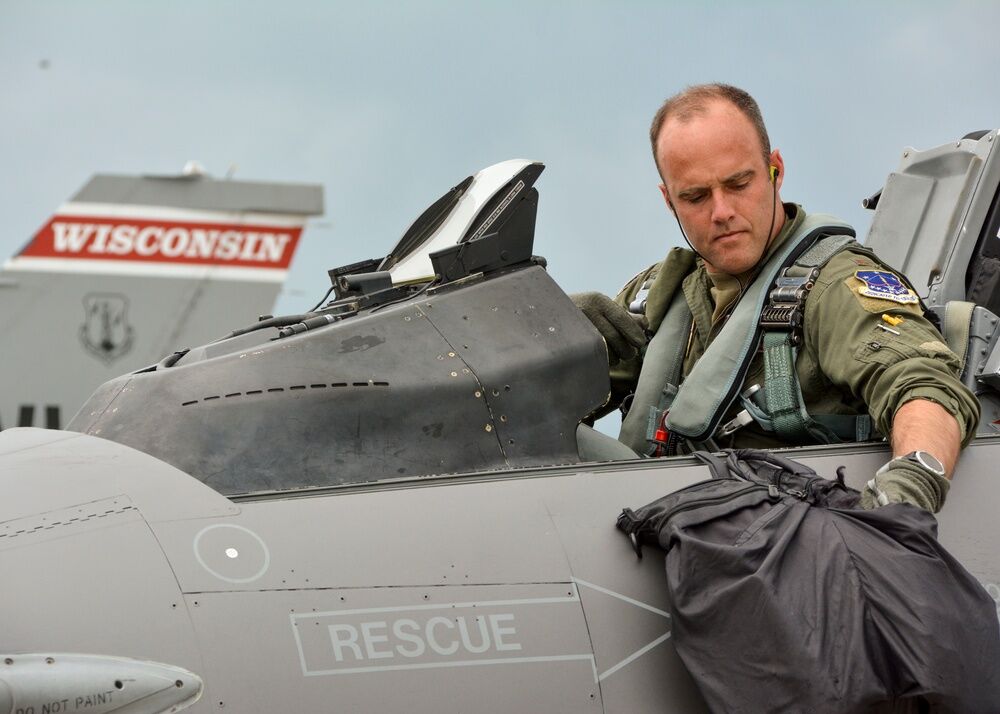
Truax Field Air National Guard Base
Truax Field Air National Guard Base is a military installation in Madison, Wisconsin, sharing grounds with the Dane County Regional Airport. The site was activated as an Army Air Base in June 1942 and was named in honor of Lieutenant Thomas L. Truax, a Wisconsin native killed in a training accident in 1941. The 176th Fighter Squadron was organized at the field in 1948, and the installation transitioned to Wisconsin Air National Guard control in 1968. Today the base is home to the 115th Fighter Wing, which has supported federal missions including Operations Noble Eagle, Enduring Freedom, and Iraqi Freedom, as well as state emergency and disaster response. As a longtime flying installation, the base maintained firefighting and training operations that are now central to ongoing environmental review.
Like many military airfields, Truax Field has been associated with concerns about potential exposure to a group of persistent chemicals. These concerns stem largely from decades of firefighting training and the materials used in those exercises, which have been linked to contamination found in groundwater, soil, and surface water around the base.
- PFAS (per- and polyfluoroalkyl substances) are a large family of synthetic chemicals valued for their resistance to heat, water, and oil and known for persisting in the environment. At Truax Field, PFAS entered groundwater and soil from past firefighting activities, with detections reported in groundwater at levels up to roughly 39,841 nanograms per liter. PFAS exposure has been associated in some studies with a range of potential health effects, though research into these associations is continuing.
- PFOS (perfluorooctane sulfonate) is one of the most studied PFAS compounds and was a common ingredient in older firefighting foams. It was among the substances detected in the contamination identified beneath and around the base. PFOS has been associated with concerns about potential effects on the immune system and other health outcomes, and it is the subject of ongoing study.
- PFOA (perfluorooctanoic acid) is another PFAS compound historically present in industrial products and firefighting materials. It has been identified among the fluorinated compounds associated with the site. PFOA has been the focus of health research examining possible links to certain conditions, and findings on these associations remain under review.
- AFFF (aqueous film forming foam) is a firefighting agent that contained PFAS compounds and was used at the base and nearby fire training areas for many years. Repeated use of AFFF during training and emergency response is regarded as the primary pathway through which PFAS reached the surrounding environment. Concerns about potential exposure to the chemicals in AFFF have prompted broader review of past firefighting practices at military sites.
Truax Field is not listed on the National Priorities List. In 2018 the Wisconsin Department of Natural Resources identified the 115th Fighter Wing, along with the City of Madison and Dane County, among the responsible parties for PFAS contamination in the area. The base is among the first National Guard sites to undergo a remedial investigation under the federal Comprehensive Environmental Response, Compensation, and Liability Act (CERCLA), with the first phase of that investigation completed in April 2022. Officials have indicated that determining the full nature and extent of contamination, and selecting cleanup approaches, is expected to take a number of years.
Veterans, current service members, and others who lived or worked at Truax Field and have questions about possible exposure are encouraged to stay informed as the investigation progresses and to discuss their individual health and any concerns with the U.S. Department of Veterans Affairs or a qualified medical provider. The VA offers information on environmental exposures and related benefits that may be helpful when weighing personal circumstances.
Were you stationed at a contaminated site?
The PACT Act of 2022 added more than 20 presumptive conditions for toxic exposure, including many cancers, and there is no deadline to file a VA claim.
This page is for informational purposes only and is not medical or legal advice. Consult a qualified professional about your health or benefits.
Discussion
No approved comments yet.