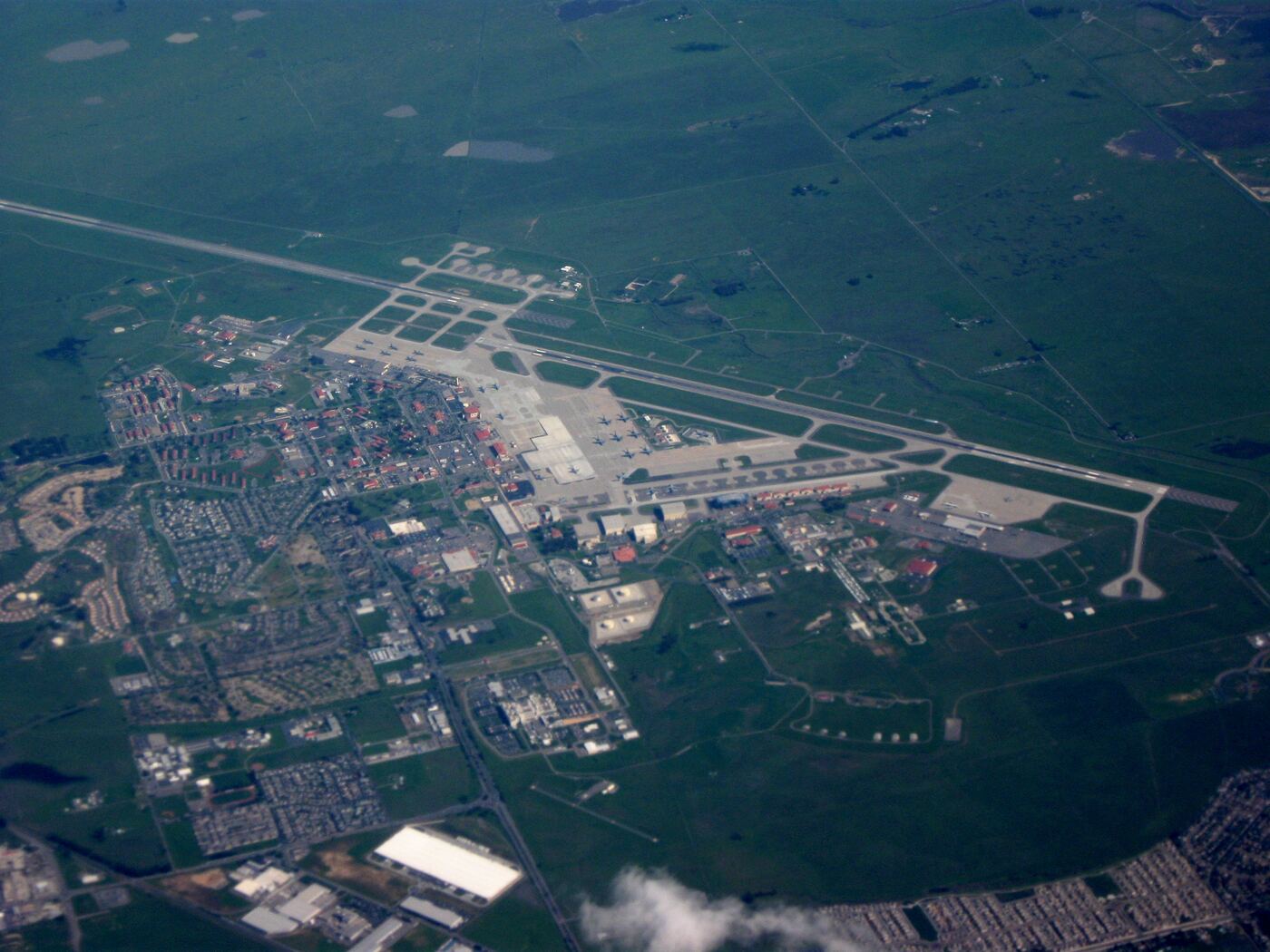
Travis Air Force Base
Travis Air Force Base is an active United States Air Force installation located near Fairfield, California, roughly midway between San Francisco and Sacramento. Construction began in 1942, and the base was activated in May 1943 as the Fairfield-Suisun Army Air Base, initially supporting bombers and fighters assigned to defend the West Coast during World War II. It was renamed in 1951 in honor of Brigadier General Robert F. Travis, who was killed in an aircraft accident at the installation in 1950. Today the base is home to the 60th Air Mobility Wing, the largest wing in Air Mobility Command, and serves as a major strategic airlift and aerial refueling hub operating C-5, C-17 and KC-46 aircraft.
There are concerns about potential carcinogenic health hazards at Travis Air Force Base, stemming from decades of industrial operations, waste disposal and firefighting training that released various environmental contaminants into groundwater, soil and nearby Union Creek:
- Trichloroethylene (TCE): TCE is a chlorinated solvent that was used in degreasing and aircraft maintenance operations at the base. Past disposal practices and solvent spills allowed TCE and other volatile organic compounds to migrate into groundwater at numerous sites across the installation, and TCE remains one of the primary chemicals of concern there. Exposure to TCE has been associated with kidney cancer and other serious health conditions.
- Benzene: A component of jet fuel and other petroleum products handled at the base, benzene has been detected in contaminated areas connected to fuel storage and spill sites. Benzene is a recognized human carcinogen, and long term exposure has been linked to leukemia and other blood disorders.
- PFAS, including PFOS and PFOA: PFAS contamination at Travis is largely attributed to AFFF, a firefighting foam used for decades in training exercises and emergency responses. The Air Force began investigating PFAS at the base in 2015, and groundwater sampling in 2018 reportedly found combined PFOA and PFOS concentrations as high as 712,000 parts per trillion, far above federal health advisory levels. PFAS exposure has been associated with kidney cancer, testicular cancer and other health effects, though research is still developing.
- Heavy metals: Landfills, a radioactive burial site and other waste disposal areas at the base contributed metals to soil and groundwater. Certain heavy metals are classified as known or probable human carcinogens, and concerns about potential exposure among those who lived and worked on base have been raised.
The EPA added Travis Air Force Base to the National Priorities List in November 1989, citing contaminated landfills, fire training areas, a radioactive burial site, solvent spill areas and roughly two dozen contaminated groundwater sites. Cleanup has been underway for decades; groundwater treatment systems have removed more than 15,000 pounds of volatile organic compounds since 1996, a final basewide groundwater remedy was put in place in 2014, and most soil cleanups are complete. After expanding off-base drinking water well sampling in 2020, the Air Force completed installation of treatment systems for affected households in early 2021, and monitoring of both conventional contaminants and PFAS continues.
It is important to note that establishing definitive links between service at a particular installation and specific illnesses is scientifically complex, and research into these exposures is ongoing. Veterans and family members who spent time at Travis Air Force Base may wish to stay informed about the cleanup, document their service history, and speak with the VA or a qualified healthcare provider about any health concerns and potential benefits.
Were you stationed at a contaminated site?
The PACT Act of 2022 added more than 20 presumptive conditions for toxic exposure, including many cancers, and there is no deadline to file a VA claim.
This page is for informational purposes only and is not medical or legal advice. Consult a qualified professional about your health or benefits.
Discussion
No approved comments yet.