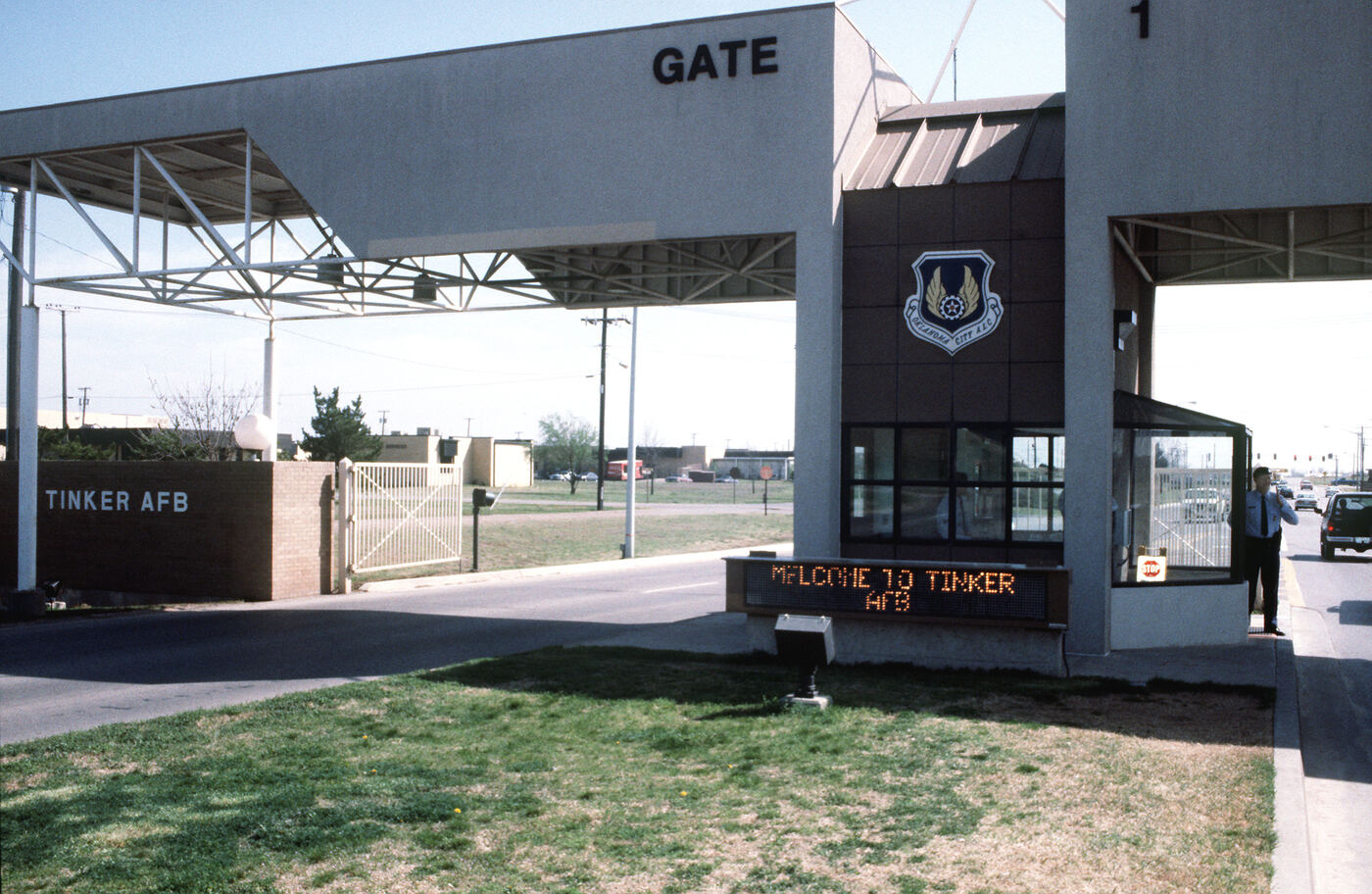
Tinker Air Force Base
Tinker Air Force Base is an active United States Air Force installation located in Oklahoma City, Oklahoma, southeast of the downtown area. Activated by the War Department in March 1942 as an aircraft maintenance depot, it was named for Major General Clarence L. Tinker, an Oklahoma native lost in action in the Pacific that same year. Today the base is home to the Oklahoma City Air Logistics Complex, the largest air logistics complex in Air Force Materiel Command, which performs depot-level maintenance on aircraft, jet engines and related weapon systems. Over more than eight decades of operation, tens of thousands of military members and civilian employees have worked at the installation, much of it in heavily industrialized maintenance areas such as Building 3001.
There are concerns about potential carcinogenic health hazards at Tinker Air Force Base, due to documented exposure to several environmental contaminants connected with its aircraft and engine overhaul operations:
- Trichloroethylene (TCE): TCE is a chlorinated solvent that was used in large quantities at Tinker to degrease aircraft parts and engine components, particularly in and around Building 3001. TCE was found in groundwater beneath the base and in base potable water supply wells, and exposure to it has been associated with elevated risks of kidney cancer and other illnesses. Vapor intrusion, in which solvent vapors migrate from contaminated groundwater into buildings, is among the documented exposure pathways of concern.
- Tetrachloroethylene (PCE): PCE, another chlorinated degreasing solvent used in maintenance operations, was also detected in groundwater and soil at the site. PCE exposure may potentially be linked to certain cancers and neurological effects, and it remains a contaminant of concern in ongoing monitoring.
- Benzene and petroleum compounds: Benzene, along with toluene and xylenes, was associated with fuels and petroleum products handled at the base, including releases from underground storage tanks. Benzene is a known human carcinogen, and exposure has been associated with leukemia and other blood disorders.
- Heavy metals: Plating and industrial processes contributed metals including hexavalent chromium, lead, cadmium, nickel and barium to soil, sediment and groundwater. Hexavalent chromium in particular has been associated with increased cancer risk, while lead exposure raises concerns about neurological and other health effects.
- Industrial solvents and related VOCs: Beyond TCE and PCE, the site's history of solvent use left other volatile organic compounds, such as dichloroethene, in groundwater and soil gas. Long-term exposure to these compounds has been associated with a range of potential health concerns.
The Soldier Creek/Building 3001 area of Tinker Air Force Base was added to the EPA National Priorities List in 1987 after contamination was confirmed in groundwater, soil, sediment and surface water, including four base potable water supply wells. The site sits within the recharge zone of the Garber-Wellington Aquifer, and Soldier Creek flows from the base into neighboring communities. A 1990 Record of Decision required removal of underground storage tanks and contaminated soil, extraction and treatment of contaminated groundwater, soil vapor extraction and abandonment of two affected water supply wells. Cleanup and monitoring continue under the oversight of the EPA, the Air Force and the Oklahoma Department of Environmental Quality, with periodic five-year reviews evaluating whether the remedies remain protective.
Establishing definitive links between service at Tinker Air Force Base and specific illnesses is complex, and research into these exposures is ongoing. Veterans and civilian workers who spent time at the base may wish to stay informed about the cleanup, document their service history, and speak with the VA or a qualified healthcare provider about any health concerns and potential benefits.
Were you stationed at a contaminated site?
The PACT Act of 2022 added more than 20 presumptive conditions for toxic exposure, including many cancers, and there is no deadline to file a VA claim.
This page is for informational purposes only and is not medical or legal advice. Consult a qualified professional about your health or benefits.
Discussion
No approved comments yet.