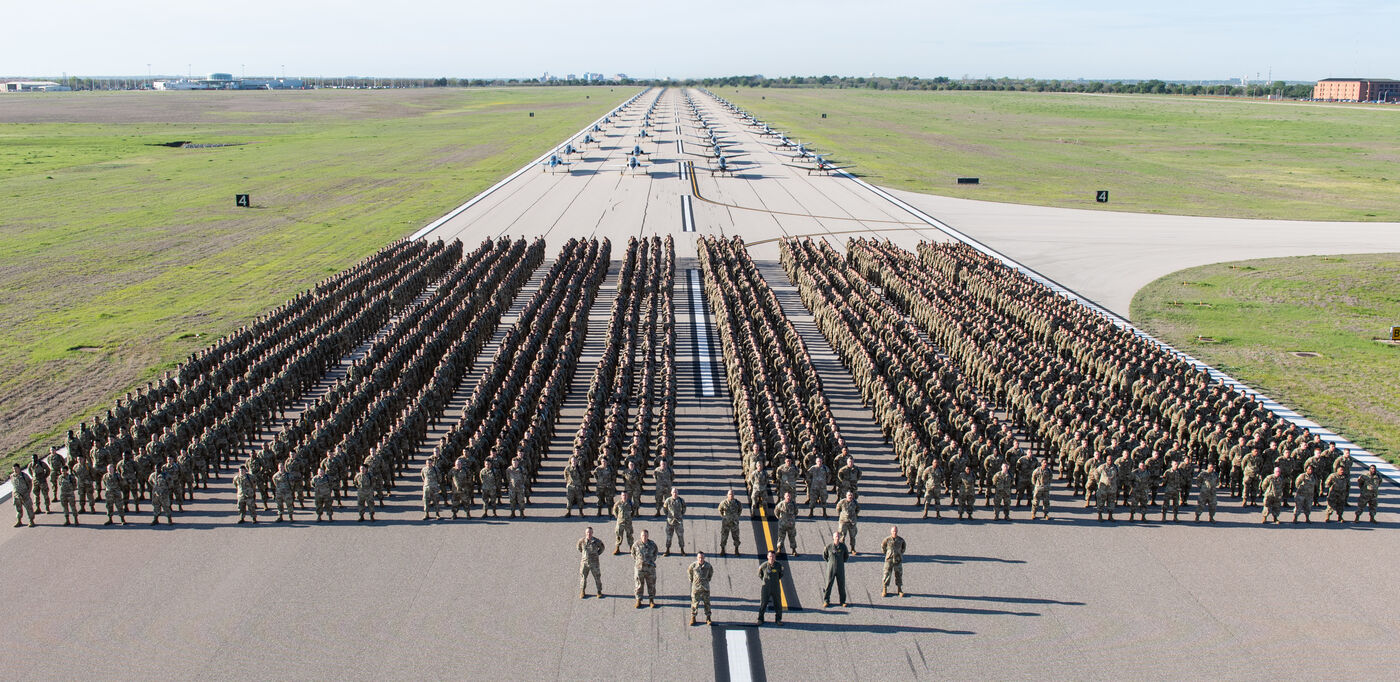
Sheppard Air Force Base
Sheppard Air Force Base is an active United States Air Force training installation located about five miles north of Wichita Falls in Wichita County, Texas. Construction began in 1941, and the facility was named Sheppard Field in honor of Texas senator John Morris Sheppard. After serving as an Army Air Corps training center during World War II and a brief period of deactivation, the base was reactivated in 1948 under the Department of the Air Force. Today it operates under Air Education and Training Command and is one of the largest and most diversified training bases in the Air Force. It is home to the 82nd Training Wing and the 80th Flying Training Wing, which conducts the Euro-NATO Joint Jet Pilot Training program.
As with many long-operating military airfields, Sheppard Air Force Base has been the subject of concerns about potential exposure to certain environmental contaminants. Much of the attention has centered on a group of synthetic chemicals associated with firefighting foam that was used in training and emergency response activities over many years.
- PFAS: PFAS (per- and polyfluoroalkyl substances) are a large family of manufactured chemicals valued for their resistance to heat, water, and grease. An analysis by the Environmental Working Group of Department of Defense drinking-water testing reported detectable levels of PFAS in multiple wells associated with the base, attributed to past use of firefighting foam. These compounds are persistent in the environment, and research has associated certain PFAS with a range of potential health concerns.
- PFOS: PFOS (perfluorooctane sulfonate) is one of the most studied individual PFAS compounds and was a common ingredient in older firefighting foam formulations used at airfields such as Sheppard. PFOS has been associated in some studies with effects on the immune system and other health concerns, which has contributed to its phaseout in many products.
- PFOA: PFOA (perfluorooctanoic acid) is another individual PFAS compound that has been detected in connection with firefighting foam residues at military sites. It breaks down very slowly and has been the subject of ongoing study regarding potential long-term health effects.
- AFFF: AFFF (aqueous film-forming foam) is the firefighting foam widely used by the military to suppress fuel fires. Its use in training exercises and emergency response at Sheppard Air Force Base is the suspected source of the PFAS, PFOS, and PFOA reported in groundwater, because the foam contained these compounds.
Sheppard Air Force Base is not listed on the National Priorities List as a federal Superfund site. The contamination concerns are being addressed through the Air Force PFAS investigation process, which involves identifying potential release areas, sampling drinking water and groundwater, and evaluating whether further action is warranted. This work is coordinated with state and federal environmental oversight, and the scope of testing and any response measures may evolve as additional data become available.
Veterans, families, and others who lived or worked at Sheppard Air Force Base may wish to stay informed about the base environmental investigation and any updated testing results. Anyone with questions about possible exposure and related health care or benefits is encouraged to speak with the U.S. Department of Veterans Affairs, which can provide guidance based on individual circumstances.
Were you stationed at a contaminated site?
The PACT Act of 2022 added more than 20 presumptive conditions for toxic exposure, including many cancers, and there is no deadline to file a VA claim.
This page is for informational purposes only and is not medical or legal advice. Consult a qualified professional about your health or benefits.
Discussion
No approved comments yet.