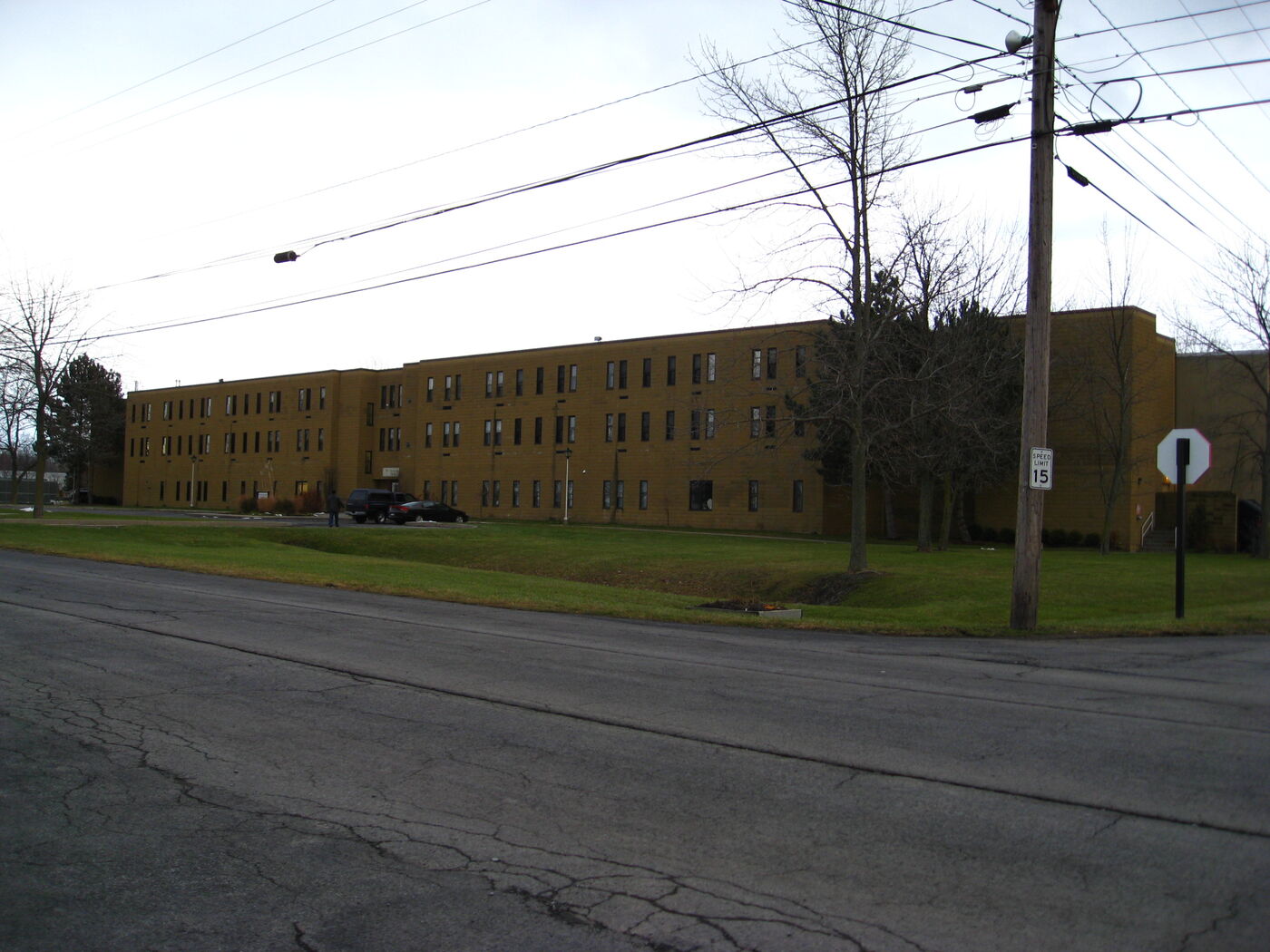
Seneca Army Depot
Seneca Army Depot was a United States Army munitions storage and demilitarization installation located in Romulus, Seneca County, in the Finger Lakes region of central New York. The Army established the depot in 1941, and during World War II it served as an ammunition supply facility before its mission shifted to the storage, maintenance, and disposal of military munitions. The Army operated the roughly 10,500 acre site until about 2000, after which much of the property was transferred for civilian reuse. For about four decades, demilitarization of obsolete ordnance was carried out at on site Open Burning Grounds, where fuses, projectiles, propellants, and explosives were burned directly on the ground surface. The Environmental Protection Agency added the depot to the National Priorities List in August 1990.
Because of these long running disposal and burning practices, environmental investigations identified a range of contaminants in soil, sediment, and groundwater at the depot. The concerns below reflect substances documented by the EPA, the Army, and the New York State Department of Environmental Conservation, along with the hedged health considerations that have been associated with each.
- Heavy metals. Decades of open burning of munitions left lead and other heavy metals in soil at the Open Burning Grounds and in the sediments of nearby Reeder Creek, with reported lead concentrations in some soils far above background levels. Lead and similar metals have been associated with concerns about potential effects on the nervous system, kidneys, and developmental health, particularly with prolonged exposure.
- Explosives and RDX. The burning and handling of projectiles and propellants introduced explosive residues, including compounds such as TNT and RDX, into surface soils and groundwater at the Open Burning Grounds. RDX and related explosive compounds have been studied for concerns about potential effects on the nervous system and other organs, and some have been examined for possible carcinogenicity.
- Solvents and trichloroethylene. Industrial solvents, including TCE (trichloroethylene), were used in maintenance and degreasing activities and have been detected in groundwater at the site, along with breakdown products such as vinyl chloride. TCE has been associated with concerns about potential effects on the immune system, liver, and certain cancers, and exposure pathways at contaminated sites are a recognized concern.
Cleanup at Seneca Army Depot has proceeded under the Superfund program through a Federal Facilities Agreement among the Army, the EPA, and the New York State Department of Environmental Conservation following the August 1990 NPL listing. Remedial actions have included thermal treatment and excavation of contaminated soils, and after cleanup goals were met on parts of the property the EPA approved a partial deletion of portions of the site from the National Priorities List in 2008. Work on remaining areas, including additional soil remediation and long term groundwater monitoring, has continued, and investigations into other substances at the site remain ongoing.
Veterans who served at Seneca Army Depot may wish to stay informed about the documented contamination and the continuing cleanup actions there. Anyone with questions about possible exposure or related health concerns is encouraged to speak with the Department of Veterans Affairs and a personal health care provider, who can offer guidance based on individual service history and current circumstances.
Were you stationed at a contaminated site?
The PACT Act of 2022 added more than 20 presumptive conditions for toxic exposure, including many cancers, and there is no deadline to file a VA claim.
This page is for informational purposes only and is not medical or legal advice. Consult a qualified professional about your health or benefits.
Discussion
No approved comments yet.