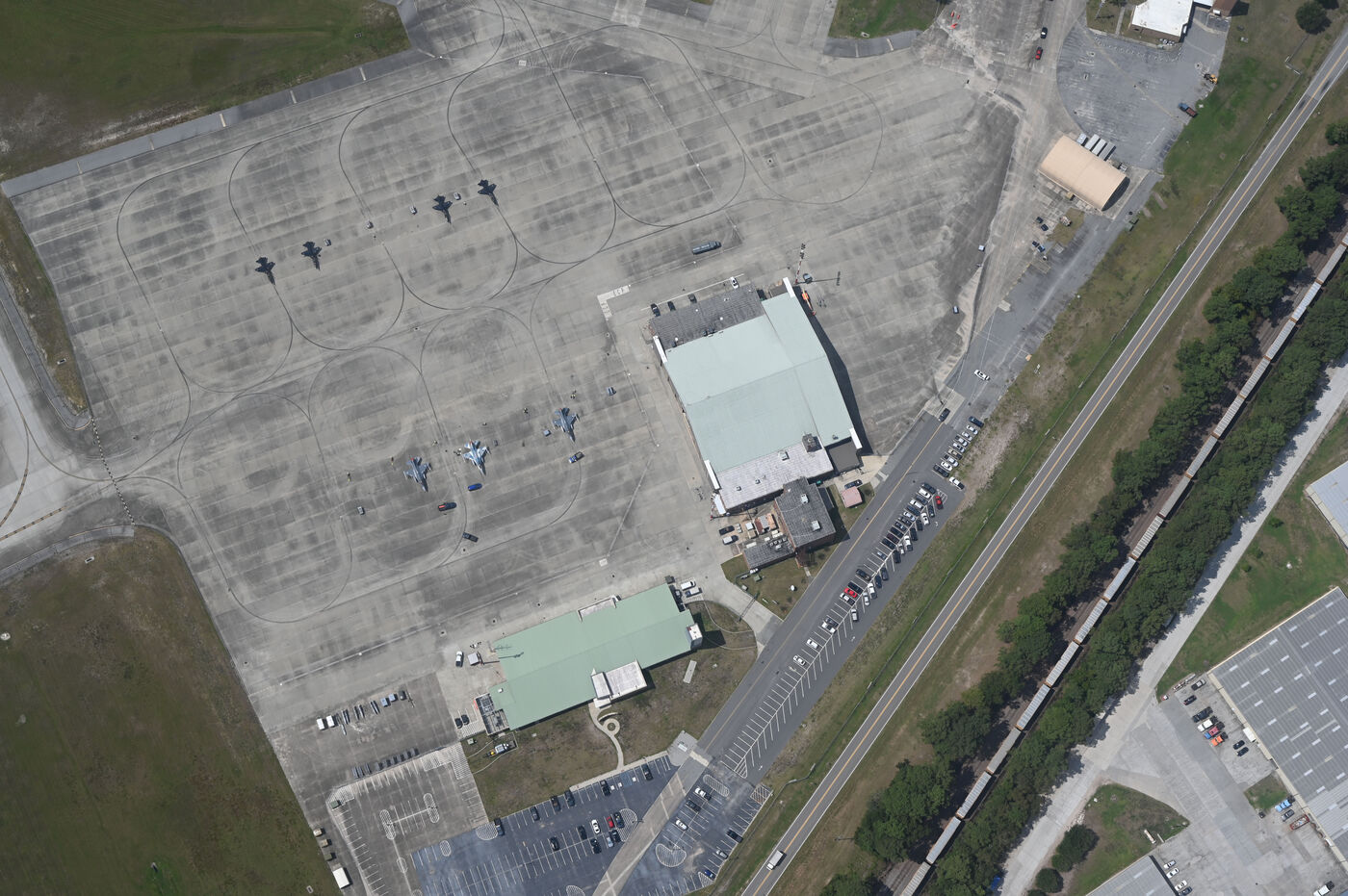
Savannah Air National Guard Base
Savannah Air National Guard Base is a Georgia Air National Guard installation located in Garden City, Georgia, co-located with the civilian Savannah/Hilton Head International Airport (formerly Travis Field). It is home to the 165th Airlift Wing, whose lineage traces to the 158th unit federally recognized in 1946 and the 165th group established in 1958. The wing took its current designation as the 165th Airlift Wing in 1995. Its mission is the worldwide airlift of personnel, equipment, and supplies, and it operated the C-130H Hercules from 1981 before transitioning to the newer C-130J model beginning in 2024. The base has supported domestic, humanitarian, and overseas operations over many decades of service.
Like many long-operating military airfields, the base has been the subject of environmental concerns related to past industrial and firefighting activities. It has been identified in reporting as one of four Georgia military installations confirmed with contamination tied to the historical use of firefighting foam. The concerns center primarily on a group of persistent chemicals that have drawn attention from federal and state authorities.
- PFAS: PFAS (per- and polyfluoroalkyl substances) are a large family of synthetic chemicals valued for their resistance to heat, water, and oil. At Savannah Air National Guard Base, PFAS contamination has been associated with the use of firefighting foams during training and emergency response. Exposure to PFAS has been associated in some studies with effects on the immune system, thyroid, and certain cancers, though research into these associations is ongoing.
- PFOS: PFOS (perfluorooctane sulfonate) is one of the most studied PFAS compounds and was a primary ingredient in older firefighting foam formulations. Its persistence in soil and groundwater is a key reason it has been monitored at the installation. PFOS has been associated with concerns about potential effects on cholesterol levels, liver function, and immune response.
- PFOA: PFOA (perfluorooctanoic acid) is another PFAS compound historically present in foam products and various industrial materials. Because it does not readily break down, PFOA can remain in the environment for long periods. It has been associated in some research with concerns about kidney and testicular cancers and other health effects, though findings continue to be evaluated.
- AFFF: AFFF (aqueous film-forming foam) is the firefighting foam used at many military airfields to suppress fuel fires. Its application during fire training and emergency response is regarded as the main pathway by which PFAS compounds, including PFOS and PFOA, entered soil and groundwater at the base. Concerns about potential exposure relate chiefly to the PFAS chemicals these foams contained.
The base is not listed on the National Priorities List (Superfund). Investigation and any necessary cleanup of PFAS contamination are being addressed through the Department of Defense environmental restoration framework under federal law, including the process governed by CERCLA. Senate inquiries have pressed the Department of Defense to remediate contamination and assess potential health impacts on the surrounding community. Assessment at the installation has been described as ongoing.
Veterans, Guard members, and families who served or lived at or near Savannah Air National Guard Base may wish to stay informed as environmental investigations continue. Those with questions about possible exposure are encouraged to keep records of their service and to consult the U.S. Department of Veterans Affairs regarding health resources and any benefits for which they may be eligible.
Were you stationed at a contaminated site?
The PACT Act of 2022 added more than 20 presumptive conditions for toxic exposure, including many cancers, and there is no deadline to file a VA claim.
This page is for informational purposes only and is not medical or legal advice. Consult a qualified professional about your health or benefits.
Discussion
No approved comments yet.