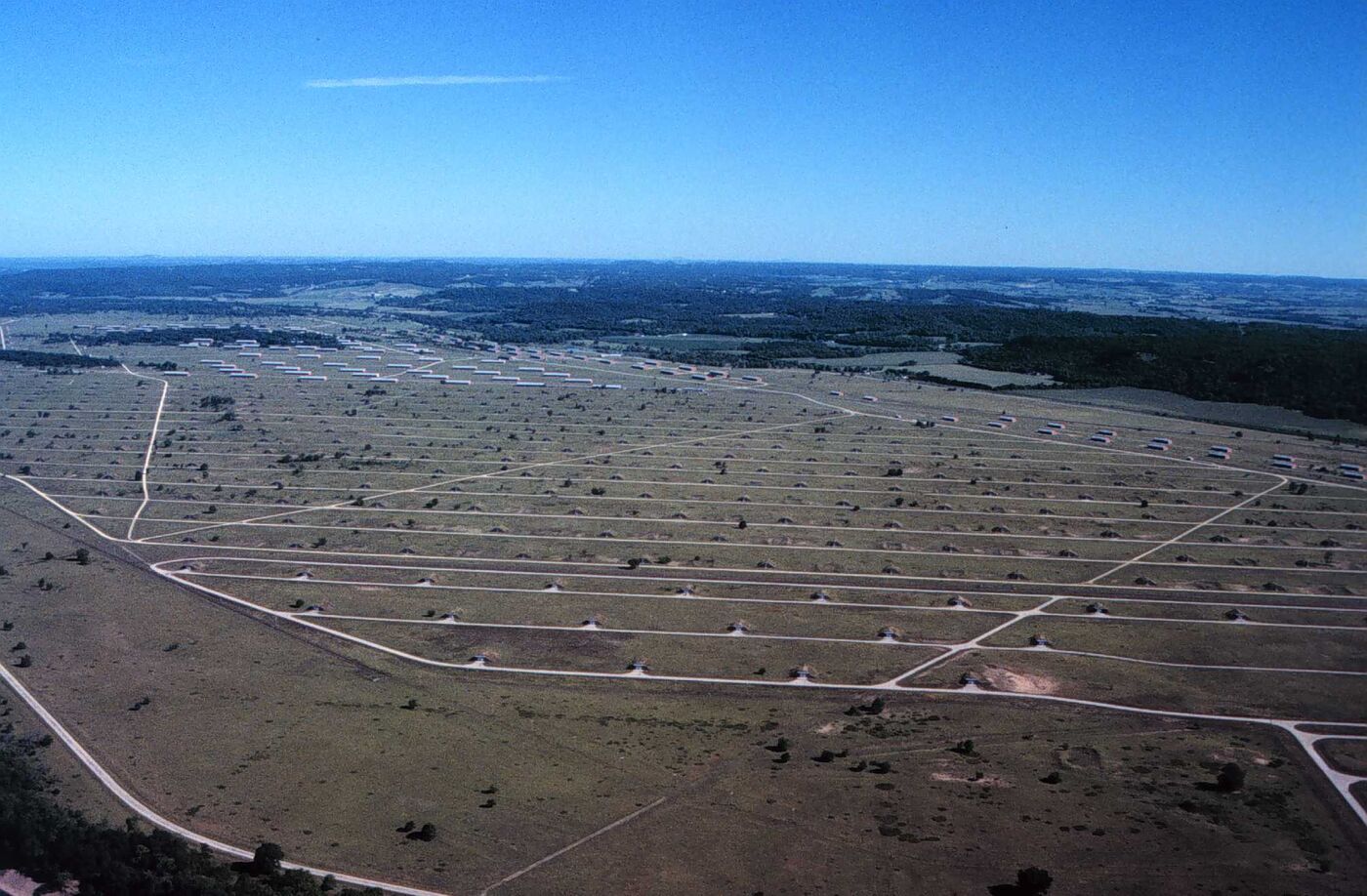
Savanna Army Depot Activity
Savanna Army Depot Activity was a former United States Army installation of roughly 13,000 acres on the eastern bank of the Mississippi River, spanning Carroll and Jo Daviess counties in northwestern Illinois, about seven miles north of the town of Savanna. The Army acquired the property in 1917 to operate a proof and test facility for artillery guns and ammunition, and the site transitioned to a depot role in 1921. Over the following decades it expanded to include the storage, processing, and demilitarization of munitions and the handling of various industrial chemicals. The installation was selected for closure under the Base Realignment and Closure (BRAC) process in 1995 and ceased operations in March 2000. Its long history of explosives and ordnance work left contamination across soil, groundwater, surface water, and sediment at numerous areas of the property.
Because of the materials handled there over many years, several contaminants of concern have been documented at the site, and federal and state agencies have studied potential exposure pathways for workers, residents, and the surrounding environment.
- Explosives (TNT and RDX). Trinitrotoluene (TNT) and RDX are compounds used in military munitions. At Savanna, munitions processing and the washing out of shells routed explosives residue into unlined lagoons, and TNT and RDX have been detected in soil and groundwater at the former washout lagoons and related sites. Exposure to certain explosives compounds has been associated in some studies with effects on the liver, blood, and other systems, which is why these residues have been a focus of cleanup.
- Heavy metals and lead. Metals such as lead, arsenic, cadmium, chromium, mercury, and others were used in or generated by ordnance operations, lead based paint, and waste disposal at the depot. These metals have been documented in soil and sediment at several sites, including former landfills. Long term exposure to lead and other heavy metals has been associated with a range of health concerns, raising questions about potential exposure on and near the installation.
- Polychlorinated biphenyls. PCBs were once common in electrical equipment, hydraulic systems, and other industrial applications. At Savanna, Aroclor PCB compounds have been identified in soil and sediment at several areas of the depot. PCBs persist in the environment, and concerns about potential exposure to them have contributed to the site's remediation priorities.
The Environmental Protection Agency added Savanna Army Depot Activity to the National Priorities List in 1989, designating it a Superfund site. The Army leads cleanup under a federal facility agreement with EPA and Illinois EPA oversight, and remedies have included landfill capping, leachate and gas treatment, incineration of explosives contaminated soil and sediment, water supply extensions, and institutional controls. A five year review completed in June 2020 concluded that response actions remained consistent with the selected remedies and protective of human health and the environment, and a subsequent review was underway in following years.
Veterans, civilian employees, and family members who spent time at Savanna Army Depot Activity may wish to stay informed as cleanup and monitoring continue. Anyone with questions about possible exposure and related health concerns is encouraged to speak with the U.S. Department of Veterans Affairs and a personal health care provider, who can offer guidance based on individual service history and circumstances.
Were you stationed at a contaminated site?
The PACT Act of 2022 added more than 20 presumptive conditions for toxic exposure, including many cancers, and there is no deadline to file a VA claim.
This page is for informational purposes only and is not medical or legal advice. Consult a qualified professional about your health or benefits.
Discussion
No approved comments yet.