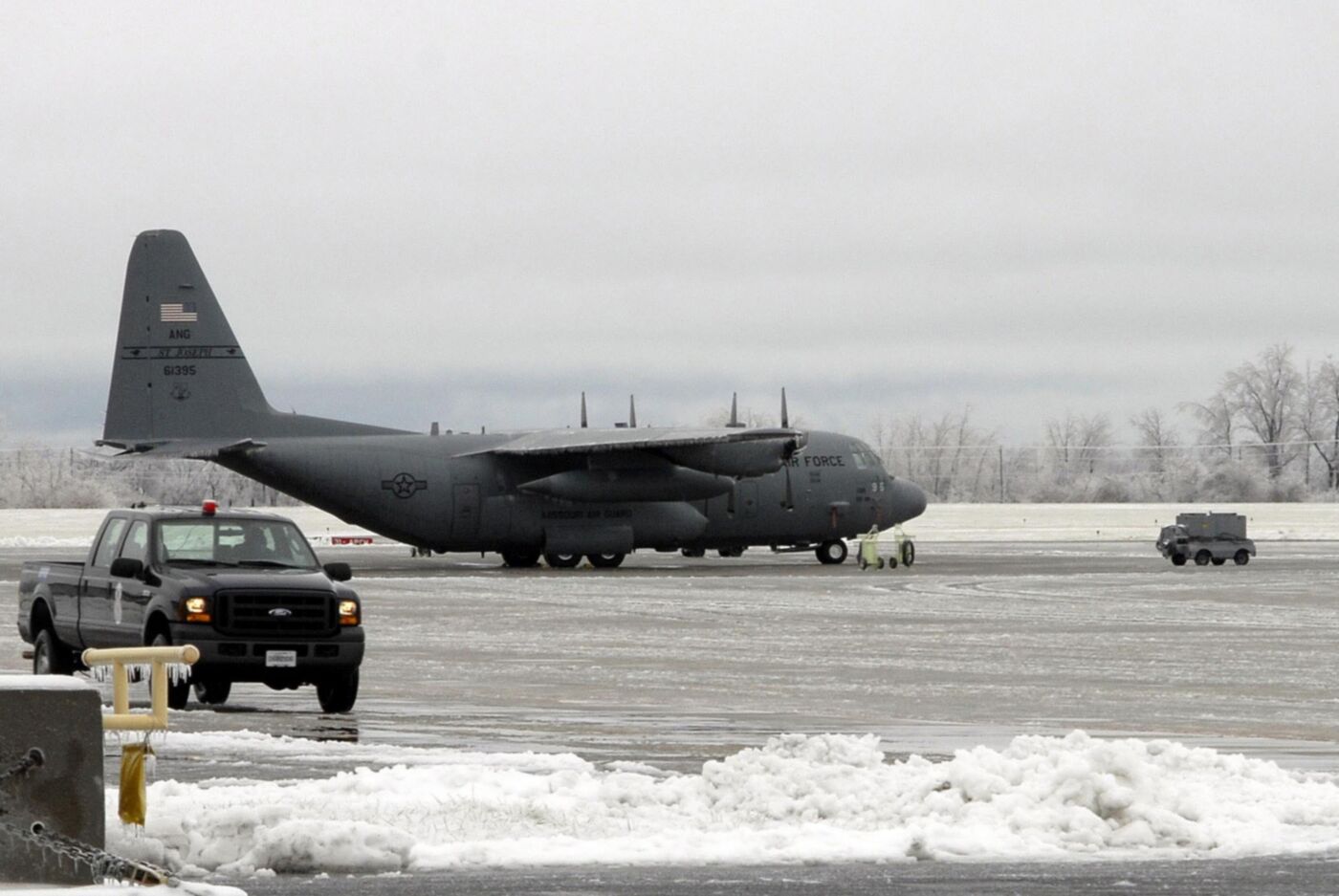
Rosecrans Air National Guard Base
Rosecrans Air National Guard Base is a Missouri Air National Guard installation located at Rosecrans Memorial Airport in St. Joseph, Missouri, occupying roughly 302 acres on an oxbow island near the Missouri River. The airfield dates to the World War II era, when the Army Air Forces established Rosecrans Field and the Ferrying Division of the Air Transport Command took over operations in July 1942. The base is named in honor of Guy Wallace Rosecrans, an Army Air Service airman killed during World War I. Today it is home to the 139th Airlift Wing, which flies the C-130H Hercules and provides tactical airlift for state and federal missions. The base also hosts the Advanced Airlift Tactics Training Center, which works to improve the effectiveness and survivability of mobility forces.
As with many long active military airfields, decades of aircraft operations, fueling, maintenance, and fire training have been associated with environmental contamination at the installation. State records maintained by the Missouri Department of Natural Resources identify several areas of soil and groundwater contamination requiring further characterization and possible cleanup. The contaminants documented below reflect those records and concerns about potential exposure.
- Jet fuel and petroleum: Aircraft fuels are among the main contaminants of concern identified at the base, and an underground storage tank site has one or more tanks known to have leaked fuel. Petroleum constituents such as benzene and other hydrocarbons have been associated with a range of potential health concerns, which is part of why fuel releases are tracked and remediated.
- Chlorinated solvents and related chemicals: State records list chlorinated solvents, paint strippers, waste oils, and various organic chemicals among the contaminants of concern, reflecting historic degreasing and maintenance activity. Chlorinated solvents such as TCE can persist in groundwater and have been associated with concerns about potential long term exposure.
- Toluene and polynuclear aromatic hydrocarbons: Toluene and polynuclear aromatic hydrocarbons (PAHs) are documented at the site. These compounds are commonly linked to fuels, solvents, and combustion residues, and exposure to certain PAHs has been associated with health concerns in environmental studies.
- Heavy metals: Arsenic and cadmium are identified among the contaminants of concern in state records for the base. Both metals can occur in soil and groundwater near industrial and aviation operations, and long term exposure to elevated levels has been associated with various health concerns.
- PFAS and AFFF: Per and polyfluoroalkyl substances, known as PFAS, have been raised as a concern at the base in connection with the historic use of AFFF firefighting foam. AFFF was widely used by the military to suppress fuel fires, and these compounds, including PFOS and PFOA, can migrate into groundwater. They have been associated with concerns about potential health effects, and the Environmental Protection Agency set drinking water standards for several PFAS in 2024.
Rosecrans is not listed on the National Priorities List as a Superfund site. Investigation and oversight are instead coordinated through the Missouri Department of Natural Resources Federal Facilities Section, which includes the base among sites in the investigation phase, with leaking underground storage tanks addressed under the state storage tank cleanup program. Characterization and potential cleanup actions for the affected soil and groundwater areas remain ongoing.
Veterans, civilian personnel, and family members who served or worked at Rosecrans Air National Guard Base may wish to stay informed as investigation and cleanup work continues. Anyone with questions about possible exposure or related health concerns is encouraged to speak with their health care provider and to contact the U.S. Department of Veterans Affairs about available screening, benefits, and guidance.
Were you stationed at a contaminated site?
The PACT Act of 2022 added more than 20 presumptive conditions for toxic exposure, including many cancers, and there is no deadline to file a VA claim.
This page is for informational purposes only and is not medical or legal advice. Consult a qualified professional about your health or benefits.
Discussion
No approved comments yet.