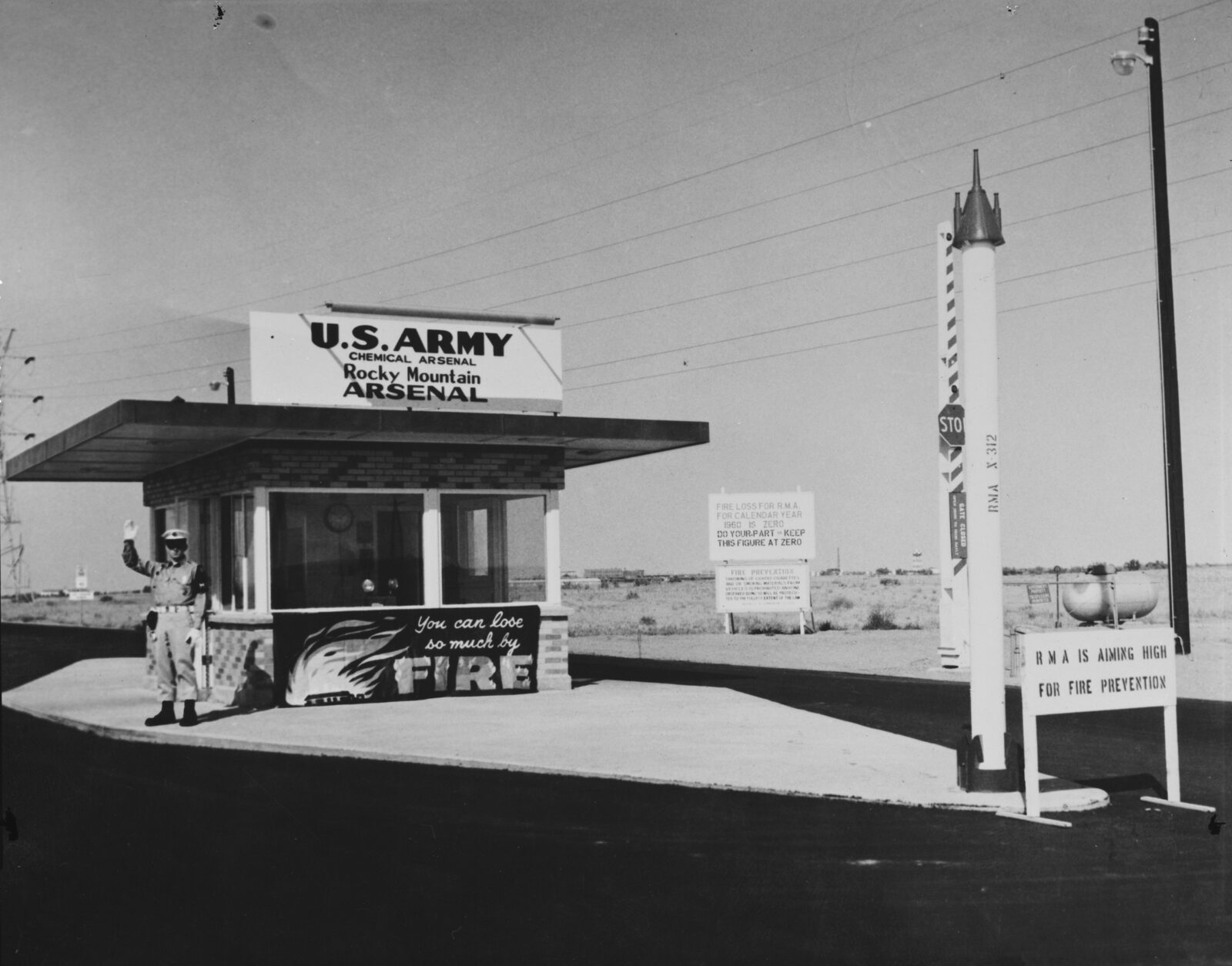
Rocky Mountain Arsenal
Rocky Mountain Arsenal is a former U.S. Army chemical manufacturing facility in Adams County, Colorado, located about ten miles northeast of downtown Denver. Established in 1942, the installation originally covered more than 17,000 acres (nearly 27 square miles) and produced incendiary munitions and chemical warfare agents, including mustard gas, during World War II. In the 1950s the Army built the North Plants complex to manufacture the nerve agent sarin (GB), and chemical weapons production continued until 1969. After the war, portions of the facility were leased to private companies, beginning with Julius Hyman and Company in 1946 and later Shell Chemical Company, which manufactured organochlorine pesticides on site until 1982.
There are concerns about potential carcinogenic health hazards at Rocky Mountain Arsenal due to decades of military and industrial activity that contaminated soil and groundwater with a wide range of environmental contaminants:
- Chlorinated solvents: Halogenated volatile organic compounds, including TCE (trichloroethylene) and tetrachloroethylene, were detected in soil and groundwater in the Motor Pool area, where chlorinated solvents were used for equipment cleaning. A groundwater extraction system was built to remove TCE in that area. Exposure to TCE has been associated with kidney cancer and other health conditions, and there are concerns about potential exposure for those who served or worked at the arsenal.
- Heavy metals: Decades of chemical and munitions manufacturing left soils and groundwater contaminated with heavy metals, including arsenic. Long-term exposure to certain heavy metals may potentially be linked to an elevated risk of cancer and other chronic illnesses.
- Organochlorine pesticides: Lessees including Shell Chemical Company manufactured pesticides such as aldrin, dieldrin, and endrin at the site until 1982. These persistent compounds contaminated soil and groundwater, and some have been classified as probable human carcinogens, raising concerns about possible health effects from past exposure.
- Chemical warfare agent byproducts: Diisopropylmethylphosphonate (DIMP), a byproduct of sarin manufacturing and detoxification, entered groundwater after wastes were disposed of in unlined surface basins during the 1950s. There are concerns about potential health effects from exposure to DIMP and related breakdown products.
Rocky Mountain Arsenal was placed on the EPA National Priorities List in 1987 and has been described as one of the most contaminated sites in the country, with more than 600 chemicals identified. The cleanup, carried out under a Federal Facility Agreement, removed contaminated soil to a depth of ten feet across much of the affected area and contained it in two on-site hazardous waste landfills beneath engineered covers. The soil cleanup was completed in 2010, and nearly 16,000 acres have since been deleted from the NPL. Most of the former arsenal is now the Rocky Mountain Arsenal National Wildlife Refuge, designated by Congress in 1992, while groundwater monitoring and treatment continue at the site.
It is important to note that while there are concerns about potential exposure to hazardous substances at Rocky Mountain Arsenal, establishing definitive links between service at a particular installation and specific health conditions can be complex. Ongoing research and environmental monitoring continue to shape what is known about these exposures. Veterans who served at the arsenal are encouraged to stay informed about site updates, document their service history, and consult the VA regarding health concerns and any benefits that may apply.
Were you stationed at a contaminated site?
The PACT Act of 2022 added more than 20 presumptive conditions for toxic exposure, including many cancers, and there is no deadline to file a VA claim.
This page is for informational purposes only and is not medical or legal advice. Consult a qualified professional about your health or benefits.
Discussion
No approved comments yet.