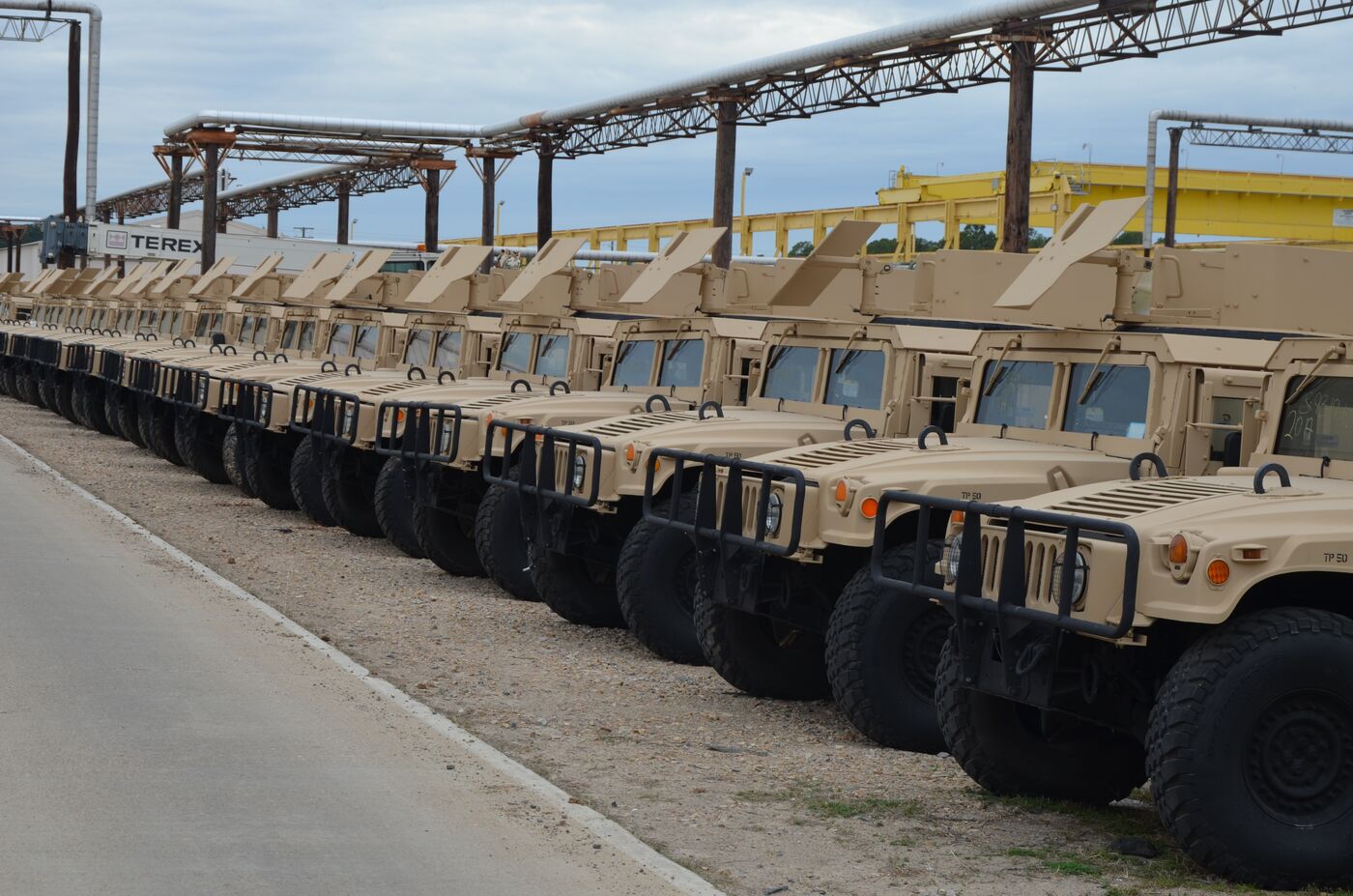
Red River Army Depot
Red River Army Depot (RRAD) is a U.S. Army maintenance and ammunition-storage installation located about 18 miles west of Texarkana in Bowie County, Texas. The depot was activated in 1941 to serve as an ammunition storage facility, and over the following decades it expanded into one of the Army's principal centers for depot-level maintenance. Today the installation spans roughly 15,000 acres and focuses on the repair and remanufacture of tactical wheeled vehicles, including HMMWVs, MRAP vehicles, and Bradley Fighting Vehicle components. Its long history of heavy industrial work, ammunition handling, vehicle maintenance, and firefighting operations has shaped the environmental questions associated with the site.
As with many older defense installations, decades of maintenance, degreasing, and storage activities at RRAD have been associated with the release of industrial chemicals into soil and groundwater. State and federal records document concerns about potential exposure to several categories of contaminants, and investigations into these substances are ongoing.
- Trichloroethylene (TCE): TCE is a chlorinated solvent that was widely used for degreasing metal parts and equipment, a common practice at vehicle and ammunition maintenance depots such as RRAD. TCE has been associated with concerns about potential effects on the liver, kidneys, immune system, and developing fetus, and it can persist in groundwater for long periods.
- Per- and polyfluoroalkyl substances (PFAS): PFAS are a large family of synthetic chemicals that resist heat, water, and oil. At RRAD, PFAS releases are under investigation in connection with the historical use of AFFF firefighting foam during fire training and emergency response. PFAS compounds break down very slowly in the environment and have been associated with concerns about potential effects on cholesterol levels, the immune system, and certain cancers.
- Solvents and other volatile organic compounds: Beyond TCE, a range of industrial solvents was used in cleaning, painting, and maintenance operations. These compounds can migrate through soil and into groundwater, and they have been associated with concerns about potential exposure for workers and nearby communities where releases occurred.
- Heavy metals: Maintenance, plating, painting, and ammunition-related activities can introduce metals such as lead and chromium into soil and water. Heavy metals do not degrade and have been associated with concerns about potential health effects depending on the type of metal and the level and duration of exposure.
Red River Army Depot is not listed on the National Priorities List, the federal Superfund roster. Instead, cleanup at the installation has been deferred to corrective action under the Resource Conservation and Recovery Act (RCRA) Subtitle C program. The Texas Commission on Environmental Quality (TCEQ) helps oversee environmental restoration at the depot through the Defense and State Memorandum of Agreement program, reviewing cleanup documents and providing regulatory support, and state records have described restoration efforts at the installation as on schedule. PFAS investigations are being handled as a distinct, evolving line of inquiry alongside the established solvent and metals cleanup work.
Veterans, civilian employees, and family members who lived or worked at Red River Army Depot may wish to stay informed as monitoring and investigation continue, since the understanding of these contaminants can change over time. Anyone with questions about possible exposure and related health care or benefits is encouraged to contact the U.S. Department of Veterans Affairs (VA) and to discuss individual concerns with a qualified health care provider.
Were you stationed at a contaminated site?
The PACT Act of 2022 added more than 20 presumptive conditions for toxic exposure, including many cancers, and there is no deadline to file a VA claim.
This page is for informational purposes only and is not medical or legal advice. Consult a qualified professional about your health or benefits.
Discussion
No approved comments yet.