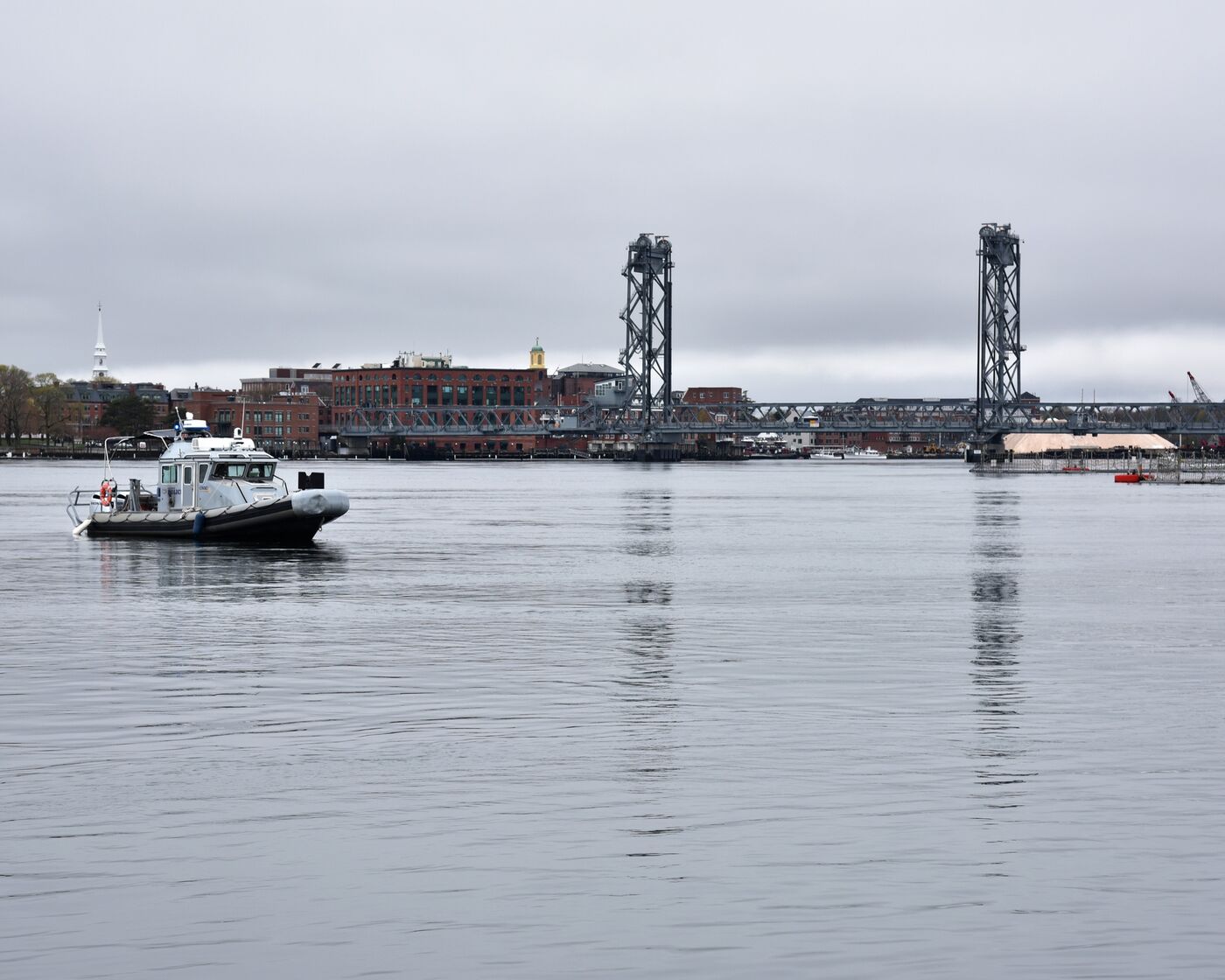
Portsmouth Naval Shipyard
Portsmouth Naval Shipyard is a United States Navy installation on Seavey Island in Kittery, Maine, in York County, at the mouth of the Piscataqua River across from Portsmouth, New Hampshire. Established on June 12, 1800, it is among the oldest continuously operating shipyards in the Navy and was originally developed to build wooden vessels for the fleet. During World War I the shipyard took on the construction of submarines, and it built submarines for the Navy through 1969, launching more than seventy boats during World War II. Today the roughly 278 acre facility focuses on the overhaul, repair, and modernization of the Navy's nuclear powered submarine fleet. More than a century of shipbuilding and submarine work has left a record of industrial contamination across portions of the site.
Because of its long industrial history, including landfills, spills, leaks from piping and storage areas, and the use of firefighting foams, the shipyard has been associated with a range of contaminants in groundwater, soils, and sediments. The substances below have been documented in connection with operations at the installation, and concerns about potential exposure have prompted decades of investigation and cleanup.
- PCBs (polychlorinated biphenyls): Industrial chemicals once widely used in electrical equipment, coatings, and insulating fluids. At Portsmouth Naval Shipyard, PCBs were documented in soils and sediments tied to shipbuilding and repair activities. PCBs have been associated with a variety of long term health concerns in some studies.
- Heavy metals: Metals such as mercury, lead, arsenic, and thallium were documented at the site, reflecting decades of metalworking, painting, battery storage, and waste disposal. Exposure to certain heavy metals has been linked to potential effects on the nervous system, kidneys, and other organs.
- Benzene: A volatile organic compound found in fuels and solvents, benzene was detected in groundwater at the shipyard. Benzene has been associated in some research with concerns about effects on blood and bone marrow.
- Polycyclic aromatic hydrocarbons (PAHs): A group of compounds that can form from fuels, oils, and combustion byproducts common to heavy industrial sites. PAHs were documented in soils and sediments at the installation, and some PAHs have raised concerns about potential health effects.
- Asbestos: A fibrous mineral historically used aboard ships and in shipyard buildings for insulation and fireproofing. Given the era and nature of submarine and ship work at Portsmouth, asbestos was present in many materials, and inhalation of asbestos fibers has been associated with serious respiratory conditions.
- PFAS and AFFF: Per and polyfluoroalkyl substances are persistent chemicals found in aqueous film forming foam (AFFF) used for firefighting. The Navy investigated PFAS at the shipyard between 2019 and 2021 and detected it in groundwater above EPA screening levels in several areas. PFAS compounds have raised concerns about potential health effects and persistence in the environment.
Portsmouth Naval Shipyard was added to the National Priorities List, the federal Superfund program, in 1994. After roughly thirty years of investigation and remediation carried out by the Navy with EPA oversight, the EPA determined that cleanup work was complete and removed, or deleted, the site from the National Priorities List in February 2024. Ongoing operation and maintenance, land use controls, monitoring, and five year reviews are expected to continue to confirm that the remedies remain protective.
Veterans and others who served or worked at Portsmouth Naval Shipyard may wish to stay informed about its environmental history and any updates to monitoring at the site. Those with questions about possible exposures and their health are encouraged to speak with the U.S. Department of Veterans Affairs and their own medical providers about available benefits, screenings, and guidance.
Were you stationed at a contaminated site?
The PACT Act of 2022 added more than 20 presumptive conditions for toxic exposure, including many cancers, and there is no deadline to file a VA claim.
This page is for informational purposes only and is not medical or legal advice. Consult a qualified professional about your health or benefits.
Discussion
No approved comments yet.