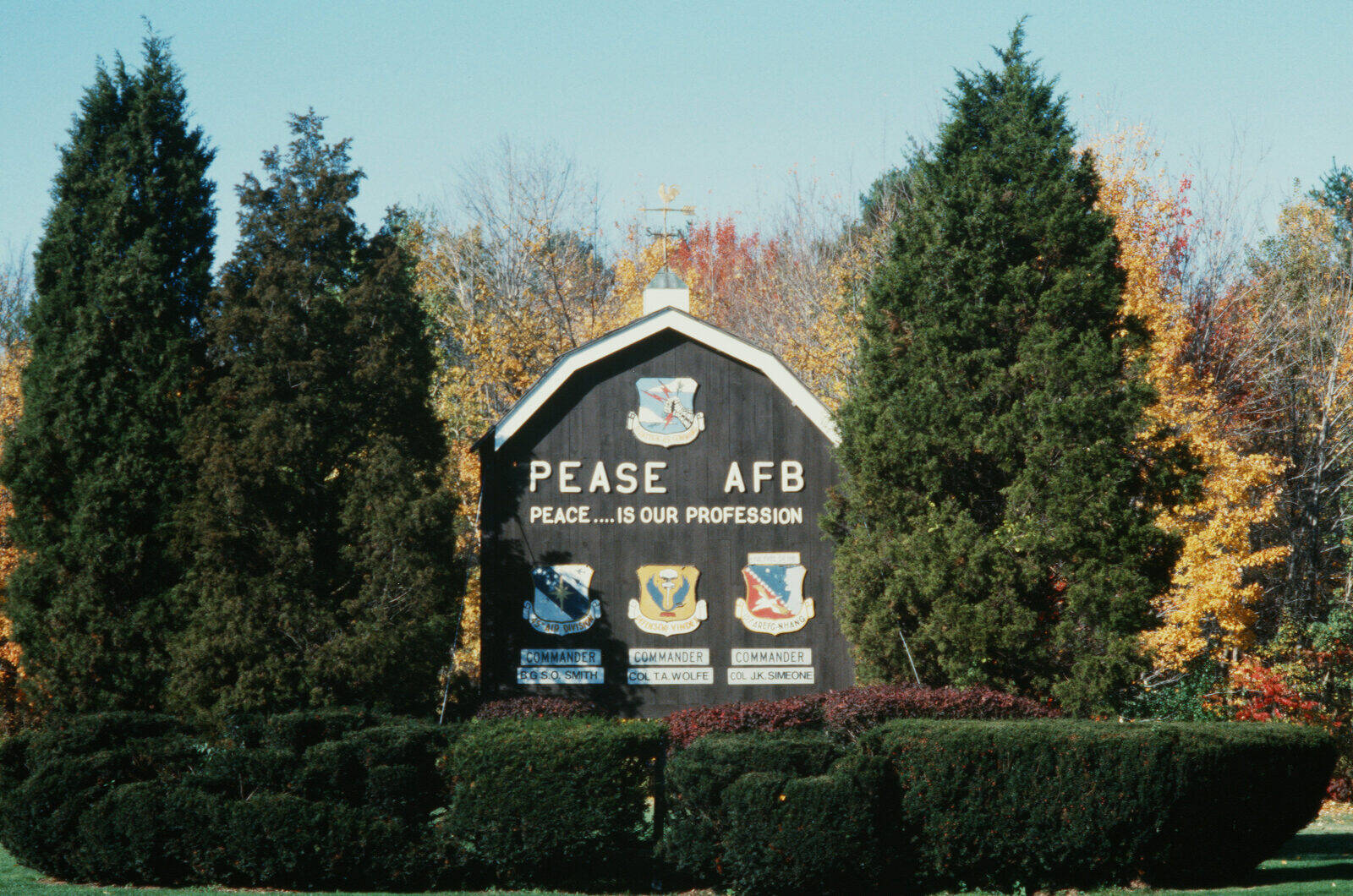
Pease Air Force Base
Pease Air Force Base was a United States Air Force installation in Portsmouth and Newington, New Hampshire, on approximately 4,365 acres near the Great Bay estuary. Activated in 1956, Pease served as a Strategic Air Command base throughout the Cold War, supporting bomber and aerial refueling operations and extensive aircraft maintenance activities. The base closed in 1991 under the Base Realignment and Closure process. Much of the property has since been redeveloped as the Pease International Tradeport, which today hosts hundreds of businesses, Portsmouth International Airport, and the New Hampshire Air National Guard.
There are concerns about potential carcinogenic health hazards at Pease Air Force Base, stemming from exposure to several environmental contaminants documented at the site:
- PFAS (per- and polyfluoroalkyl substances): A large family of synthetic chemicals that resist breaking down in the environment. Beginning in 2013, Air Force sampling at the former Fire Department Training Area 2 (Site 8) identified PFAS in groundwater at concentrations above federal health advisories then in effect. Exposure to PFAS has been associated with potential health concerns, including possible links to certain cancers.
- PFOS (perfluorooctane sulfonate): A specific PFAS compound detected in the Haven public water supply well at the Pease Tradeport in April 2014 at 2,500 parts per trillion, roughly 12.5 times the EPA provisional health advisory, which led to the well being taken out of service in May 2014. PFOS exposure may potentially be linked to immune, thyroid, and other health effects under ongoing study.
- PFOA (perfluorooctanoic acid): Another PFAS compound found alongside PFOS at the base. In the 2013 sampling at the former fire training area, seventeen monitoring wells exceeded the EPA provisional health advisory for PFOA. PFOA has been associated with concerns about potential health effects, including kidney and testicular cancer in some studies.
- AFFF (aqueous film forming foam): A firefighting foam containing PFAS that was used for fire training exercises and emergency response at Pease, particularly at Fire Department Training Area 2. AFFF use is considered the primary source of the PFAS contamination found in soil and groundwater at the base.
- Solvents: Industrial solvents, including degreasers such as TCE (trichloroethylene), were used in aircraft maintenance operations and were found in soil and groundwater at the base. TCE is classified as a human carcinogen, and exposure has been associated with concerns about kidney cancer and other illnesses.
- Jet fuel: Fuel spills and leaks connected to aircraft fueling and storage operations contributed to soil and groundwater contamination. Components of jet fuel, such as benzene, have been associated with potential health concerns, including certain blood cancers.
Pease Air Force Base was added to the EPA National Priorities List in February 1990, before the base closed. In 2015, the EPA issued the Air Force an administrative order under the Safe Drinking Water Act to investigate and address PFAS sources and protect drinking water supplies. Two groundwater treatment systems now operate at the site, a new Portsmouth water treatment facility dedicated in 2021 allowed the Haven well to return to service, and cleanup and monitoring continue under EPA and state oversight. The community also became the first site in the ATSDR national multi-site health study examining PFAS exposure through drinking water.
While there are concerns about potential exposure to these contaminants at Pease Air Force Base, establishing definitive links between specific exposures and individual health conditions can be complex. Research, including the ongoing ATSDR study centered on the Pease community, continues to improve understanding of possible health effects. Veterans and others who lived or worked at Pease are encouraged to stay informed and to consult the VA regarding health concerns and potential benefits.
Were you stationed at a contaminated site?
The PACT Act of 2022 added more than 20 presumptive conditions for toxic exposure, including many cancers, and there is no deadline to file a VA claim.
This page is for informational purposes only and is not medical or legal advice. Consult a qualified professional about your health or benefits.
Discussion
No approved comments yet.