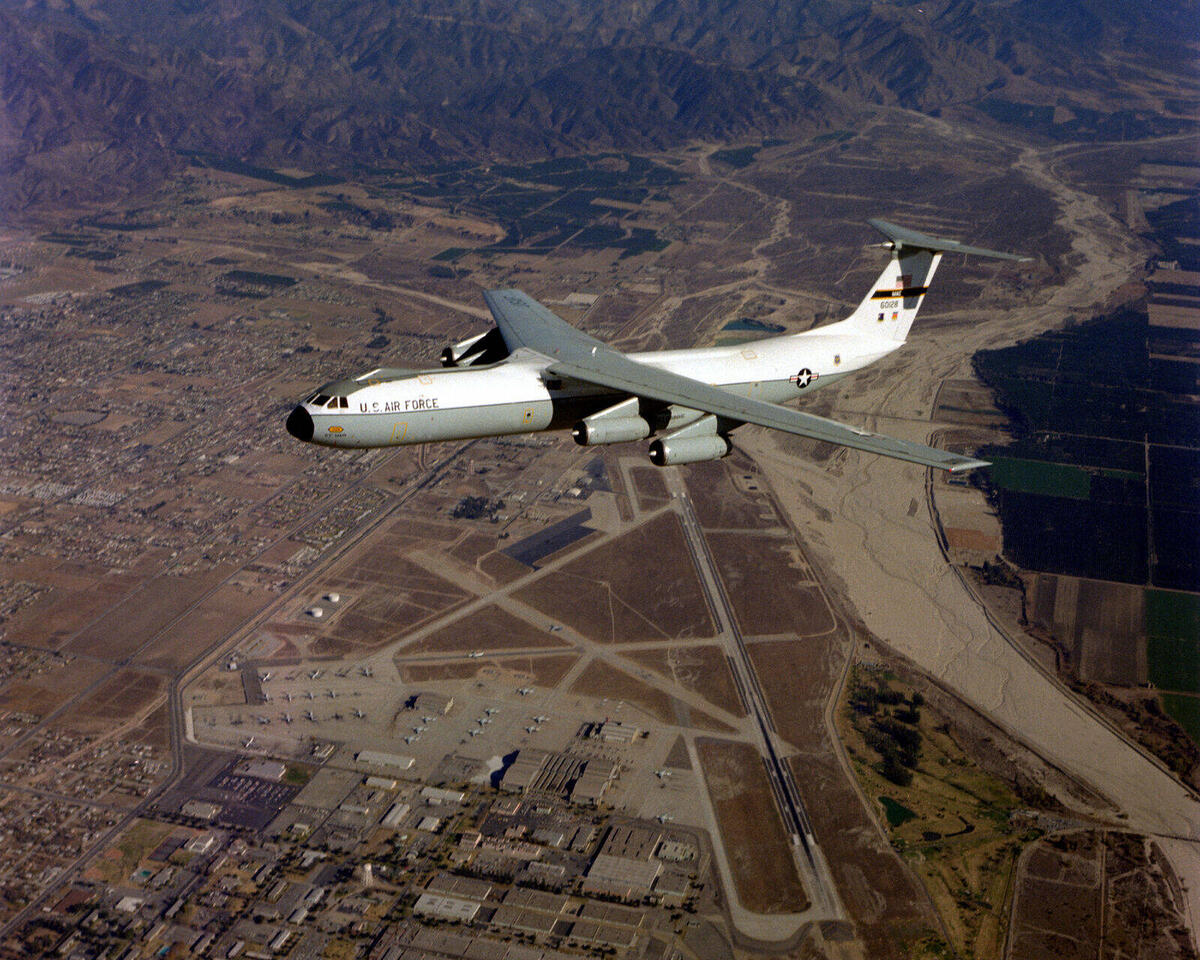
Norton Air Force Base
Norton Air Force Base was a United States Air Force installation in San Bernardino, California, covering roughly 2,165 acres at the foot of the San Bernardino Mountains. Established in 1942, it began as an Army Air Corps supply and maintenance facility and grew into a major overhaul center for jet engines and aircraft repair. Over the decades the base also supported ballistic missile programs, and beginning in 1966 it was home to the 63rd Military Airlift Wing. Norton closed on March 31, 1994 under the 1988 Base Realignment and Closure (BRAC) process, and much of the property has since been redeveloped, including as San Bernardino International Airport.
There are concerns about carcinogenic health hazards at Norton Air Force Base, due to potential exposure to various environmental contaminants identified in the base's soil and groundwater:
- Trichloroethylene (TCE): TCE is a chlorinated solvent that was widely used at Norton for degreasing aircraft parts and jet engine components. The solvent was detected in groundwater beneath the base, and investigations identified a TCE plume that threatened to migrate toward downgradient drinking water supplies. Exposure to TCE has been associated with an increased risk of kidney cancer and other serious health conditions.
- Tetrachloroethylene (PCE): PCE is a related solvent used in cleaning and degreasing operations, and it was found in base groundwater along with TCE and 1,2-dichloroethylene. Long-term exposure to PCE may potentially be linked to certain cancers and effects on the nervous system.
- Polychlorinated biphenyls (PCBs): PCBs were used in electrical transformers and other equipment, and EPA records document spills of PCBs at the base along with waste oils, solvents, and acids. PCBs persist in soil for long periods and are considered probable human carcinogens.
- Heavy metals: Metals including arsenic and lead were identified in soil and groundwater, associated with past disposal of industrial wastes into landfills, unlined pits, ponds, and drying beds. Arsenic is a known human carcinogen, and there are concerns about potential exposure for those who lived or worked near affected areas.
- Radiation: Environmental investigations identified radionuclides, including uranium, in groundwater at the base, and dioxins were also documented among site contaminants. Prolonged exposure to ionizing radiation has been associated with an elevated risk of certain cancers.
The U.S. Environmental Protection Agency placed Norton Air Force Base on the Superfund National Priorities List on July 22, 1987, after contamination was detected during Installation Restoration Program investigations. Cleanup has proceeded under the Air Force BRAC program: soil vapor extraction has removed more than 7,000 pounds of TCE from soils, and two groundwater pump and treat systems were installed to reduce contamination and prevent further migration of the TCE plume. Remedial construction is complete, and the site remains in long-term operation, maintenance, and monitoring with periodic EPA five-year reviews. The Agency for Toxic Substances and Disease Registry completed a public health assessment in 1998, which concluded that the site posed no apparent public health hazard based on the data available at that time.
It's important to note that while there are concerns about potential exposure to contaminants at Norton Air Force Base, establishing definitive links between that exposure and specific illnesses in individual veterans can be complex. Ongoing research and environmental monitoring continue to shape what is known about the site. Veterans and family members who served or lived at Norton are encouraged to stay informed about the cleanup, document their service history, and consult the Department of Veterans Affairs about health concerns and potential benefits.
Were you stationed at a contaminated site?
The PACT Act of 2022 added more than 20 presumptive conditions for toxic exposure, including many cancers, and there is no deadline to file a VA claim.
This page is for informational purposes only and is not medical or legal advice. Consult a qualified professional about your health or benefits.
Discussion
No approved comments yet.