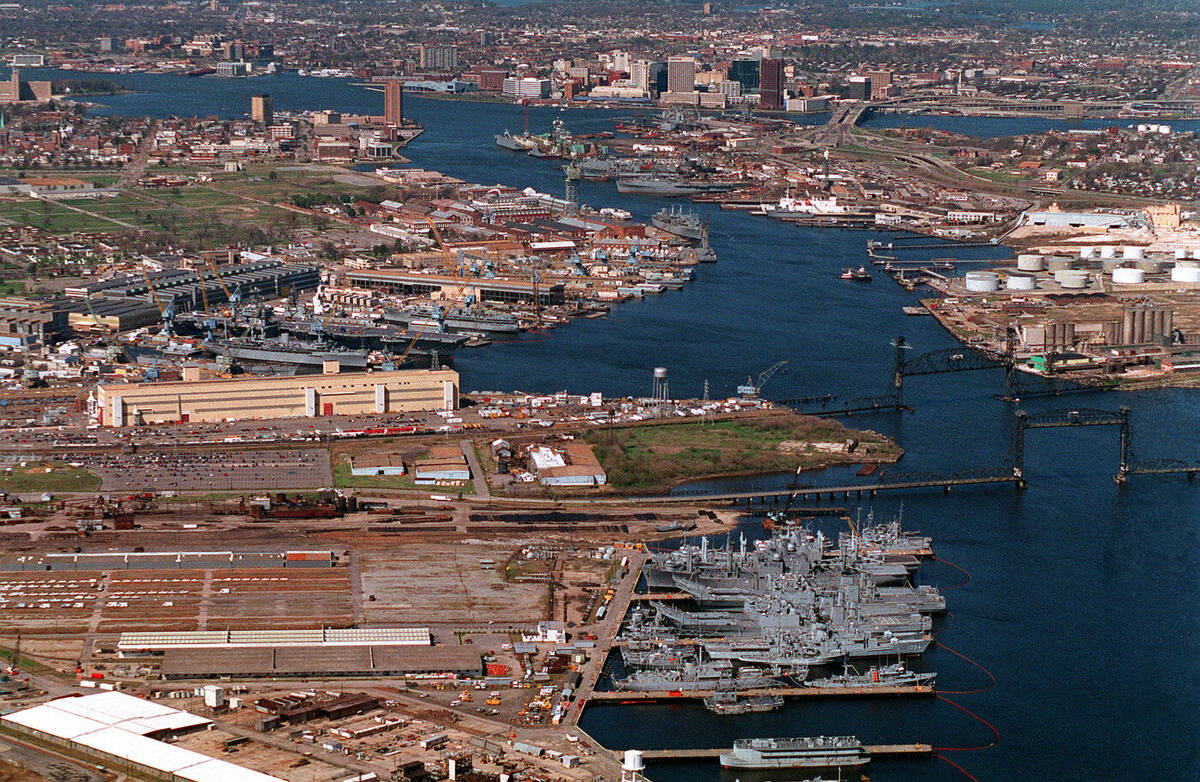
Norfolk Naval Shipyard
Norfolk Naval Shipyard is a United States Navy industrial facility located in Portsmouth, Virginia, on the western shore of the Southern Branch of the Elizabeth River. Its origins trace to 1767, when it operated as the privately owned Gosport Shipyard, and the federal government purchased the property in 1801. It is regarded as the oldest and one of the largest shipyards belonging to the Navy, and its primary mission has long been to repair, overhaul, dry-dock, convert, modernize, and inactivate ships. More than two centuries of shipbuilding and ship repair generated substantial volumes of industrial waste across the installation.
Concerns about potential exposure at the shipyard center on materials that were used, stored, or disposed of during decades of industrial operations. Before the facility began using an industrial waste treatment plant in 1979, wastes were discharged to Paradise Creek and the Southern Branch of the Elizabeth River, and several solid waste disposal areas were concentrated along Paradise Creek. The contaminants summarized below have been documented in connection with these activities.
- PCBs. Polychlorinated biphenyls, or PCBs, are synthetic chemicals that were once used in electrical equipment, hydraulic systems, and various oils. At Norfolk Naval Shipyard, oils and wastes contaminated with PCBs were associated with industrial shops and were detected in Paradise Creek sediments sampled in 1986 and 1992. PCBs have been associated with a range of potential health effects, which is why historical exposure remains a subject of study.
- Heavy metals. Abrasive blast grit containing paint residues introduced heavy metals such as arsenic, lead, cadmium, copper, and zinc into the environment, and metals including antimony, chromium, iron, nickel, and silver are also identified among the primary contaminants. These materials came from blasting, painting, and metalworking operations central to ship repair. Exposure to certain heavy metals has been associated with potential health concerns, and the metals are a focus of environmental monitoring at the site.
- Solvents. Industrial solvents were used for cleaning, degreasing, and paint-related work throughout the shipyard, and solvents, thinners, and related wastes were among the materials handled on site. Volatile and semivolatile organic compounds have been identified among the contaminants of concern. Some solvents have been associated with potential health effects, prompting continued attention to where they were used and disposed of.
The Environmental Protection Agency added Norfolk Naval Shipyard to the National Priorities List, the federal Superfund list of the most contaminated sites, in May 1999. Cleanup is led by the Navy under a Federal Facilities Agreement with the EPA and the Virginia Department of Environmental Quality. Remedies at the site have included soil covers and land use controls that restrict certain development, and five-year reviews are conducted to evaluate whether the selected remedies remain protective of human health and the environment.
Veterans and civilian workers who served at or near Norfolk Naval Shipyard may find it helpful to stay informed as environmental reviews continue and new information becomes available. Anyone with questions about possible exposure and their health is encouraged to speak with the Department of Veterans Affairs, which can explain available resources and any applicable benefits.
Were you stationed at a contaminated site?
The PACT Act of 2022 added more than 20 presumptive conditions for toxic exposure, including many cancers, and there is no deadline to file a VA claim.
This page is for informational purposes only and is not medical or legal advice. Consult a qualified professional about your health or benefits.
Discussion
No approved comments yet.