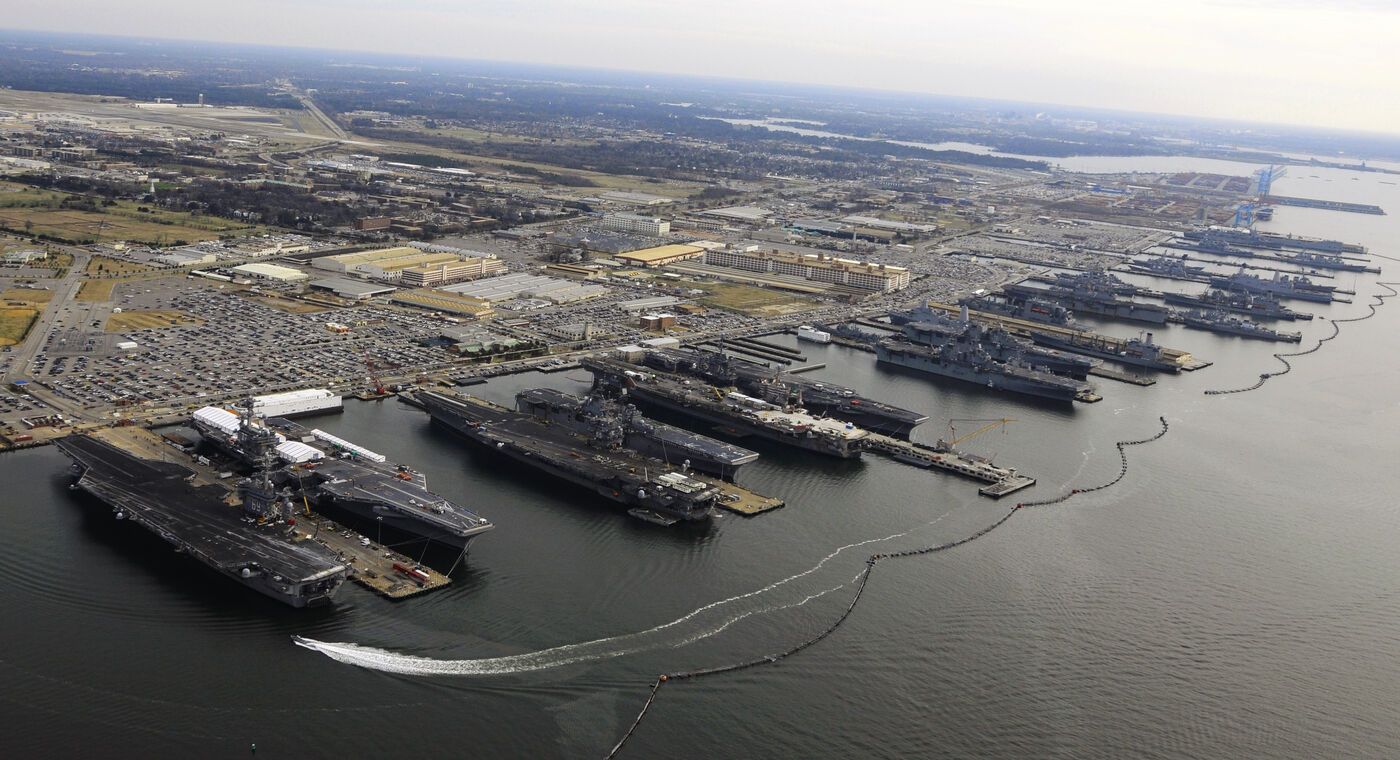
Naval Station Norfolk (Sewells Point Naval Complex)
Naval Station Norfolk, sometimes referred to as the Sewells Point Naval Complex, is a United States Navy installation located on roughly 4,630 acres at Sewells Point near the mouth of the Elizabeth River and Hampton Roads in Norfolk, Virginia. The property was set aside for naval use in 1917 to support operations during World War I, and it expanded rapidly during World War II to become a major embarkation point for Atlantic operations. Today it is generally described as the world's largest naval base and serves as a hub for the Atlantic Fleet, home to dozens of ships, submarines, and aircraft. Its mission centers on providing operational readiness, support, and services for the ships, aircraft, and personnel assigned to the fleet. Decades of industrial activity tied to ship maintenance, fueling, and firefighting have left an environmental legacy that the Navy and the U.S. Environmental Protection Agency continue to address.
Investigations beginning in the 1990s identified contamination across portions of the base, and several substances of concern have been documented in soil, sediment, and groundwater. The following contaminants have been associated with the site, and each carries concerns about potential exposure.
- PFOS and PFOA: These are individual PFAS compounds, part of a family of synthetic chemicals that resist heat, water, and oil. At Naval Station Norfolk, the Navy is investigating PFOS and PFOA based on historical practices, including the use of AFFF firefighting foam. These compounds have been associated in some studies with potential health effects, and they remain under active study at the base.
- PCBs: PCBs are man-made chemical mixtures once used in electrical equipment, hydraulic systems, and certain coatings. Sediment and soil sampling at the complex detected polychlorinated biphenyls, consistent with the kinds of equipment and maintenance work historically performed on a large naval base. PCBs have been associated with a range of potential health concerns, prompting careful monitoring.
- Solvents: Groundwater at the base has been found to contain volatile organic compounds, including TCE (trichloroethylene), along with tetrachloroethylene and dichloroethylenes. These solvents were commonly used in degreasing, cleaning, and industrial processes. Exposure to such solvents has been associated with potential health effects, which is part of why the groundwater is being treated.
- Heavy metals: Metals have been documented in soil and sediment across portions of the site. Metals can persist in the environment, and concerns about potential exposure have contributed to the cleanup measures undertaken at the base.
The EPA added Naval Station Norfolk to the National Priorities List, the federal Superfund program, in April 1997. Cleanup work overseen by the EPA and carried out by the Navy has included removal of contaminated soil, sediment, and buried drums, capping, and treatment of groundwater through extraction and treatment systems. The EPA has designated physical construction of the cleanup remedy as complete, while investigation of PFAS and long-term monitoring continue.
Veterans, civilian workers, and family members who spent time at Naval Station Norfolk and have questions about possible exposure are encouraged to stay informed as new findings emerge and to discuss any health concerns with the U.S. Department of Veterans Affairs. The VA can provide guidance on screening, benefits, and resources that may apply to individual circumstances.
Were you stationed at a contaminated site?
The PACT Act of 2022 added more than 20 presumptive conditions for toxic exposure, including many cancers, and there is no deadline to file a VA claim.
This page is for informational purposes only and is not medical or legal advice. Consult a qualified professional about your health or benefits.
Discussion
No approved comments yet.