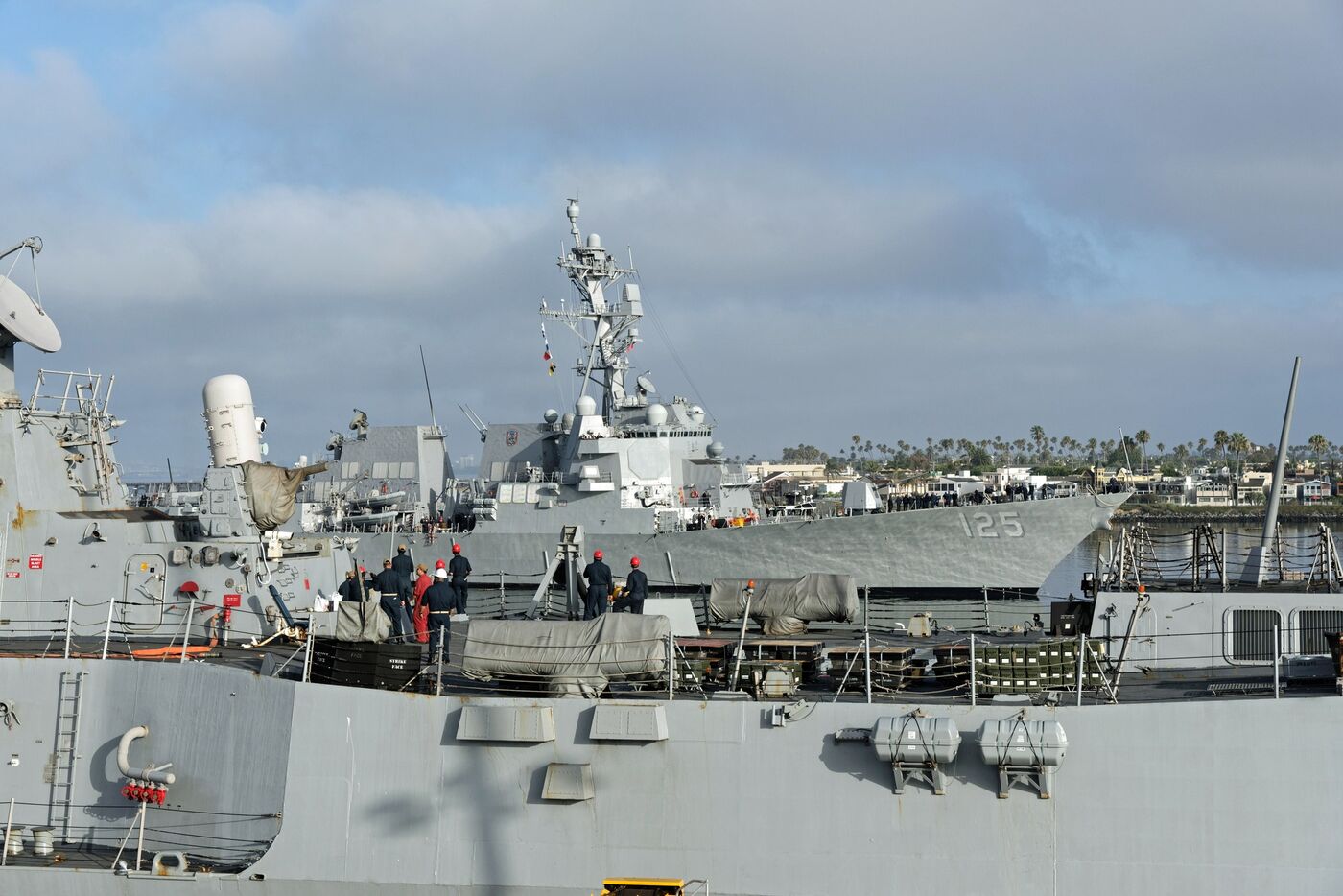
Naval Weapons Station Seal Beach
Naval Weapons Station Seal Beach is a United States Navy ordnance facility in Seal Beach, California, responsible for the storage, loading, and maintenance of ammunition and missile ordnance for the Pacific Fleet. The installation was commissioned in 1944, during World War II, as a Naval Ammunition and Net Depot, with early missions that included loading ammunition onto Pacific Fleet ships and servicing the anti-submarine nets used to protect fleet anchorages. The site was selected for its open space suitable for weapons storage and its proximity to the naval concentrations at Long Beach and San Diego. The station also operates detachments at Fallbrook and Norco, both in California. Today the facility continues to provide logistics, weapons handling, and supply support to the fleet.
Decades of ordnance handling, industrial operations, and firefighting activity have left a number of areas on the station with documented contamination. The Navy has identified dozens of sites under its Installation Restoration program, and the station (along with its Fallbrook detachment) appears on the California State Water Resources Control Board military list for suspected firefighting-foam releases. The following contaminants have been documented or are under investigation in connection with operations at this base.
- PFAS: Per- and polyfluoroalkyl substances are a family of long-lasting synthetic chemicals. At Seal Beach, concerns center on past use of firefighting foam, and the Navy has been sampling drinking water wells near its detachments for PFAS, prioritizing wells with PFOA or PFOS above federal screening levels. PFAS have been associated in some studies with a range of potential health effects, prompting concerns about potential exposure.
- AFFF: Aqueous film-forming foam is a firefighting agent historically used to suppress fuel fires and during training. The use of AFFF at ordnance and fuel-handling installations such as Seal Beach is a recognized source of the PFAS now under investigation at the station and its detachments.
- Explosive compounds: Given the station's role in ammunition storage, loading, and disposal, including an explosives burning ground, residues from energetic compounds are among the concerns the restoration program is intended to address. Exposure to certain explosive residues has been associated with potential health concerns, and remediation has been pursued at locations where contamination was identified.
- Heavy metals: Metals such as lead and antimony were linked to a former small-arms range, where concerns that wildlife could ingest shot and residual soil contamination led to the range being closed in the early 1990s. Heavy metals can persist in soil and sediment, and elevated exposure has been associated with various potential health effects.
- Solvents: Industrial solvents are commonly associated with the maintenance and degreasing operations carried out at ordnance and equipment facilities. Exposure to certain solvents has raised concerns about potential health effects, and the cleanup program is intended to address such contamination where it has been identified.
Naval Weapons Station Seal Beach is not listed on the National Priorities List as a federal Superfund site. Environmental work is instead carried out under the Navy and NAVFAC Installation Restoration program with federal and California state oversight, including the Department of Toxic Substances Control. Of the sites originally identified, many required no further action, while others have moved through investigation, removal actions, and cleanup, with some efforts continuing at locations such as the former landfill, a paint locker, and the explosives burning ground.
Veterans, civilian workers, and family members who spent time at Naval Weapons Station Seal Beach may wish to stay informed as monitoring and remediation continue. Anyone with questions about possible exposure is encouraged to keep records of their service and to speak with the U.S. Department of Veterans Affairs about health resources and any benefits for which they may be eligible.
Were you stationed at a contaminated site?
The PACT Act of 2022 added more than 20 presumptive conditions for toxic exposure, including many cancers, and there is no deadline to file a VA claim.
This page is for informational purposes only and is not medical or legal advice. Consult a qualified professional about your health or benefits.
Discussion
No approved comments yet.