Naval Weapons Industrial Reserve Plant Bethpage
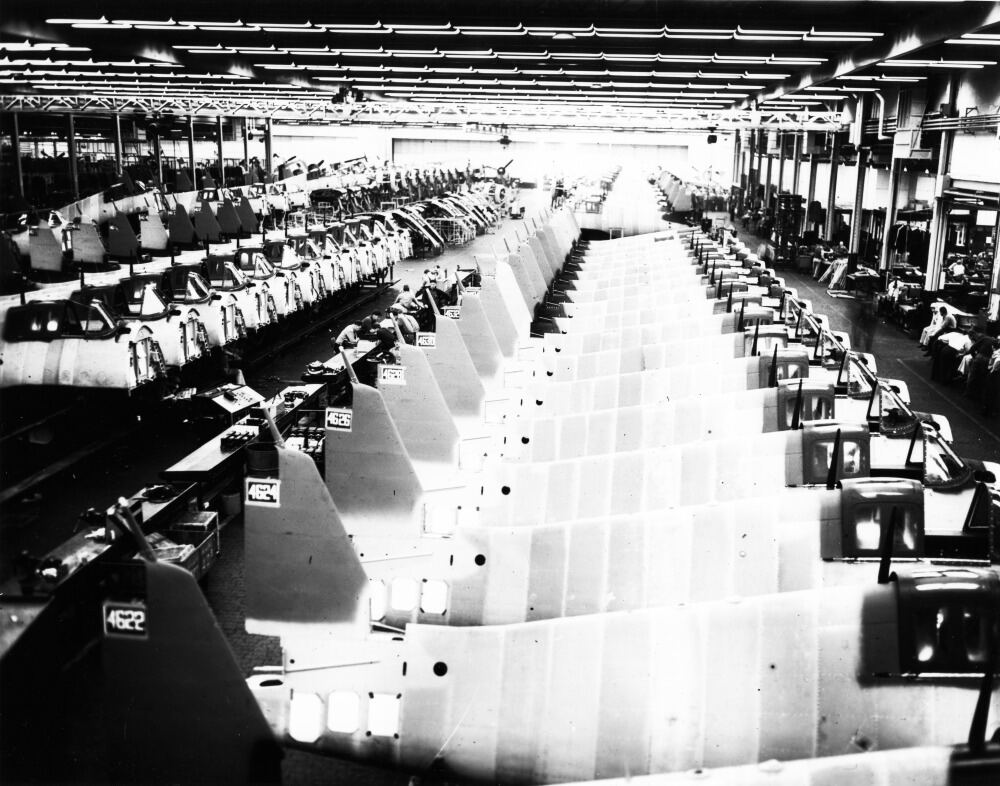
Naval Weapons Industrial Reserve Plant (NWIRP) Bethpage was a government-owned, contractor-operated facility in the hamlet of Bethpage in Nassau County, New York, on Long Island. The Navy established the plant in 1941 on land where the Grumman Corporation had been building aircraft since 1936, and the government-owned parcel of roughly 105 acres sat within a larger Grumman complex of about 600 acres. Grumman designed, fabricated, and tested prototype aircraft and aerospace systems at Bethpage for the Navy and NASA, including work on the F-14 Tomcat and the Apollo Lunar Module. Manufacturing operations at the site ended in 1996.
There are concerns about potential carcinogenic health hazards at NWIRP Bethpage, due to exposure to various environmental contaminants documented in soil and groundwater:
- TCE (trichloroethylene): TCE was used extensively at the Bethpage plant as a metal degreasing solvent in aircraft manufacturing. Releases through recharge basins, sumps, dry wells, and spill areas allowed the chemical to reach groundwater, and TCE has been measured at concentrations as high as 4,600 parts per billion in a Navy monitoring well near the site. TCE is classified as a known human carcinogen, and exposure has been associated with kidney cancer, non-Hodgkin lymphoma, and other health conditions.
- Other solvents and volatile organic compounds: Investigations have also identified tetrachloroethene, dichloroethylene, and vinyl chloride in groundwater at and around the facility, reflecting decades of industrial cleaning and manufacturing processes. Long-term exposure to certain volatile organic compounds may potentially be linked to elevated cancer risk and other health effects, and several local water district well fields have required treatment for these compounds.
- Heavy metals: Metals, including chromium associated with metal finishing operations, have been documented at the site. Some forms of chromium, particularly hexavalent chromium, have been associated with increased cancer risk in occupational settings, raising concerns about potential historical exposure for workers and nearby residents.
The combined releases from the Navy plant and the adjacent Grumman property created what is known as the Navy-Grumman groundwater plume, the largest on Long Island. First discovered in 1986, the plume now spans more than 3,000 acres and reaches depths of approximately 900 feet in the Magothy Aquifer, which supplies drinking water to much of Nassau County. The site is not on the federal Superfund National Priorities List; instead, cleanup proceeds under federal RCRA corrective action and the New York State Superfund program, overseen by the New York State Department of Environmental Conservation. A 2019 amended record of decision calls for full containment of the plume, and the Navy and Northrop Grumman operate groundwater extraction and treatment systems while affected public water suppliers treat their wells. In a settlement announced by the Department of Justice in 2022, Northrop Grumman agreed to pay the United States $35 million toward cleanup costs at the site.
Establishing definitive links between time spent at a particular installation and later illness is scientifically complex, and research into the health effects of these contaminants is ongoing. Veterans and civilian workers who served at NWIRP Bethpage are encouraged to stay informed about the cleanup, keep records of their potential exposure history, and consult the Department of Veterans Affairs with questions about health concerns and available benefits.
Were you stationed at a contaminated site?
The PACT Act of 2022 added more than 20 presumptive conditions for toxic exposure, including many cancers, and there is no deadline to file a VA claim.
This page is for informational purposes only and is not medical or legal advice. Consult a qualified professional about your health or benefits.
Discussion
No approved comments yet.