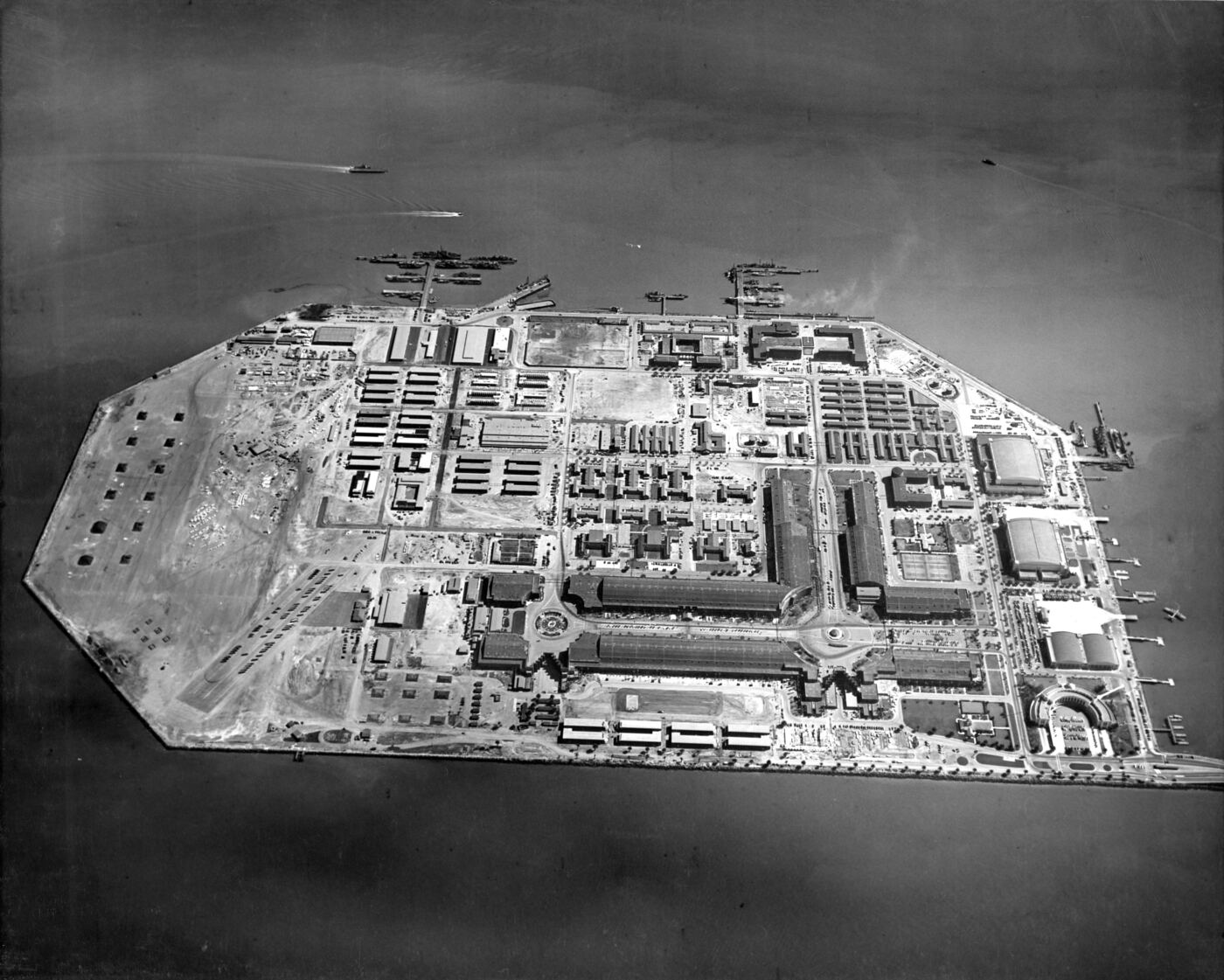
Naval Station Treasure Island
Naval Station Treasure Island was a United States Navy installation on a man-made island in San Francisco Bay, California, located between San Francisco and Oakland. The island was originally built for the 1939 Golden Gate International Exposition, and the Navy took control of it in 1941, operating the station during World War II as a major training facility and embarkation point for sailors deploying to the Pacific. After the war, the station continued to host a variety of training schools, including academies focused on nuclear, biological, and chemical warfare defense. The installation was selected for closure by the 1993 Base Realignment and Closure (BRAC) Commission and officially closed on September 30, 1997. The island is now being redeveloped for civilian uses, including housing.
There are concerns about potential carcinogenic health hazards at Naval Station Treasure Island, due to possible exposure to environmental contaminants documented at the former base:
- Radiation: For decades, Treasure Island hosted nuclear war training academies where sailors practiced radiation detection, instrument repair, and ship decontamination using radioactive materials reported to include radium, cesium-137, and plutonium. Training activities included the USS Pandemonium, a mock vessel that was deliberately treated with radioactive material so students could practice decontaminating it. Radium-painted deck markers and instrument dials were also handled and repaired on the island. Investigative reporting and a 2014 Bulletin of the Atomic Scientists analysis documented mishandling of radioactive waste, including a 1950 radium spill and the on-site burial of radium items, and the Navy's 2012 draft historical radiological assessment acknowledged that the island's radiological history was more extensive than earlier reviews had indicated. During the cleanup, radium-contaminated objects were discovered in areas later used for housing, and thousands of cubic yards of impacted soil have been excavated and shipped off the island. Ionizing radiation is a recognized human carcinogen, and exposure has been associated with increased risk of various cancers, raising concerns for those who served, worked, or lived at the station.
- Solvents: Industrial solvents were used at Treasure Island in ship repair, maintenance, and other support operations, and solvents are listed among the contaminants of concern identified in soil and groundwater at the former station. Long-term exposure to certain solvent compounds, including volatile organic compounds, has been associated with potential health effects, and some solvents are classified as known or probable human carcinogens. Personnel who handled these materials, or who may have encountered affected soil or groundwater, may potentially have faced exposure risks.
Naval Station Treasure Island is not listed on the federal National Priorities List (Superfund). Instead, the Navy's ongoing cleanup is overseen by the California Department of Toxic Substances Control, the California Department of Public Health, and the San Francisco Bay Regional Water Quality Control Board. Areas with the potential for radioactive contamination have undergone surface scanning and soil removal, and parcels are transferred for redevelopment only after regulators review the Navy's cleanup work. As of 2025, remediation at several sites on the island remained open.
It is important to note that establishing definitive links between service at a particular installation and later illness is scientifically complex, and research into these exposures is ongoing. Veterans who served at Naval Station Treasure Island and have concerns about their health are encouraged to stay informed about the cleanup, document their service history, and consult the Department of Veterans Affairs about screening and benefits options.
Were you stationed at a contaminated site?
The PACT Act of 2022 added more than 20 presumptive conditions for toxic exposure, including many cancers, and there is no deadline to file a VA claim.
This page is for informational purposes only and is not medical or legal advice. Consult a qualified professional about your health or benefits.
Discussion
No approved comments yet.