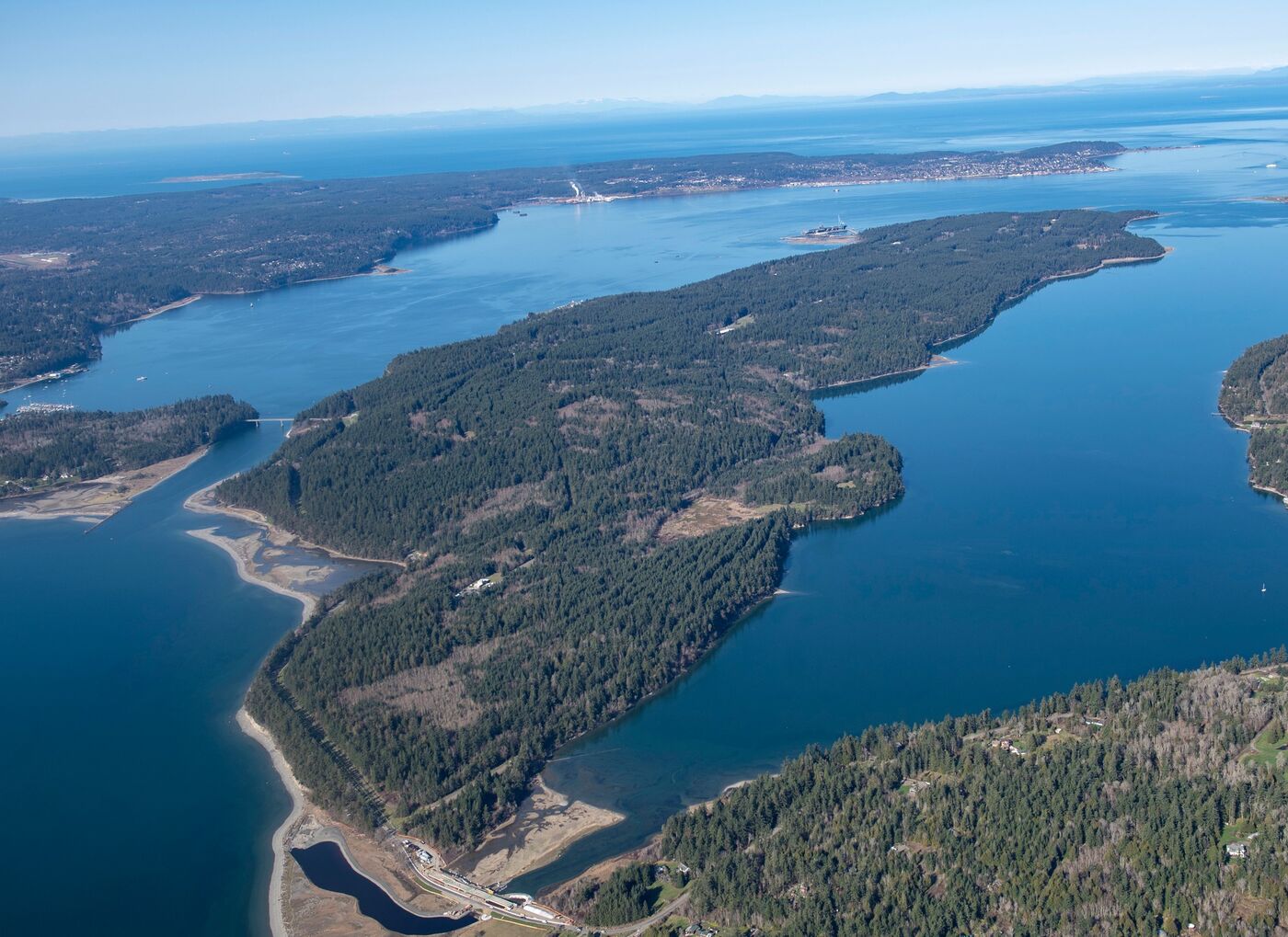
Naval Magazine Indian Island
Naval Magazine Indian Island is a roughly 2,700-acre United States Navy ordnance storage and handling facility located on Indian Island near Port Townsend and Port Hadlock in Jefferson County, Washington. The Navy purchased the island in 1939 and has used it for the storage, handling, and shipment of munitions and explosives, a role it continues to serve today. The installation, sometimes referenced historically as the Port Hadlock Detachment, occupies a sensitive marine setting along Port Townsend Bay. Over decades of operation, waste from industrial activities was managed in ways that later raised environmental concerns. As at many older defense installations, past disposal and handling practices left a legacy that became the focus of formal investigation and cleanup.
Environmental investigations at the installation documented contamination tied to landfills, burn pits, storage areas, and spills. Sampling identified a range of substances in soil, groundwater, marine sediments, and, notably, in shellfish near the shoreline. The concerns below reflect contaminants that have been associated with the site and with the kinds of activities carried out there.
- Heavy metals. Metals such as lead and others can accumulate from munitions handling, landfilling, and disposal of paints, batteries, and industrial wastes. At Indian Island, elevated levels of heavy metals were found in soil and in marine sediments, and metals were among the substances documented in nearby shellfish. Long-term exposure to certain heavy metals has been associated with a variety of health concerns, which is part of why the site received cleanup attention.
- Polychlorinated biphenyls. PCBs are man-made chemicals that were once widely used in electrical equipment, hydraulic systems, and other industrial applications before being banned. At the installation, PCBs were among the contaminants identified in soil and sediment, including in the landfill areas. PCBs persist in the environment and have been associated with potential health effects, prompting concerns about exposure for people and for the marine food web.
- Solvents. Industrial solvents, including chlorinated compounds such as TCE (trichloroethylene), were historically used for degreasing and cleaning equipment at many military facilities. Solvents were listed among the hazardous wastes associated with operations at Indian Island and were a consideration in groundwater investigations. Exposure to certain solvents has been associated with health concerns, and their tendency to migrate through soil and groundwater is a common reason for monitoring.
- Explosives and related compounds. Because the installation handled munitions, explosive compounds such as RDX were among the substances of potential concern documented in environmental records. Residues from ordnance handling and disposal can enter soil and water. Concerns about potential exposure to explosive compounds were among the factors that shaped the site investigation and remedy selection.
Naval Magazine Indian Island was proposed for the Environmental Protection Agency National Priorities List in 1993 and formally added as a Superfund site in June 1994. The Navy, EPA, and the Washington State Department of Ecology signed a Record of Decision in August 1995, and cleanup activities began in 1996. After remediation, EPA and the State of Washington determined that the site posed no significant threat to public health or the environment, and it was deleted from the National Priorities List effective June 14, 2005. Monitoring continues, and the Navy carries out periodic five-year reviews of the remedy at Site 10, the North End Landfill, with the sixth such review initiated in August 2024.
Veterans and family members who lived or worked at Naval Magazine Indian Island and who have questions about possible exposures are encouraged to stay informed as monitoring and review work continues. Anyone with health concerns they believe may be connected to service at this installation may wish to speak with the U.S. Department of Veterans Affairs about screening, benefits, and current guidance.
Were you stationed at a contaminated site?
The PACT Act of 2022 added more than 20 presumptive conditions for toxic exposure, including many cancers, and there is no deadline to file a VA claim.
This page is for informational purposes only and is not medical or legal advice. Consult a qualified professional about your health or benefits.
Discussion
No approved comments yet.