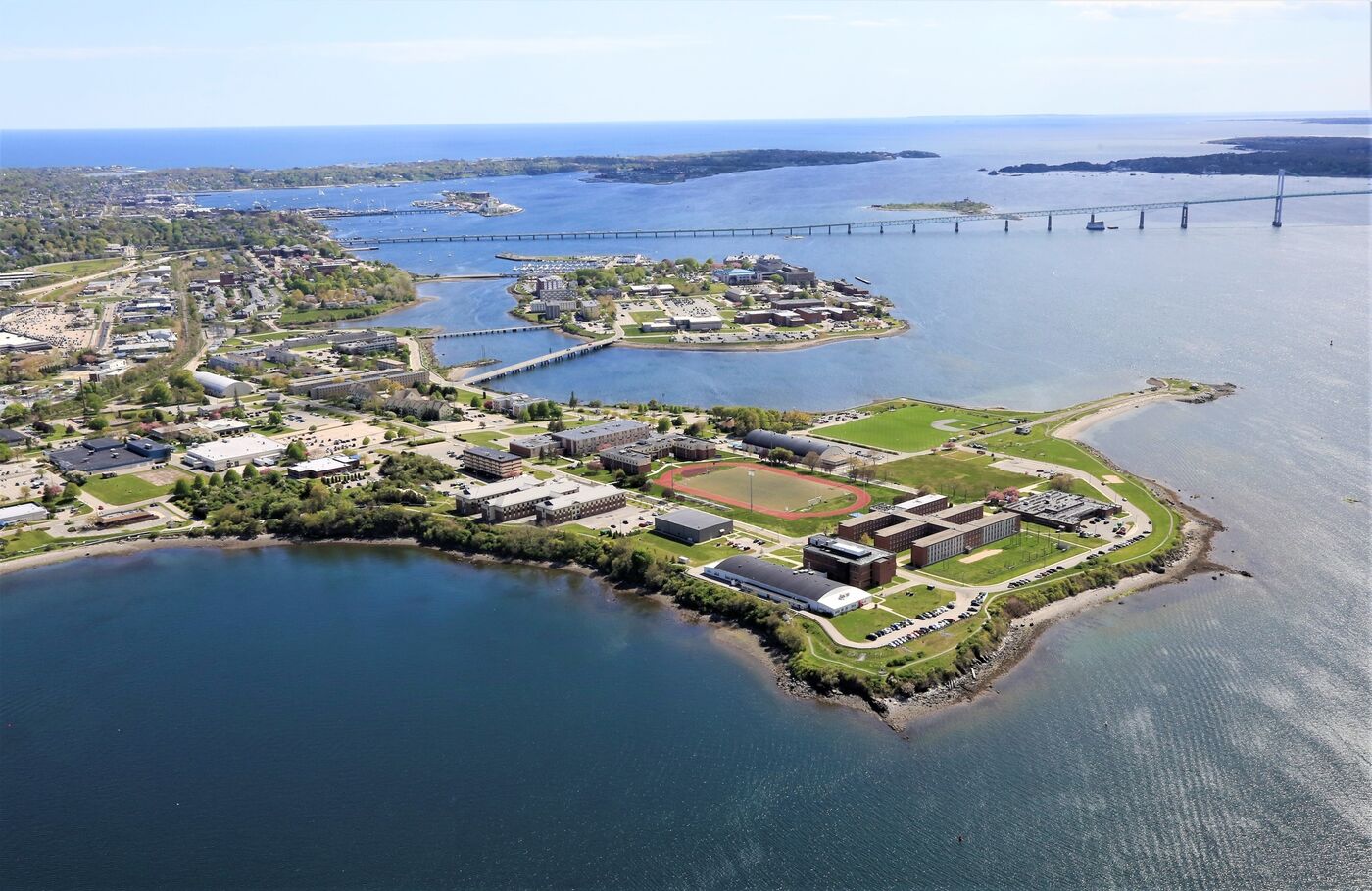
Naval Education and Training Center Newport
Naval Education and Training Center Newport is a U.S. Navy education and training complex on Aquidneck Island in Newport County, Rhode Island, along the shore of Narragansett Bay. The Navy first used the property as a refueling depot beginning around 1900 and operated it in that role into the mid-1970s, after which the installation grew into a major training center. Today the site, often associated with Naval Station Newport, hosts numerous tenant commands and supports educational and operational functions for the Navy. Over many decades of fueling, industrial and waste-disposal activity, several areas of the property became contaminated. The U.S. Environmental Protection Agency added the facility to the National Priorities List in 1989.
Investigations have identified contamination in soil, sediment and groundwater across multiple areas of the base, including a former landfill, fuel tank farms, a fire training area and a former shipyard. The materials documented at these locations have raised concerns about potential exposure for service members, civilian workers and others connected to the installation.
- PCBs: Polychlorinated biphenyls, or PCBs, are industrial chemicals once used in electrical equipment, oils and other products. At the McAllister Point Landfill, which accepted waste from roughly 1955 into the mid-1970s, the Navy disposed of waste oil and oil contaminated with PCBs. Exposure to PCBs has been associated with a range of potential health effects in some studies.
- Solvents: Chlorinated solvents and related volatile organic compounds were used in degreasing, maintenance and industrial work and were among the wastes disposed of at the landfill. These compounds have been associated with concerns about potential health effects when they reach soil or groundwater.
- Heavy metals: Metals were documented in soil and sediment in connection with the landfill, fuel handling and other industrial operations. Long-term exposure to certain heavy metals has been associated with potential health concerns.
- Asbestos: Asbestos is a fibrous mineral once common in building materials and insulation. Later investigations at the base documented potential releases of asbestos among other regulated substances. Inhalation of asbestos fibers has been associated with serious respiratory illness.
- PFAS: Per- and polyfluoroalkyl substances, or PFAS, are persistent man-made chemicals. The Navy agreed in 2017 to investigate PFAS in groundwater at the installation, and these chemicals have raised concerns about potential exposure through drinking water in affected areas.
- AFFF: Aqueous film-forming foam, or AFFF, is a firefighting foam containing PFAS that was used to suppress fuel fires. AFFF was used at the base from the 1960s until about 2016 and is considered a likely source of the PFAS investigated in groundwater.
Because the contamination spans several areas, the EPA placed the installation on the National Priorities List in 1989, designating it a federal-facility Superfund site. Cleanup is carried out by the U.S. Navy under the Comprehensive Environmental Response, Compensation, and Liability Act (CERCLA), with EPA and state oversight, across multiple recognized site areas. Remedial investigations and remedies remain ongoing, and the EPA conducts periodic five-year reviews to confirm that completed remedies continue to protect human health and the environment.
Veterans, family members and civilian employees who served or worked at Newport may wish to stay informed as investigation and cleanup continue. Those with questions about possible exposure are encouraged to keep records of their service and to speak with the U.S. Department of Veterans Affairs about available health resources and benefits programs.
Were you stationed at a contaminated site?
The PACT Act of 2022 added more than 20 presumptive conditions for toxic exposure, including many cancers, and there is no deadline to file a VA claim.
This page is for informational purposes only and is not medical or legal advice. Consult a qualified professional about your health or benefits.
Discussion
No approved comments yet.