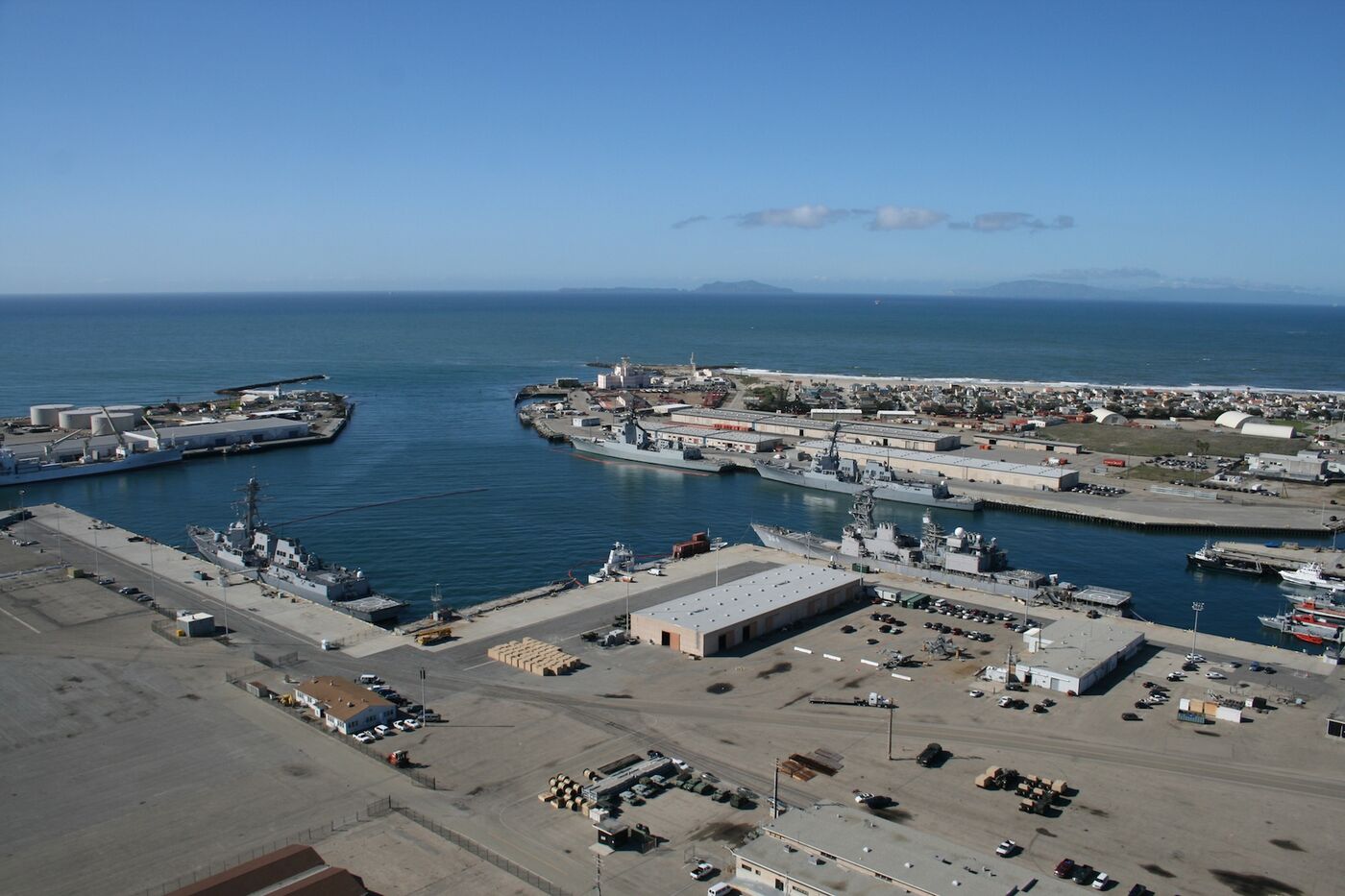
Naval Base Ventura County
Naval Base Ventura County (NBVC) is a U.S. Navy installation on the coast of Southern California that was established on October 11, 2000, through the consolidation of two long-standing commands. The base comprises three sites: the airfield and missile testing complex at Point Mugu, the Naval Construction Battalion Center (the Seabees) at Port Hueneme, and the remote San Nicolas Island. Point Mugu began missile testing operations in 1946 and grew into the Navy's primary West Coast missile development and evaluation center, while Port Hueneme traces its origins to a 1942 wartime advance base depot. Today NBVC serves the Pacific Fleet as a deep water port, railhead, and airfield, and it supports a large community of military and civilian personnel along with numerous tenant commands.
Decades of flight operations, fuel handling, firefighting training, and industrial activity at the installation have left behind several documented environmental concerns. Both the Point Mugu and Port Hueneme portions of the base appear on the California State Water Resources Control Board list of military facilities with a known or suspected release of per- and polyfluoroalkyl substances, and the Navy has documented petroleum and solvent contamination across many of its restoration sites. The contaminants below have been associated with the base and are the subject of ongoing study.
- PFAS: PFAS are a family of synthetic "forever chemicals" that resist breaking down in the environment. At NBVC they are linked primarily to firefighting activities, and both base areas are listed by California water regulators as facilities with a known or suspected PFAS release. PFAS exposure has been associated in some studies with effects on the immune system, cholesterol, and certain cancers, though research is continuing.
- PFOS: PFOS is one of the most studied individual PFAS compounds and was a key ingredient in older firefighting foams. It is among the substances the Navy and NAVFAC are sampling for in groundwater at Point Mugu. PFOS has been associated with concerns about potential effects on thyroid function and immune response.
- PFOA: PFOA is a related compound that was also present in legacy foam formulations used at military installations. It is included in the PFAS sampling underway at the base. Concerns about potential exposure to PFOA include possible associations with kidney and liver effects reported in scientific literature.
- AFFF: AFFF, or aqueous film forming foam, is the firefighting foam used by the military to suppress fuel fires beginning in the 1970s. Its use during training and emergency response at NBVC is the documented source of the PFOS and PFOA found in base groundwater. The PFAS chemicals it contained are the focus of the current sampling and investigation.
- Jet fuel and petroleum: Aviation and vehicle operations at the base involved large volumes of jet fuel and other petroleum products, and the Navy has documented petroleum, diesel, gasoline, and waste oil at numerous restoration sites, including former tanks and disposal areas. Long term exposure to petroleum constituents has been associated with a range of health concerns, which is why affected soil and groundwater have been targeted for cleanup.
- Solvents: Industrial degreasing and maintenance work generated chlorinated and other solvents such as TCE, which the Navy has addressed in groundwater plumes at the installation. Some of these solvents have been associated with concerns about potential effects on the liver, kidneys, and nervous system in long term exposure studies.
Cleanup at Naval Base Ventura County is being carried out under the federal CERCLA framework through the Navy's Installation Restoration Program, which has investigated and remediated hundreds of sites at the base since the mid-1980s. NAVFAC is conducting PFAS sampling at Point Mugu to characterize the extent of contamination in groundwater, and the base is not currently listed on the National Priorities List. Work on fuel and solvent plumes and on PFAS investigation remains ongoing, with oversight from state and federal environmental agencies.
Veterans, families, and civilian workers who spent time at Naval Base Ventura County may understandably have questions about what these documented contaminants could mean for their health. Staying informed as the Navy's investigations continue is a reasonable step, and anyone with concerns about potential exposure is encouraged to discuss their service history with the U.S. Department of Veterans Affairs and their personal healthcare provider. This page is informational only and is not medical or legal advice.
Were you stationed at a contaminated site?
The PACT Act of 2022 added more than 20 presumptive conditions for toxic exposure, including many cancers, and there is no deadline to file a VA claim.
This page is for informational purposes only and is not medical or legal advice. Consult a qualified professional about your health or benefits.
Discussion
No approved comments yet.