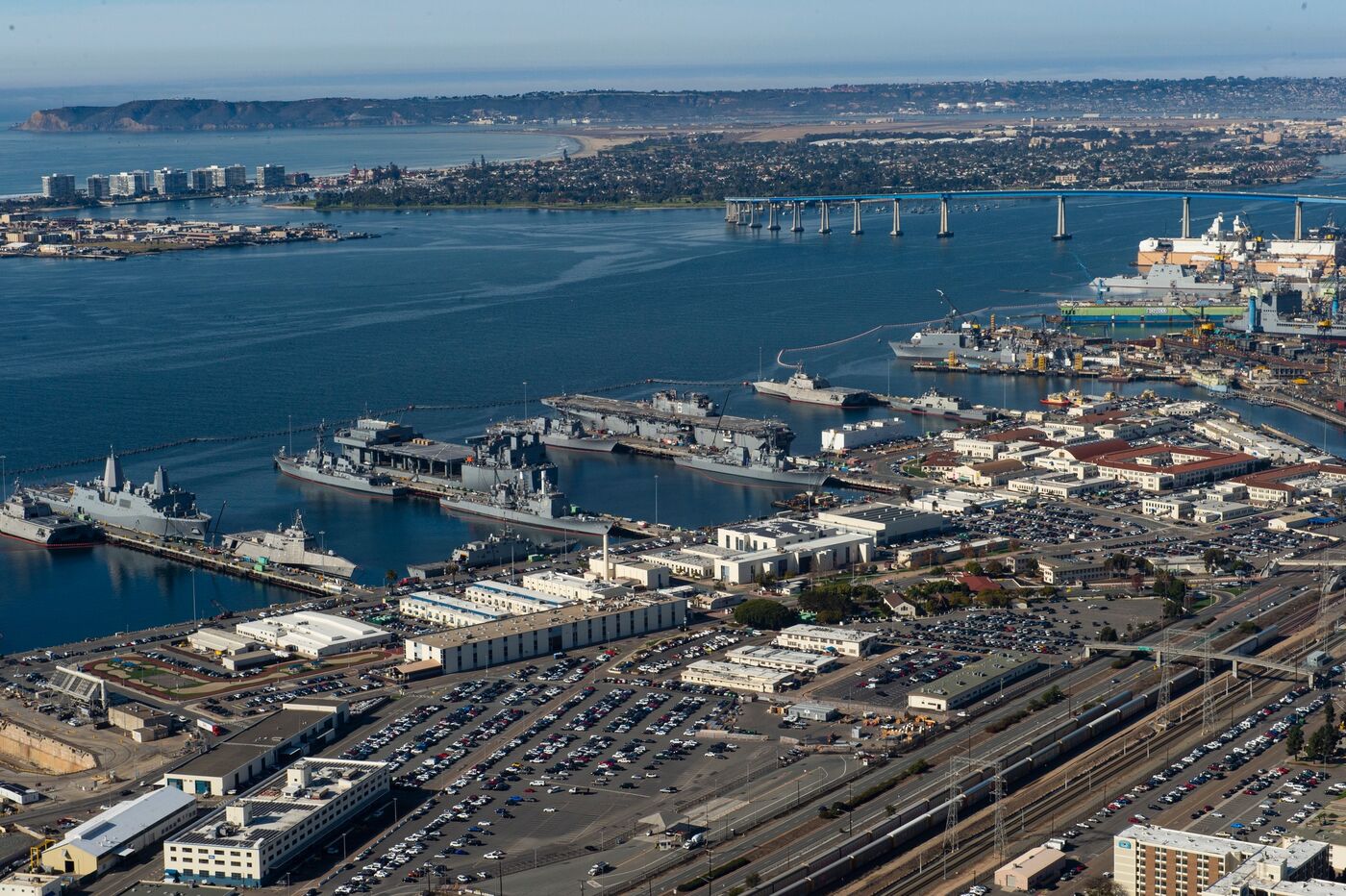
Naval Base San Diego
Naval Base San Diego, often known by its 32nd Street location, is one of the U.S. Navy's principal surface ship installations and is generally described as the largest surface force support base on the West Coast. The facility traces its origins to 1922, when it was established as U.S. Destroyer Base San Diego, and it was redesignated U.S. Repair Base San Diego in 1943 before becoming Naval Station San Diego in 1946. During World War II the base carried out conversion, overhaul, and battle damage repair work on thousands of ships, and in the decades since it has provided berthing, maintenance, and logistical support for ships of the U.S. Pacific Fleet. Today it is widely regarded as the second largest surface ship naval base in the country, after Naval Station Norfolk. Its long history of industrial and shipyard operations along San Diego Bay has also made it the subject of environmental investigation and cleanup.
Because of the scale and duration of repair, maintenance, and industrial activity at the base, several categories of contaminants have been associated with its soil, groundwater, and adjacent bay sediment. State and federal agencies have documented concerns about potential exposure to the substances described below.
- PCBs: Polychlorinated biphenyls (PCBs) are a group of synthetic chemicals once used in electrical equipment, hydraulic systems, and various industrial applications common to shipyard and ship repair settings. At Naval Base San Diego, PCBs have been identified among the contaminants released into San Diego Bay sediment and base soils. PCBs have been associated in scientific literature with a range of potential health effects, which is why exposure is taken seriously by regulators.
- Heavy metals: Metals such as those associated with painting, plating, abrasive blasting, and metalworking have been documented in soil and bay sediment at the base. Heavy metals can persist in the environment, and there are general concerns about potential exposure where these substances accumulate in soil or sediment.
- Solvents: Industrial solvents, including degreasers used to clean parts and equipment, were employed in maintenance and repair operations at the base. Solvents detected in groundwater and soil at military facilities have been associated with concerns about potential exposure, and several common solvents such as TCE have been studied for possible health effects.
- PFAS: Per- and polyfluoroalkyl substances (PFAS) are a large family of persistent chemicals associated with firefighting foam known as AFFF, which the military began using in the 1970s. Naval Base San Diego appears on the California Water Board's list of military facilities with known or suspected PFAS releases. PFAS are being evaluated under federal investigation processes, and there are ongoing concerns about potential exposure through groundwater.
Naval Base San Diego is not listed on the National Priorities List, and its federal Superfund profile reflects a status indicating it does not currently qualify for that list based on existing information. Cleanup is instead carried out under state oversight, with the San Diego Regional Water Quality Control Board and the California Department of Toxic Substances Control providing regulatory review, working with the Navy under the Defense and State Memorandum of Agreement framework. Remedial activities, including soil removal, capping, and groundwater measures, have been reported as ongoing, and PFAS investigations are proceeding through the federal assessment process described as a multi-year effort.
Veterans and family members who served or lived at Naval Base San Diego may wish to stay informed as investigation and cleanup continue. Those with questions about possible exposure and related benefits are encouraged to speak with the U.S. Department of Veterans Affairs and their own health care providers, who can offer guidance based on individual circumstances.
Were you stationed at a contaminated site?
The PACT Act of 2022 added more than 20 presumptive conditions for toxic exposure, including many cancers, and there is no deadline to file a VA claim.
This page is for informational purposes only and is not medical or legal advice. Consult a qualified professional about your health or benefits.
Discussion
No approved comments yet.