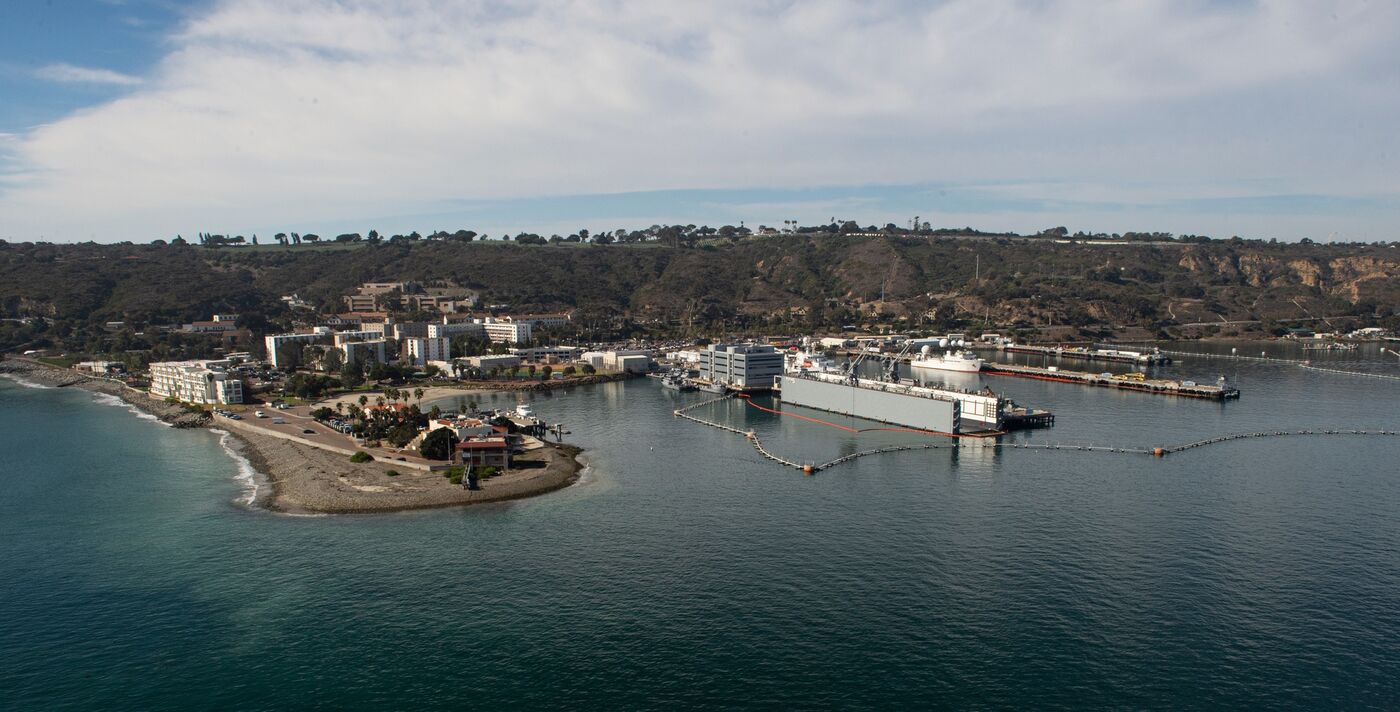
Naval Base Point Loma
Naval Base Point Loma is a U.S. Navy installation occupying the Point Loma peninsula along San Diego Bay in California. It was established as a consolidated command on October 1, 1998, when several separate Navy facilities in the Point Loma area were brought together under Commander, Navy Region Southwest. The base traces its military history to Fort Rosecrans, an Army coastal defense post turned over to the Navy in 1959, with a Navy submarine support facility established there in 1963. Today the installation combines several commands, including a submarine base, fleet training functions, and the information warfare and ocean systems heritage that grew out of the former Naval Electronics Laboratory and Space and Naval Warfare Systems Command. With roughly 22,000 personnel, it remains one of the larger Navy complexes on the West Coast.
Decades of industrial operations, fuel storage, and waste handling on the peninsula have been associated with contamination of soil, groundwater, and bay sediment. Environmental records documenting these concerns date back to the early 1990s, and the California State Water Resources Control Board and the Navy have investigated a range of contaminants as part of ongoing cleanup work around San Diego Bay.
- Solvents (volatile organic compounds): Industrial solvents such as trichloroethylene (TCE) were widely used in degreasing, maintenance, and electronics work. At Naval Base Point Loma, volatile organic compounds have been documented in groundwater, and remedial studies have evaluated ways to limit exposure. Some solvents have been associated in health research with concerns about potential effects on the liver, kidneys, and immune system.
- Heavy metals: Metals are a common byproduct of plating, machining, and waste disposal. At this base, hexavalent chromium has been identified in soil, prompting evaluation of measures to prevent contact with affected areas. Exposure to certain heavy metals has been associated with concerns about potential effects on multiple organ systems.
- Jet fuel: The installation has long supported fuel storage and fleet operations. Beginning around 1999, JP-5 jet fuel and marine diesel were reported to have leaked from aging steel storage tanks, forming a fuel plume on the water table beneath a fuel depot. Long-term exposure to fuel constituents has been associated with concerns about potential health effects.
- PFAS: Per- and polyfluoroalkyl substances, including those found in aqueous film-forming foam (AFFF) firefighting foam, are listed among the contaminants under investigation at Point Loma facilities by the California Water Board. These compounds have been associated in some studies with concerns about potential exposure, and they remain the subject of continuing study.
The EPA identifies the Point Loma Naval Complex as a Federal Facility but reports that it is not currently listed on the National Priorities List. Cleanup is instead carried out as a state-regulated effort overseen by California water authorities and the Navy, with the responsible parties conducting remedial activities at sites around San Diego Bay. Work has included focused feasibility studies and institutional controls intended to limit exposure to contaminants remaining in soil and groundwater, while PFAS investigation is being addressed under the federal CERCLA process as funding permits. The state and the Navy have at times disputed the pace of remediation.
Veterans and civilian workers who served at Naval Base Point Loma may wish to stay informed as investigation and cleanup continue. Anyone with questions about possible exposure is encouraged to keep records of their service and to consult the U.S. Department of Veterans Affairs about available health resources and any benefits for which they may be eligible.
Were you stationed at a contaminated site?
The PACT Act of 2022 added more than 20 presumptive conditions for toxic exposure, including many cancers, and there is no deadline to file a VA claim.
This page is for informational purposes only and is not medical or legal advice. Consult a qualified professional about your health or benefits.
Discussion
No approved comments yet.