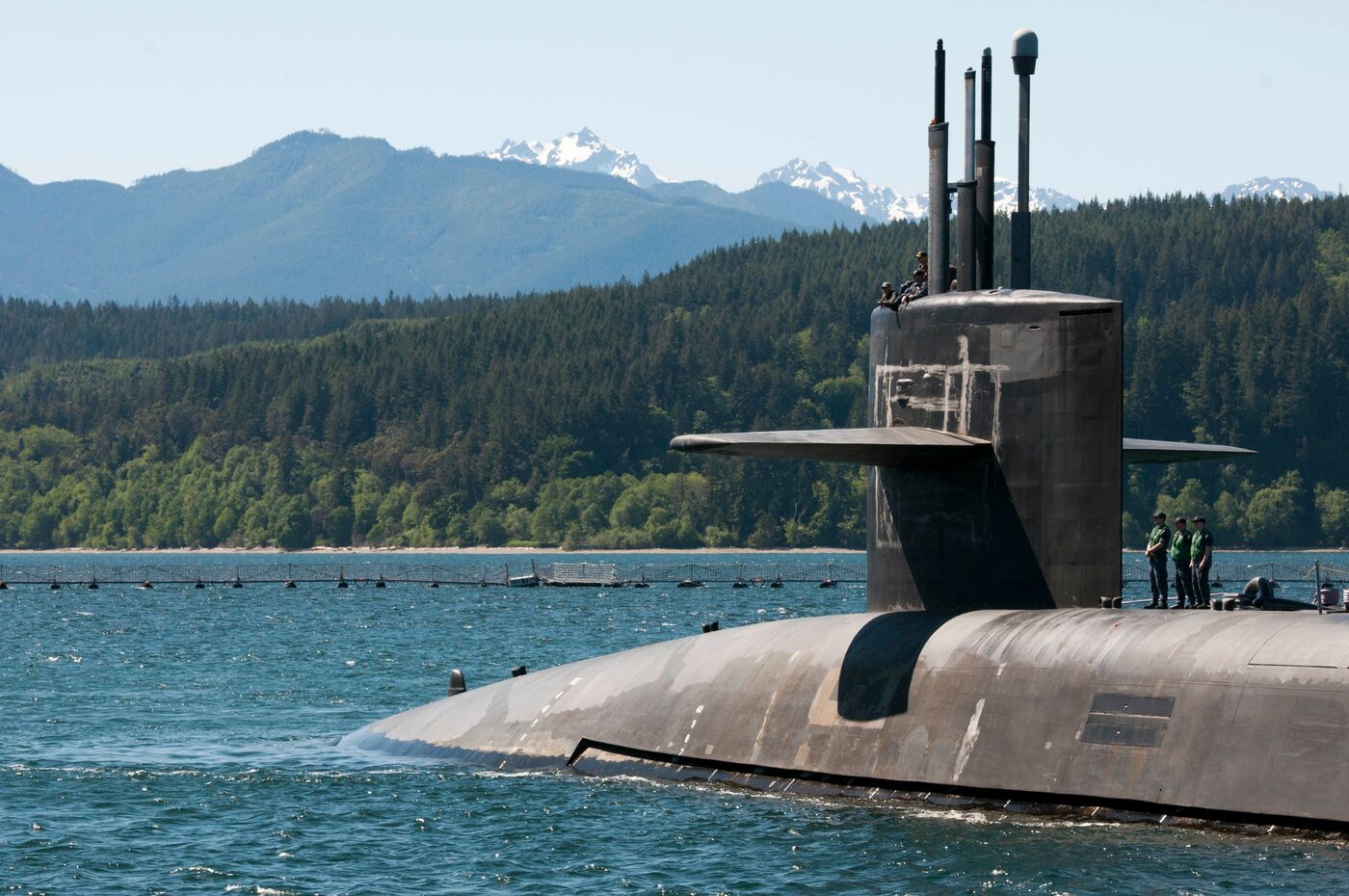
Naval Base Kitsap-Bangor
Naval Base Kitsap-Bangor is a United States Navy installation on the Kitsap Peninsula along Hood Canal near Silverdale, Washington. The Navy first used the roughly 7,000-acre property from the early 1940s through 1973 to store, process, and ship munitions, demilitarizing more than two million pounds of explosive ordnance between 1965 and 1973. The site was recommissioned as a submarine base in the late 1970s to support the Trident submarine fleet in the Pacific, and today it is home to ballistic-missile and guided-missile submarines and to the Strategic Weapons Facility, Pacific. In 2004 the former Submarine Base Bangor merged with Naval Station Bremerton to form the consolidated Naval Base Kitsap, one of the Navy's largest installations in the Pacific Northwest.
Decades of ordnance disposal, industrial activity, and base operations have been associated with contamination of soil, surface water, and groundwater at several areas of the installation. Investigations have identified a range of substances tied to these activities, prompting continued sampling and cleanup.
- RDX and other explosives. Explosive compounds such as RDX (cyclonite), TNT, and DNT are residues of munitions handling and ordnance demilitarization. At Bangor, surface water and shallow groundwater in the burn and debris areas were found to be contaminated with RDX and TNT from past detonation and incineration of ordnance. Exposure to certain explosive compounds has been associated in studies with effects on the nervous system and other organs.
- Solvents and volatile organic compounds. Chlorinated solvents and other volatile organic compounds, including 1,2-dichloroethane and benzene, were detected in groundwater at the base in connection with industrial and maintenance activities. Long-term exposure to some of these VOCs has been associated in research with concerns affecting the liver, kidneys, and immune system.
- Heavy metals. Metals associated with ordnance residues, paints, and industrial operations were documented in soil and groundwater at the installation. Some metals have been associated with potential health concerns when present in drinking water at elevated levels over time.
- PFAS. Per- and polyfluoroalkyl substances, known as PFAS, are long-lasting synthetic chemicals. Navy sampling of about 292 wells in the area found detections in roughly 80, with two wells exceeding the federal lifetime health advisory level of 70 parts per trillion. Research has associated some PFAS with concerns about cholesterol levels, immune response, and certain cancers.
- PFOS and PFOA. PFOS and PFOA are individual PFAS compounds that have drawn particular regulatory attention and were among the substances investigated in the Bangor groundwater studies. These compounds have been associated in epidemiological studies with a range of potential health effects.
- AFFF. Aqueous film-forming foam, or AFFF, is a firefighting foam historically used to suppress fuel fires and during training. The Navy identified multiple potential PFAS source areas at Bangor, including locations linked to fire response, where AFFF use has been associated with PFAS releases to soil and groundwater.
Two areas at the installation are listed on the federal Superfund program's National Priorities List. The Bangor Ordnance Disposal site (Site A) was added to the NPL in July 1987, and the larger Bangor Naval Submarine Base site was added in 1990. Cleanup has included groundwater extraction and treatment, soil treatment, and long-term monitoring, with periodic five-year reviews. The Navy's PFAS investigation is separate and ongoing, and affected residents have been provided bottled water while permanent solutions are developed.
Veterans and family members who lived or served at Naval Base Kitsap-Bangor and have questions about possible exposure are encouraged to stay informed as new findings emerge. Speaking with the U.S. Department of Veterans Affairs about health concerns, eligibility, and registry programs can help individuals understand options that may apply to their situation.
Were you stationed at a contaminated site?
The PACT Act of 2022 added more than 20 presumptive conditions for toxic exposure, including many cancers, and there is no deadline to file a VA claim.
This page is for informational purposes only and is not medical or legal advice. Consult a qualified professional about your health or benefits.
Discussion
No approved comments yet.