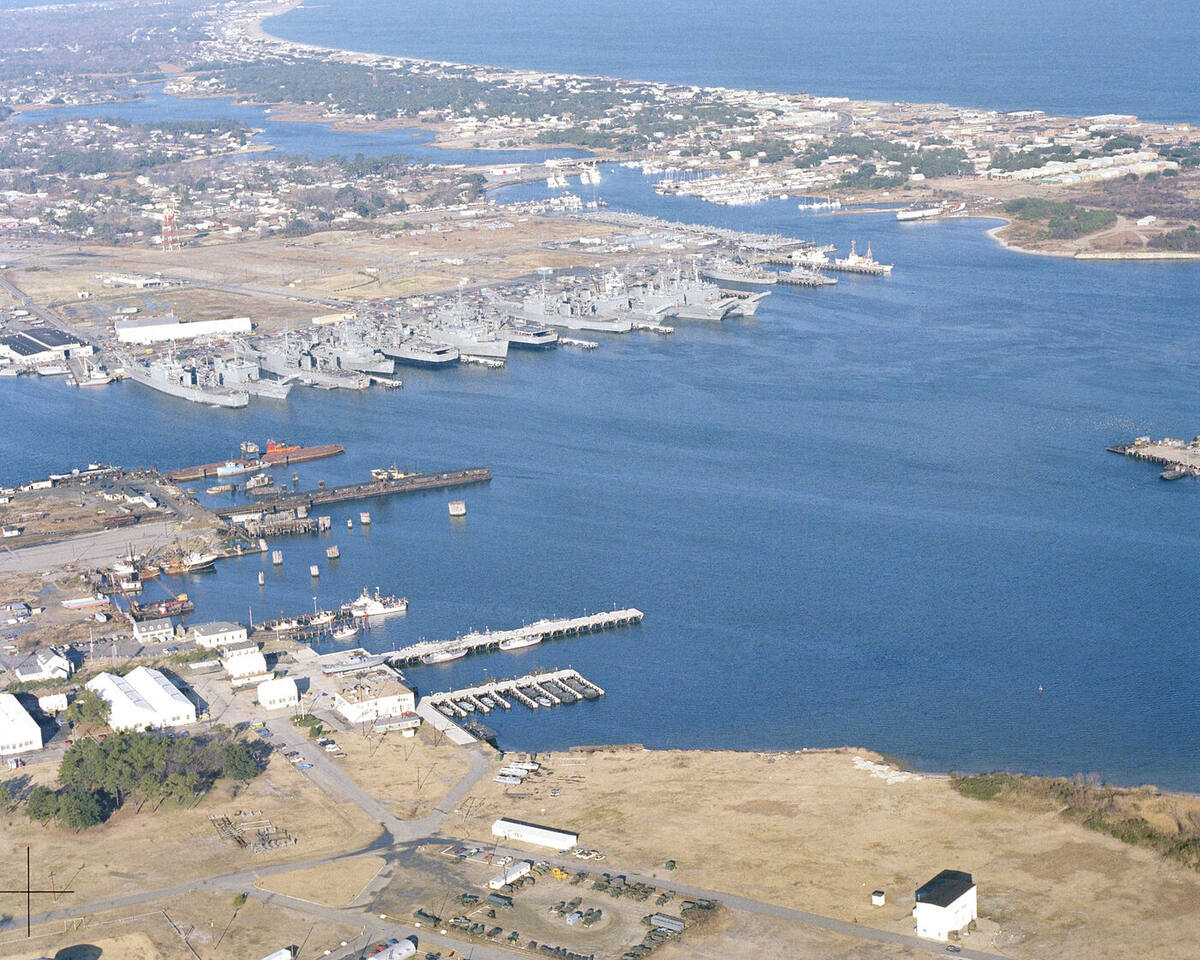
Naval Amphibious Base Little Creek
Naval Amphibious Base Little Creek is a U.S. Navy installation in Virginia Beach, Virginia, situated near the mouth of the Chesapeake Bay. Commissioned on August 10, 1945, and designated a permanent base the following year, it grew into the major operating base for the amphibious forces of the Navy's Atlantic Fleet and is often described as the largest installation of its kind in the world. The base supports roughly 15,000 personnel along with dozens of homeported ships and resident activities, and it provides training and logistical support for amphibious operations. In 2009 the installation merged with nearby Fort Story and was renamed Joint Expeditionary Base Little Creek, though the Little Creek property remains widely known by its original name. Its long history of industrial and waterfront operations is central to the environmental concerns that later emerged.
Decades of base operations have been associated with the release of several substances into soil, sediment, surface water, and groundwater. Activities including vehicle and boat maintenance, boat painting and sandblasting, pesticide mixing and application, dry cleaning, and electroplating left residues across roughly 140 known or suspected locations on the installation. The following contaminants have been documented and have raised concerns about potential exposure.
- Solvents. Chlorinated solvents such as TCE and related volatile organic compounds were used in degreasing, equipment maintenance, and dry cleaning at the base. Such solvents can migrate through soil into groundwater, and exposure to certain solvents has been associated in some studies with effects on the liver, kidneys, and immune system.
- Heavy metals. Metals were tied to electroplating, painting, and sandblasting work, with residual abrasive blast material accumulating on the ground surface in some areas. Heavy metals do not break down in the environment, and concerns about potential long-term exposure to metals such as lead and chromium have been raised because of their possible effects on multiple organ systems.
- PCBs. PCBs were widely used in electrical equipment, hydraulic systems, and similar applications at industrial and waterfront facilities of this era. These compounds persist in sediment and have been associated in some research with potential health concerns, which is part of why they have been a focus of investigation at the site.
Naval Amphibious Base Little Creek was added to the National Priorities List on May 10, 1999, and cleanup has proceeded under the federal Superfund program. The Navy serves as the lead agency and works with the U.S. Environmental Protection Agency and the Virginia Department of Environmental Quality, with a Federal Facilities Agreement signed in 2003. The site reached construction completion in 2015, and Records of Decision were issued for twelve operable units. Long-term groundwater monitoring continues at several of those units, with five-year reviews used to confirm that remedies remain protective. More recently, documented releases of aqueous film-forming foam in a pier area have prompted evaluation of PFAS contamination as part of ongoing study.
Veterans, civilian workers, and family members who spent time at Little Creek may find it helpful to keep informed as monitoring and reviews continue. Anyone with questions about possible exposure is encouraged to discuss their service history with the U.S. Department of Veterans Affairs and their own health care provider, who can offer guidance based on individual circumstances.
Were you stationed at a contaminated site?
The PACT Act of 2022 added more than 20 presumptive conditions for toxic exposure, including many cancers, and there is no deadline to file a VA claim.
This page is for informational purposes only and is not medical or legal advice. Consult a qualified professional about your health or benefits.
Discussion
No approved comments yet.