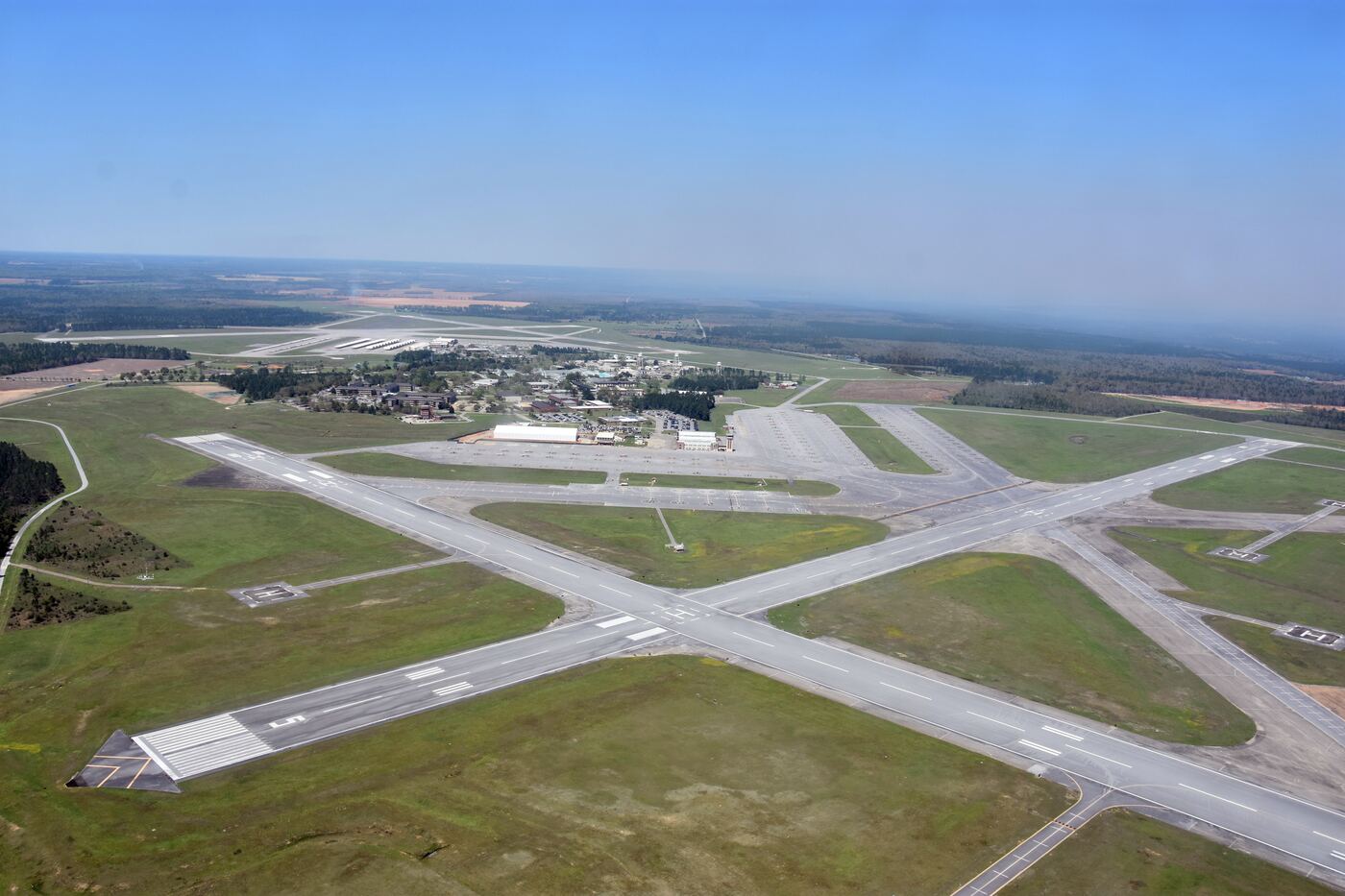
Naval Air Station Whiting Field
Naval Air Station Whiting Field is a naval aviation training facility in Santa Rosa County, Florida, about seven miles north of Milton and roughly 20 miles northeast of Pensacola in the state's panhandle. The installation was commissioned in July 1943 to instruct student naval aviators, and it has served as a flight training base ever since. Over the decades, day to day operations such as aircraft maintenance, fueling, and paint stripping generated a variety of industrial wastes. According to the EPA, through the early 1980s construction debris, garbage, waste solvents and oils, tank bottom sludges, fuels, and machine fluids were disposed of at different locations around the facility.
Those historic waste handling practices contaminated soil and groundwater at the base, and several contaminants have been documented in official investigations. Veterans and civilian employees who served or worked at Whiting Field may have questions about potential exposure to the following substances.
- Solvents. Industrial solvents were used at Whiting Field to clean structural metal components before repair or fabrication and to strip paint from aluminum, steel, and alloy parts, and waste solvents were disposed of on the installation for decades. In 1986, Florida regulators asked the base to shut down a drinking water supply well after the chlorinated solvent TCE (trichloroethylene) was detected above state drinking water standards. Long term exposure to chlorinated solvents has been associated in scientific studies with concerns about certain cancers and other health effects, although individual risk depends on the level and duration of any exposure.
- Benzene. Benzene is a volatile organic compound found in petroleum fuels and some industrial products. On August 28, 1986, the Florida Department of Environmental Regulation requested that one of the base's drinking water supply wells be shut down because benzene concentrations exceeded the state drinking water standard. The affected wells were later fitted with charcoal filter systems and returned to service. Benzene is classified by federal health agencies as a known human carcinogen, and exposure has been associated with blood related conditions, including leukemia.
- Jet fuel. As a busy flight training station, Whiting Field stored and handled large volumes of aviation fuel, and fuels along with tank bottom sludges were among the wastes disposed of on base through the early 1980s. Fuel releases contributed to petroleum contamination of soil and groundwater. Jet fuel contains benzene and other hydrocarbons, and prolonged exposure to fuel constituents has been linked in some studies to potential neurological and other health concerns.
EPA placed Naval Air Station Whiting Field on the Superfund National Priorities List in 1994. The Navy carried out removal actions at 11 cleanup areas between 1999 and 2001, focusing largely on contaminated soil, and a Federal Facilities Agreement among the Navy, EPA, and the Florida Department of Environmental Protection took effect in 2009. Cleanup decisions have been issued for most of the 28 operable units identified at the site, and land use controls, groundwater monitoring, and periodic Five-Year Reviews continue under joint Navy, EPA, and FDEP oversight.
If you trained, served, or worked at Whiting Field and have concerns about possible exposure, it may help to review official site documents and keep an eye on ongoing cleanup updates. Veterans with health questions are encouraged to speak with their health care providers and to contact the Department of Veterans Affairs about registry exams, documentation, and any benefits that may apply to their situation.
Were you stationed at a contaminated site?
The PACT Act of 2022 added more than 20 presumptive conditions for toxic exposure, including many cancers, and there is no deadline to file a VA claim.
This page is for informational purposes only and is not medical or legal advice. Consult a qualified professional about your health or benefits.
Discussion
No approved comments yet.