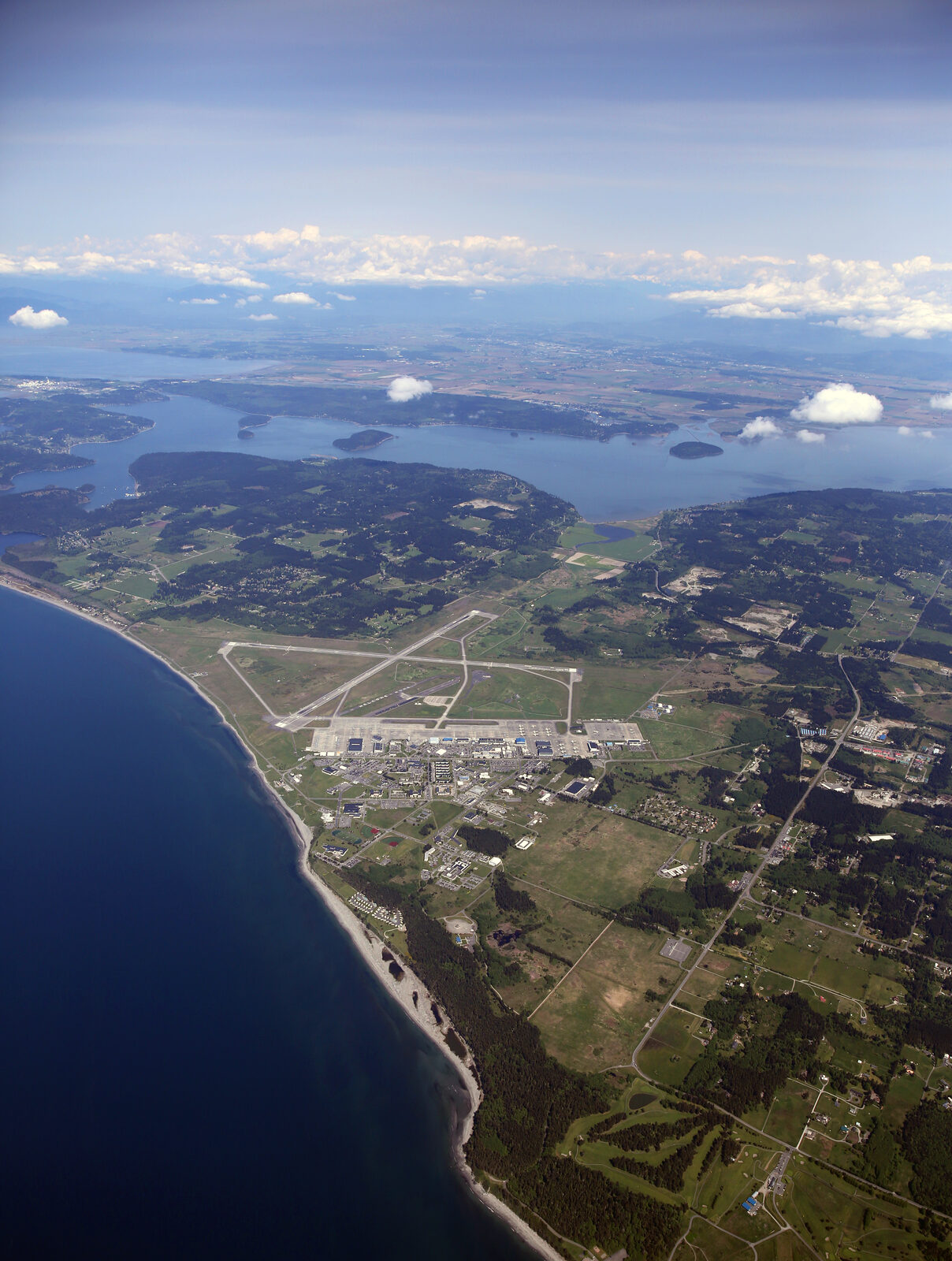
Naval Air Station Whidbey Island
Naval Air Station Whidbey Island is a United States Navy installation on Whidbey Island in Island County, Washington, near Oak Harbor. Commissioned on September 21, 1942, the station initially served as a base to train fighter and patrol bomber crews during World War II. The installation consists of two main areas, Ault Field and the Seaplane Base, and the Navy also operates nearby Outlying Landing Field (OLF) Coupeville, where pilots practice carrier landings. Today it is the home of the Navy's EA-18G Growler electronic attack squadrons.
There are concerns about potential carcinogenic health hazards at the installation, due to several documented environmental contaminants:
- PFAS: Per- and polyfluoroalkyl substances are a large family of man-made chemicals that resist heat, oil, and water and break down very slowly in the environment. At NAS Whidbey Island, PFAS entered groundwater primarily through firefighting foam used in training and emergency response at Ault Field and OLF Coupeville. Exposure to certain PFAS has been associated in some studies with kidney and testicular cancer, although research is ongoing.
- PFOS: Perfluorooctane sulfonic acid is one of the most studied PFAS compounds. Navy sampling of 286 drinking water wells near Ault Field, OLF Coupeville, and the Area 6 landfill between November 2016 and July 2020 found PFOS and/or PFOA above the EPA's lifetime health advisory of 70 parts per trillion in 16 wells. Residents relying on these wells may have been exposed before testing began.
- PFOA: Perfluorooctanoic acid was detected alongside PFOS in groundwater and private wells near the base, with combined levels in one well measured as high as 2,516 parts per trillion, far above the federal advisory level. PFOA has been classified by some health agencies as carcinogenic to humans.
- AFFF: Aqueous film forming foam is a firefighting agent containing PFAS that the Navy used for decades in crash response and fire training. AFFF use at Ault Field and OLF Coupeville is considered the likely source of the PFAS found in area drinking water, and the Navy has spent more than $24 million on PFAS investigation and drinking water responses, including bottled water, filtration systems, and connecting affected homes to municipal water supplies.
- Industrial solvents: From 1969 to 1988, hazardous wastes including large volumes of acids and solvents were reportedly disposed of in pits, trenches, and a landfill in the Area 6 portion of Ault Field, and maintenance and paint stripping operations at the Seaplane Base generated solvent and paint wastes dating to the 1940s. Volatile organic compounds from these wastes contaminated soil and groundwater, and long-term exposure to certain solvents has been associated with cancer and other illnesses.
Both portions of the installation were added to the EPA's National Priorities List of Superfund sites in 1990. At the Seaplane Base, contaminated soil was excavated and removed between 1994 and 1995, and that site was deleted from the list in 1995, though land use controls remain in place. Ault Field remains on the list; cleanup actions constructed between 1993 and 1997 included excavation, landfill capping, and groundwater treatment, and the sixth five-year review, completed in 2024, found the remedies protective in the short term with continued monitoring required.
While there are concerns about potential exposure to these contaminants at Naval Air Station Whidbey Island, establishing definitive links between specific exposures and individual illnesses can be complex, and research into the long-term health effects of PFAS and solvent exposure is still developing. Veterans and family members who lived or worked at the base are encouraged to stay informed and to discuss any health concerns or potential benefits with the Department of Veterans Affairs.
Were you stationed at a contaminated site?
The PACT Act of 2022 added more than 20 presumptive conditions for toxic exposure, including many cancers, and there is no deadline to file a VA claim.
This page is for informational purposes only and is not medical or legal advice. Consult a qualified professional about your health or benefits.
Discussion
No approved comments yet.