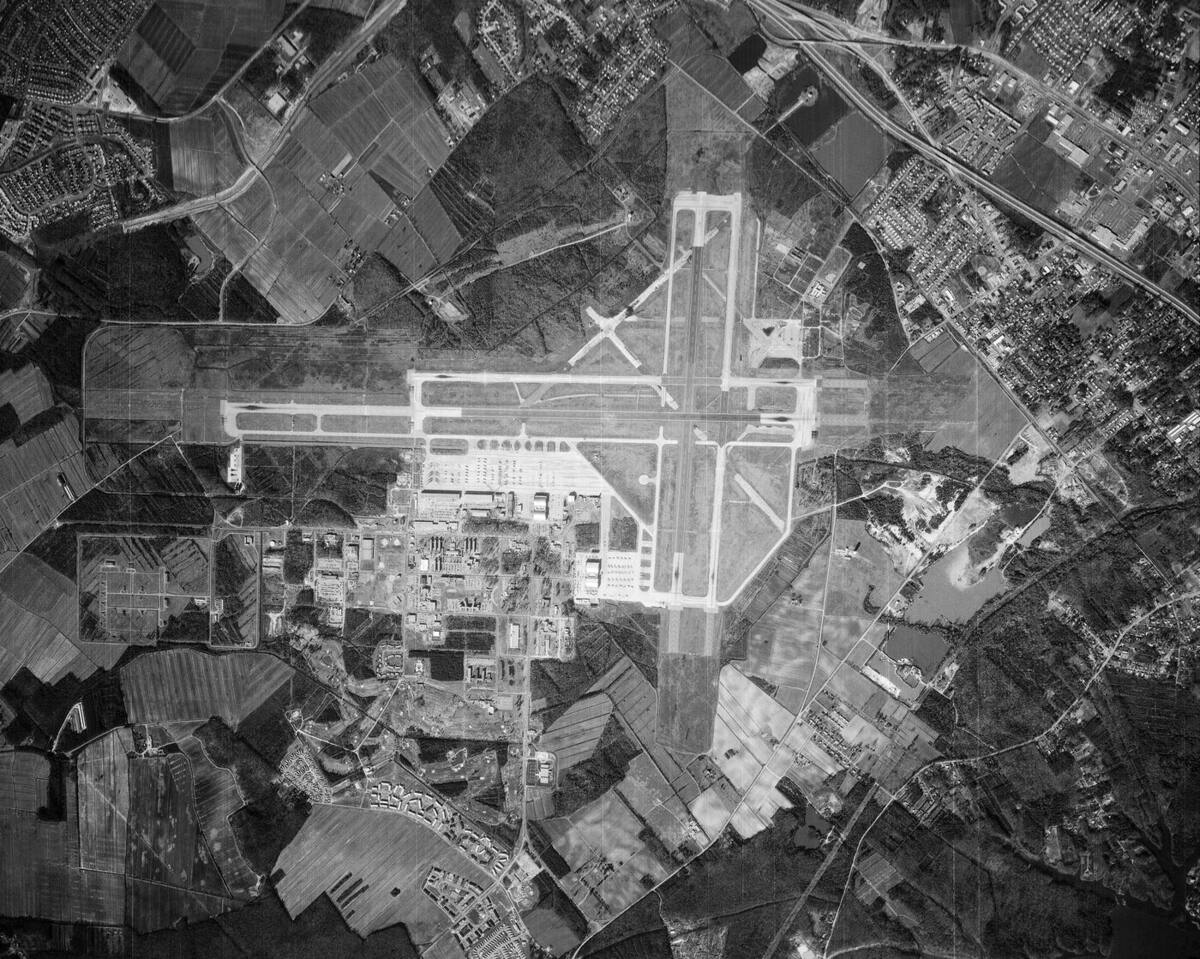
Naval Air Station Oceana
Naval Air Station Oceana is a United States Navy installation located in Virginia Beach, Virginia. Construction began in 1941, and the station was commissioned in August 1943. In the 1950s it was designated a Master Jet Base, and today it serves as the East Coast home of the Navy's strike fighter community, training and deploying the Atlantic Fleet's squadrons of F/A-18 Super Hornets. The installation also operates Naval Auxiliary Landing Field Fentress in nearby Chesapeake, an outlying field used for field carrier landing practice.
There are concerns about potential carcinogenic health hazards at Naval Air Station Oceana, due to possible exposure to several environmental contaminants:
- PFAS (per- and polyfluoroalkyl substances) are a large family of man-made chemicals, sometimes called forever chemicals because they break down very slowly in the environment. Decades of firefighting operations and training at Oceana released PFAS into soil and groundwater, and Navy off-base sampling that began in 2016 found PFAS in private drinking water wells near the base and near the Fentress outlying field. Exposure to certain PFAS has been associated in some studies with kidney and testicular cancers, thyroid disease, and other health effects, although research into these potential links is ongoing.
- PFOS (perfluorooctane sulfonate) is one of the most studied PFAS compounds and was a key ingredient in the legacy firefighting foam used at the base. Sampling of off-base wells near the Fentress field found PFOS, together with PFOA, above the EPA's 2016 lifetime health advisory of 70 parts per trillion; seven of 54 wells sampled in 2016 exceeded that level. PFOS exposure may potentially be linked to certain cancers and other health conditions.
- PFOA (perfluorooctanoic acid) was detected alongside PFOS in groundwater at the installation and in nearby private wells. PFOA has been classified by health agencies as a likely human carcinogen, and concerns remain about potential exposure for those who drank from affected wells before alternative water was provided.
- AFFF (aqueous film forming foam) was used for decades at the master jet base for aircraft crash response and firefighting training. The Navy has identified the historical use of AFFF as the most likely source of the PFOS, PFOA, and other PFAS found in groundwater at Oceana and Fentress. Personnel who regularly handled the foam, particularly firefighters, may have experienced direct exposure that has been associated with elevated PFAS levels in blood.
Naval Air Station Oceana is not listed on the federal Superfund National Priorities List. The Navy responded to the well sampling results by supplying bottled water and installing carbon filtration systems for affected households, and it later contracted to connect homes with contaminated wells to Virginia Beach city water, which has tested free of these substances. Naval Facilities Engineering Systems Command continues a formal PFAS drinking water and groundwater investigation at the installation under the Defense Environmental Restoration Program.
Establishing definitive links between service at a particular installation and later illness is complex, and research into PFAS health effects continues to evolve. Veterans and family members who lived or worked at Naval Air Station Oceana or near Fentress are encouraged to stay informed about the ongoing investigation, document their potential exposure history, and consult the VA about health concerns, screenings, and any benefits for which they may be eligible.
Were you stationed at a contaminated site?
The PACT Act of 2022 added more than 20 presumptive conditions for toxic exposure, including many cancers, and there is no deadline to file a VA claim.
This page is for informational purposes only and is not medical or legal advice. Consult a qualified professional about your health or benefits.
Discussion
No approved comments yet.