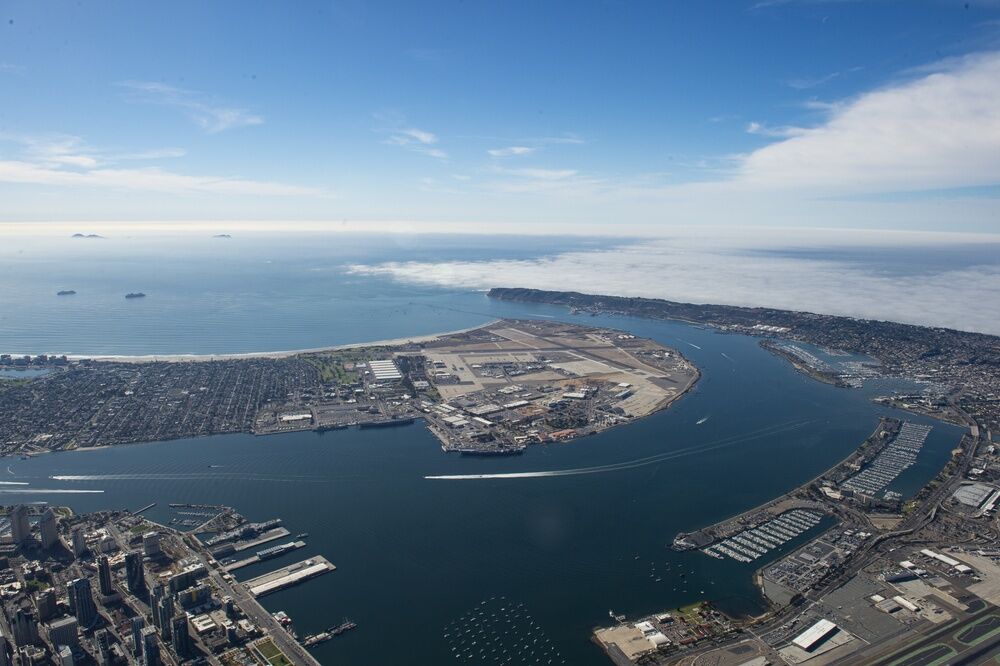
Naval Air Station North Island
Naval Air Station North Island is a major Navy installation on the Coronado peninsula in San Diego County, California. Commissioned as a naval air station in 1917, it is widely recognized as the birthplace of naval aviation, having hosted early Navy flight training before World War I. During World War II it was a principal continental United States base supporting carrier operations across the Pacific. Today it is the largest component of Naval Base Coronado, a consolidated complex established in 1997, and remains a center for carrier aviation. Its long industrial history has left environmental concerns that agencies continue to examine.
Decades of aircraft maintenance, fueling, and waste disposal at North Island have been associated with soil and groundwater contamination. Much of the concern centers on a roughly 95 acre area on the north shore known as the Fiery Marsh, where hazardous wastes were dumped and, in some places, burned in open pits. By the Navy's own estimates the area received on the order of 300,000 to 800,000 gallons of liquid hazardous wastes per year during the disposal era, with one site reportedly receiving up to 32 million gallons over time. The following contaminants have been documented or are under investigation in connection with these activities.
- Solvents and degreasers: Industrial solvents, degreasers, caustic acids, and oils were used to clean and maintain aircraft and were among the materials disposed of at the Fiery Marsh from the 1940s through the early 1970s. Exposure to certain solvents has been associated with potential health concerns, and their presence in groundwater is part of why the site remains under review.
- Trichloroethylene and related chlorinated compounds: Chlorinated solvents, including TCE and the closely related 1,1,1-trichloroethane, were commonly used as degreasing agents in aviation maintenance. These compounds are persistent in groundwater, and exposure has been associated in some studies with potential health effects, one reason monitoring has continued.
- Heavy metals: Metals from paints, coatings, and other maintenance materials were among the wastes deposited at the dump site. Heavy metals can persist in soil and groundwater, and concerns about exposure have contributed to ongoing characterization of the affected areas.
- Jet fuel and petroleum products: As an active aviation base, North Island handled large quantities of fuels and petroleum products, which were among the materials disposed of at the marsh. Petroleum constituents can migrate through soil and groundwater and have been a factor in cleanup discussions.
- Per- and polyfluoroalkyl substances: PFAS, synthetic chemicals that are highly persistent in the environment, are under investigation at North Island, where firefighting foam containing such compounds has historically been used. Because these chemicals resist breakdown and can move into groundwater, concerns about exposure have prompted ongoing study at several sites.
The Navy's environmental program at North Island has proceeded under federal and state oversight, with the site addressed as a corrective action under the Resource Conservation and Recovery Act rather than placed on the National Priorities List. In recent years the San Diego Regional Water Quality Control Board, the California Department of Toxic Substances Control, and the California Department of Fish and Wildlife have pressed the Navy to complete remediation of the Fiery Marsh, citing contaminated groundwater extending well below the surface and potential leaching into San Diego Bay.
Veterans and family members who served at or lived near North Island and have questions about possible exposure are encouraged to stay informed as cleanup work proceeds. The Department of Veterans Affairs offers guidance on environmental exposures and related benefits, and speaking with the VA or a health care provider can help individuals understand their situation and any options that may apply.
Were you stationed at a contaminated site?
The PACT Act of 2022 added more than 20 presumptive conditions for toxic exposure, including many cancers, and there is no deadline to file a VA claim.
This page is for informational purposes only and is not medical or legal advice. Consult a qualified professional about your health or benefits.
Discussion
No approved comments yet.