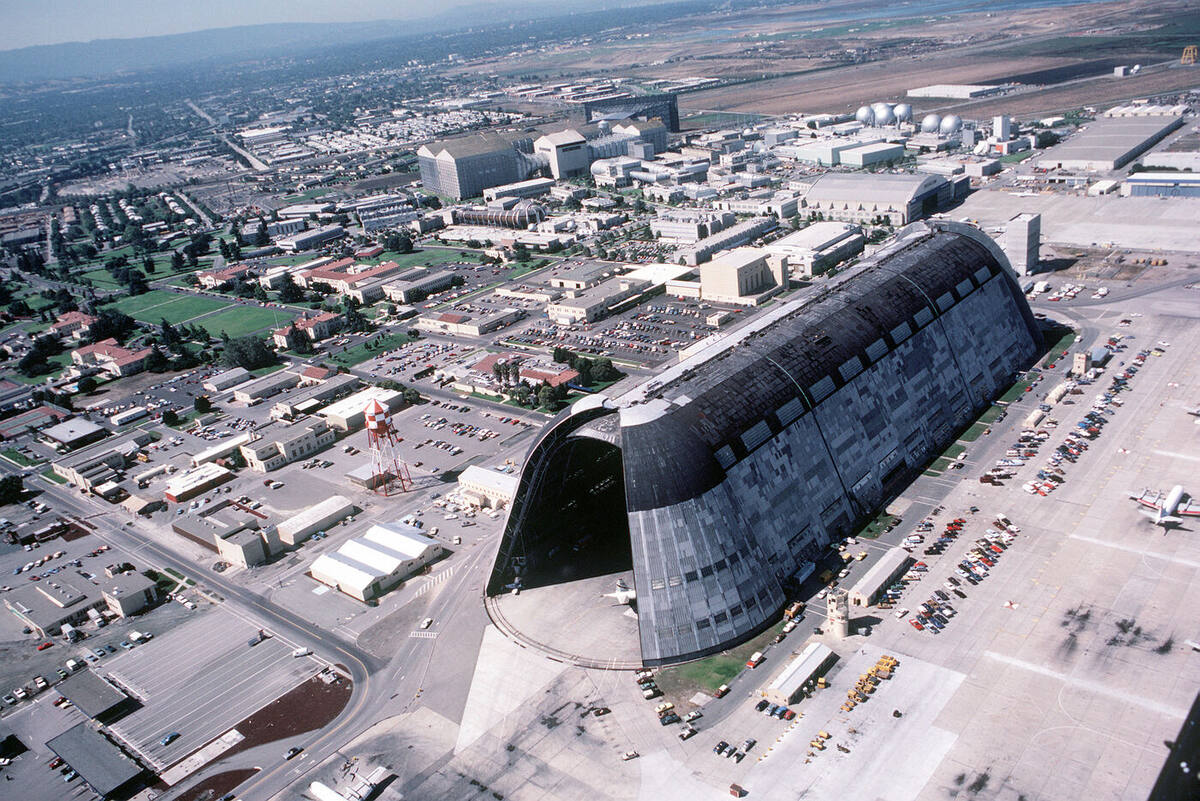
Naval Air Station Moffett Field
Naval Air Station Moffett Field sits at the southern end of San Francisco Bay between Mountain View and Sunnyvale, California. The Navy commissioned the station in 1933 as NAS Sunnyvale to support its lighter-than-air airship program, and it was soon renamed in honor of Rear Admiral William A. Moffett. After a period under Army Air Corps control from 1935 to 1942, the base returned to the Navy and went on to host major aeronautical activities, including decades of patrol aviation and aircraft maintenance operations. The base was recommended for closure under the Base Realignment and Closure (BRAC) process in 1991, closed in July 1994, and was transferred to NASA as Moffett Federal Airfield, though the Navy remains responsible for environmental cleanup.
Decades of aircraft operations, maintenance, fueling, and waste disposal contaminated groundwater, soil, and wetlands at Moffett Field. Investigators have identified 29 Installation Restoration Program sites and more than 160 petroleum sites, and contamination beneath the base merges with solvent plumes from neighboring industrial properties to form the Moffett-MEW regional groundwater plume, which extends well beyond the base boundary. Veterans and civilian workers who served at Moffett Field have raised concerns about potential exposure to several documented contaminants.
- Trichloroethylene (TCE): TCE is an industrial solvent that was widely used at Moffett Field to degrease aircraft parts and maintenance equipment. It is the leading contaminant in the regional groundwater plume, and exposure to TCE has been associated with kidney cancer, non-Hodgkin lymphoma, and other health conditions in scientific studies.
- Tetrachloroethylene (PCE): PCE is a closely related chlorinated solvent used in degreasing and cleaning operations. It has been detected in groundwater at and around the base, and long-term exposure has been associated with potential effects on the liver, kidneys, and nervous system, as well as certain cancers.
- Polychlorinated biphenyls (PCBs): PCBs were used in electrical equipment and older building materials, and they have been found in soil, storm drain sediments, and structures at Moffett Field, including the historic Hangar One. PCBs are classified as probable human carcinogens, and exposure has been associated with immune and developmental concerns.
- Other solvents and VOCs: A range of additional volatile organic compounds from fuels, cleaning agents, and shop operations has been documented in soil and groundwater. Prolonged exposure to some of these solvents has been associated with neurological and organ effects, depending on the chemical and level of contact.
EPA added Moffett Field to the Superfund National Priorities List in 1987, and the agency oversees ongoing cleanup work by the Navy and NASA with support from the California Regional Water Quality Control Board. Roughly 100 extraction wells have treated billions of gallons of groundwater, the regional plume has been stabilized, and TCE concentrations have been reduced by more than 75 percent. A 2010 remedy amendment added measures to address vapor intrusion, the movement of solvent vapors into overlying buildings, and a 2024 five-year review found the remedies protective in the short term, though groundwater treatment and monitoring are expected to continue for decades.
Veterans who served at Moffett Field and have questions about possible exposure may find it helpful to review the public cleanup records and stay current as monitoring continues. Those with health concerns they believe could be connected to their service are encouraged to speak with their health care provider and contact the Department of Veterans Affairs about registry exams and benefits eligibility.
Were you stationed at a contaminated site?
The PACT Act of 2022 added more than 20 presumptive conditions for toxic exposure, including many cancers, and there is no deadline to file a VA claim.
This page is for informational purposes only and is not medical or legal advice. Consult a qualified professional about your health or benefits.
Discussion
No approved comments yet.