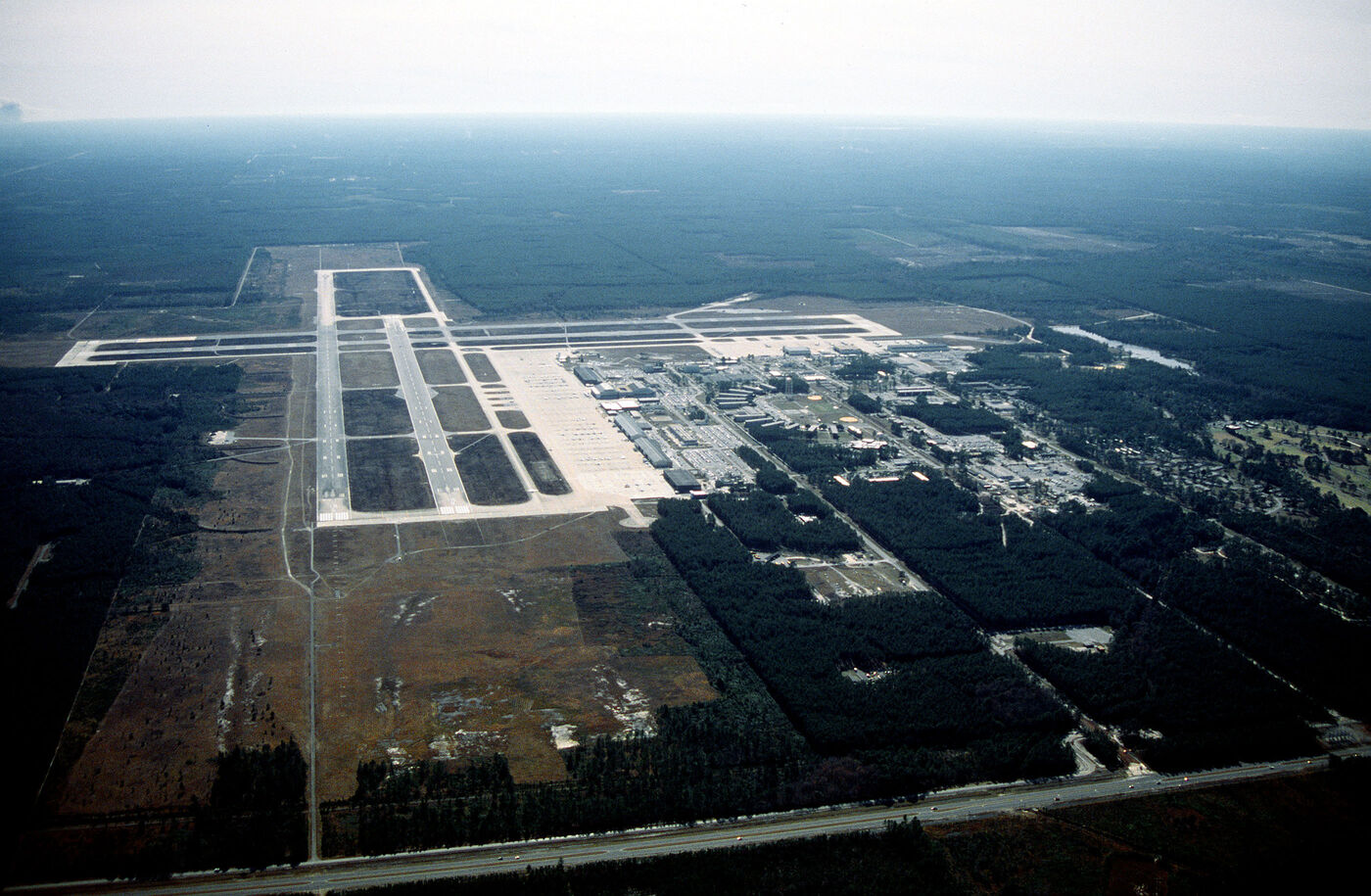
Naval Air Station Cecil Field
Naval Air Station Cecil Field was a United States Navy installation located west of Jacksonville, Florida. The base traces its origins to 1941 and was redesignated as a Naval Air Station on 30 June 1952, and by the mid-1950s it had been selected as one of the Navy's master jet bases for carrier-based jet aircraft. For decades it supported attack and fighter squadrons, including those flying the A-7 Corsair II and the F/A-18 Hornet. It was identified for closure under the Base Realignment and Closure (BRAC) process approved in 1993 and was decommissioned on 30 September 1999. Much of the former base was later transferred to civilian use and is now known as Cecil Commerce Center, with aviation operations under the Jacksonville Aviation Authority.
Like many long-operating military airfields, the site is associated with environmental concerns tied to fuels, solvents, and firefighting. Decades of maintenance, fuel handling, and waste disposal left areas where soil and groundwater were affected, and federal and Navy investigators have documented several contaminants of concern.
- PFAS: PFAS are synthetic chemicals valued for their resistance to heat, water, and oil. At Cecil Field they are associated primarily with firefighting foam. Research has examined possible associations between certain PFAS exposures and a range of health effects, with concerns about potential exposure through affected groundwater.
- PFOS: PFOS is one of the most studied PFAS compounds and was a common component of older foams. Navy sampling at the base has reported PFOS in groundwater, and some studies have associated it with potential health concerns still under evaluation.
- PFOA: PFOA is another PFAS compound historically linked to industrial and foam products. It has been reported alongside PFOS in groundwater sampling at the site, and concerns about long-term exposure have been part of the investigation.
- AFFF: AFFF, or aqueous film forming foam, was used at Cecil Field to suppress fuel fires. Because legacy formulations contained PFAS, its repeated use is regarded as a primary source of the PFOA and PFOS detected in groundwater, where reported combined concentrations have been very high.
- Solvents: Industrial solvents, including chlorinated compounds such as TCE, were used in degreasing and maintenance. Breakdown products such as vinyl chloride have been identified in groundwater plumes at the site, and exposure to such solvents has been associated with potential health concerns.
- Jet fuel: Petroleum products and jet fuel were stored and handled in large quantities. Spills and releases over many years contributed to soil and groundwater contamination, and potential exposure to fuel-related compounds has been part of the cleanup evaluation.
- PCBs: PCBs are man-made chemicals once common in electrical equipment and hydraulic systems. They are among the contaminants associated with historical operations at the base, and have been studied for possible health effects.
Naval Air Station Cecil Field was added to the National Priorities List, the federal Superfund program's roster of priority sites, on 21 November 1989. Cleanup has been carried out by the Navy with oversight from the U.S. Environmental Protection Agency and Florida regulators, and the site is organized into twelve operable units, each with its own Record of Decision. Remedies have included soil excavation and disposal or on-site containment along with groundwater treatment, and several units have reached completion while others remain under monitored natural attenuation and continued sampling. PFAS work has continued, with sampling reported in 2018 and remediation that remains ongoing.
Veterans and family members who served at or lived near Cecil Field may wish to stay informed as environmental findings develop. Those with questions about possible exposure are encouraged to speak with the U.S. Department of Veterans Affairs and their health care providers.
Were you stationed at a contaminated site?
The PACT Act of 2022 added more than 20 presumptive conditions for toxic exposure, including many cancers, and there is no deadline to file a VA claim.
This page is for informational purposes only and is not medical or legal advice. Consult a qualified professional about your health or benefits.
Discussion
No approved comments yet.