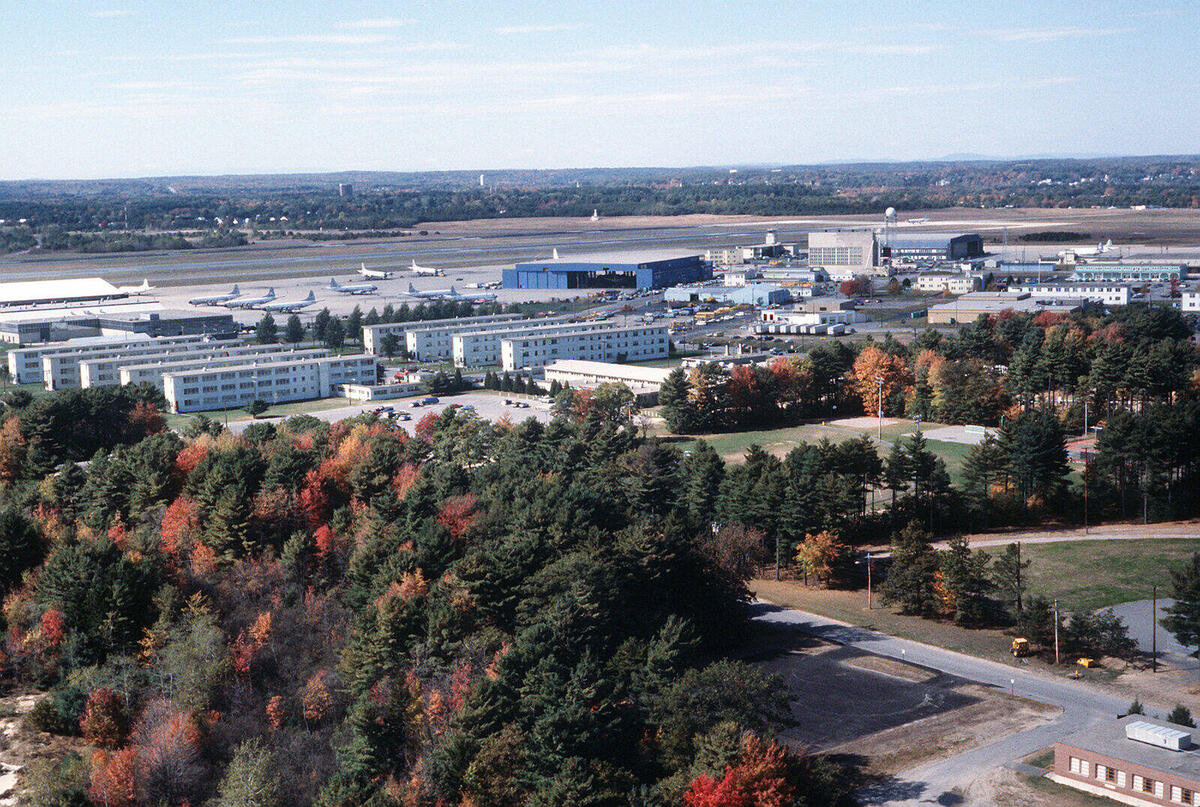
Former Naval Air Station Brunswick
The former Naval Air Station Brunswick is a roughly 3,100 acre installation in Brunswick, Maine, that the U.S. Navy commissioned in 1943. During World War II it supported anti submarine patrols over the Gulf of Maine, and after a period of reduced activity it was reactivated in 1951 and grew into a major Cold War maritime patrol base, flying P2V Neptune and later P-3 Orion aircraft to track submarine activity in the North Atlantic. The station was selected for closure under the 2005 Base Realignment and Closure process and formally closed on May 31, 2011. Much of the property has since been transferred for civilian redevelopment, including the Brunswick Executive Airport and a business and industrial park managed by the Midcoast Regional Redevelopment Authority.
There are concerns about carcinogenic health hazards at the former Naval Air Station Brunswick, due to exposure to various environmental contaminants:
- PFAS: Per and polyfluoroalkyl substances are a large family of synthetic chemicals valued for their resistance to heat, water, and grease. At Brunswick they are associated primarily with the historical use and storage of firefighting foams, and the Navy has investigated areas across the base where these chemicals may have reached soil and groundwater. PFAS compounds have been associated in some studies with concerns about potential effects on the immune system, cholesterol levels, and certain cancers.
- PFOS: Perfluorooctane sulfonate is one of the most studied PFAS compounds and was a common ingredient in older firefighting foams. PFOS was the primary compound detected after firefighting foam was released at the Brunswick Executive Airport, and it has also been identified in groundwater at the former base. PFOS has been associated with concerns about potential health effects, and Maine has established advisories where it has been found at elevated levels.
- AFFF: Aqueous film forming foam is a fire suppressant used to extinguish fuel fires and was historically deployed at military airfields like Brunswick for training and emergency response. On August 19, 2024, a malfunction of a hangar fire suppression system at the redeveloped Brunswick Executive Airport released a large volume of AFFF concentrate mixed with water, which traveled into stormwater ponds and the public sewer system. Because AFFF was a major source of PFAS at the site, concerns about potential exposure are closely tied to these foam products.
- TCE and other solvents: Trichloroethylene and related chlorinated solvents were widely used for degreasing and maintaining aircraft and equipment. Legacy solvent contamination and former landfill areas at Brunswick have been part of long running groundwater investigation and treatment, including an extraction and activated carbon system addressing the Eastern Plume. Exposure to TCE has been associated in research with concerns about potential links to certain cancers and other health conditions.
The former Naval Air Station Brunswick was placed on the EPA National Priorities List, the federal Superfund program, in 1987, with remediation coordinated among the EPA, the Navy, and the Maine Department of Environmental Protection. Cleanup has been ongoing for decades through the Federal Facilities program, and the Navy has completed multiple five year reviews while continuing to operate and optimize groundwater treatment systems, including measures intended to address PFAS.
While there are concerns about potential exposure at the former Naval Air Station Brunswick, establishing definitive links between specific contaminants and individual health outcomes can be complex, and ongoing research continues to refine what is understood about these substances. Veterans, former civilian workers, and others who lived or worked at the installation are encouraged to stay informed about new findings and to consult the U.S. Department of Veterans Affairs regarding any concerns and available benefits or health resources.
Were you stationed at a contaminated site?
The PACT Act of 2022 added more than 20 presumptive conditions for toxic exposure, including many cancers, and there is no deadline to file a VA claim.
This page is for informational purposes only and is not medical or legal advice. Consult a qualified professional about your health or benefits.
Discussion
No approved comments yet.