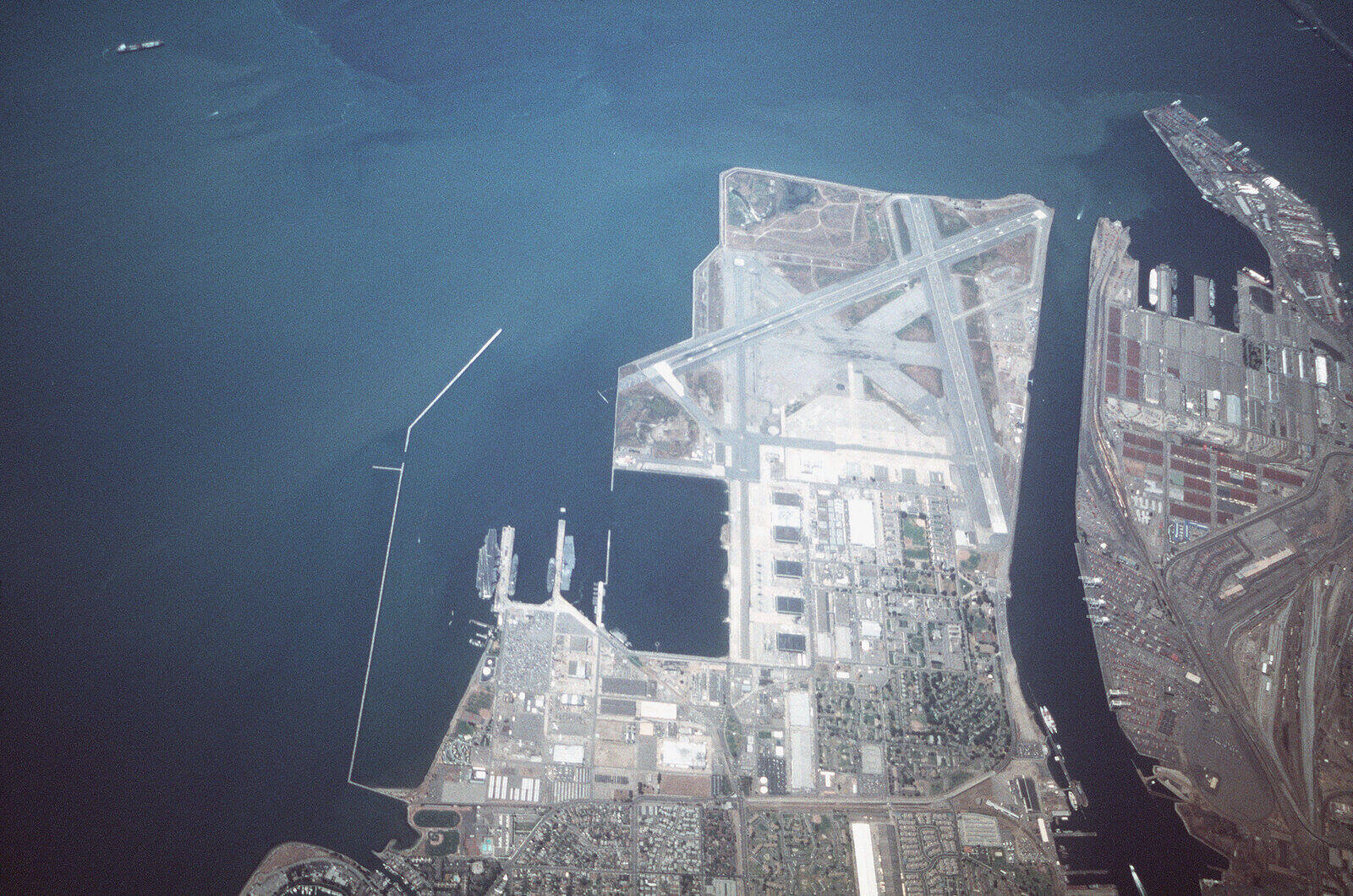
Naval Air Station Alameda
Naval Air Station Alameda was a major United States Navy installation on the western end of Alameda Island in San Francisco Bay, California. Commissioned in November 1940, the station supported patrol, transport, and carrier aviation through World War II, Korea, Vietnam, and the Cold War, and served as homeport for aircraft carriers including USS Coral Sea, USS Enterprise, and USS Carl Vinson. It also housed the Naval Air Rework Facility, where aircraft and engines were overhauled, plated, painted, and repaired. The station closed on April 25, 1997 under the Base Realignment and Closure program, and the property is now being redeveloped as Alameda Point.
There are concerns about carcinogenic health hazards at Naval Air Station Alameda due to decades of industrial operations, including metal plating, paint stripping, degreasing, fueling, engine testing, and radium dial painting. Before 1974, untreated industrial wastewater was discharged directly into the Seaplane Lagoon and the Oakland Inner Harbor. Veterans and workers may have experienced exposure to various environmental contaminants:
- TCE: Trichloroethylene is a chlorinated solvent that was used to degrease metal aircraft parts at the station's rework facility. Releases reached soil and shallow groundwater, with dense non-aqueous phase liquid contamination identified in some areas, and vapor intrusion concerns have been raised for buildings above the plumes. TCE exposure has been associated with kidney cancer and other serious health effects.
- PCE: Perchloroethylene, a related solvent used in cleaning and degreasing operations, has also been detected in groundwater at the site. PCE is considered a likely human carcinogen, and long term exposure has been associated with several types of cancer.
- Benzene: A component of aviation fuels handled during fueling and engine testing, benzene has been found in soil and groundwater at petroleum sites across the installation. Benzene exposure has been linked to leukemia and other blood disorders.
- PCBs: Waste oils containing polychlorinated biphenyls were generated and disposed of at the station, including in on-base landfills. PCBs persist in soil and sediment and are classified as probable human carcinogens.
- Radiation: Paint containing radium-226 was used to make dials and instrument markings glow, and dial painting and stripping wastes from Buildings 5 and 400 entered the storm drain system leading to the Seaplane Lagoon. Ionizing radiation from radium is a recognized carcinogen, and radiological surveys and remediation have continued at the former rework buildings.
- Industrial solvents: Operations also generated acids, paint strippers, caustic cleaners, and other volatile organic compounds that were disposed of on site, and exposure to such mixtures may potentially be linked to a range of health concerns.
- Heavy metals: Chromium and cyanide wastes from plating shops, along with arsenic detected in soil and groundwater, are present at multiple cleanup sites. Hexavalent chromium and arsenic are recognized human carcinogens.
The Environmental Protection Agency added Naval Air Station Alameda to the Superfund National Priorities List in July 1999. The Navy leads the cleanup with oversight from the EPA, the California Department of Toxic Substances Control, and the San Francisco Bay Regional Water Quality Control Board, and has spent more than $500 million across roughly 35 cleanup sites. Many parcels have been remediated and transferred for reuse, while groundwater treatment, radiological work, and institutional controls continue at others.
It is important to note that while there are concerns about potential exposure among those who served or worked at the station, establishing definitive links between specific exposures and individual illnesses can be complex. Veterans who spent time at the station are encouraged to stay informed about the cleanup, document their service history, and consult the Department of Veterans Affairs about health evaluations and benefits.
Were you stationed at a contaminated site?
The PACT Act of 2022 added more than 20 presumptive conditions for toxic exposure, including many cancers, and there is no deadline to file a VA claim.
This page is for informational purposes only and is not medical or legal advice. Consult a qualified professional about your health or benefits.
Discussion
No approved comments yet.