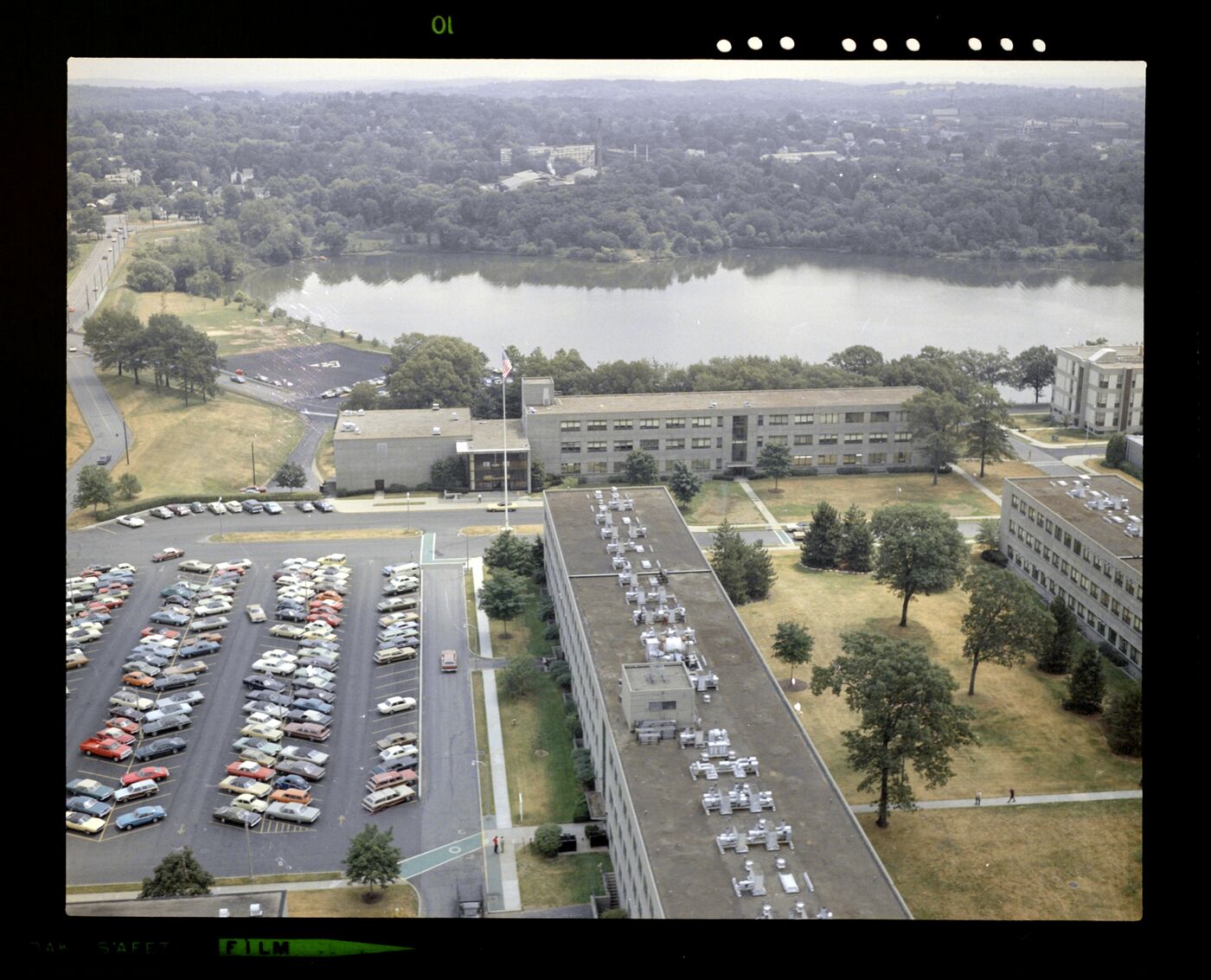
Natick Soldier Systems Center
Natick Soldier Systems Center, historically known as the Natick Laboratory and formally the U.S. Army Soldier Systems Center, is an Army research, development, and engineering installation in Natick, Middlesex County, Massachusetts. The U.S. Army built the laboratory in 1954, and the roughly 78-acre site occupies a peninsula on the eastern shore of Lake Cochituate. For decades the center has conducted research and development work on soldier equipment, food technology, clothing, and related materials. Over the course of these operations, a wide range of chemicals was used and stored on the property, and some of these activities left contamination in soil, groundwater, and surface water.
Sampling at the installation has identified a number of substances that have raised concerns about potential exposure for workers, residents, and others connected to the site. Several of these have been documented in environmental investigations conducted by the Army and the U.S. Environmental Protection Agency.
- Volatile organic compounds (VOCs): VOCs are a broad group of carbon-based chemicals that evaporate readily and were associated with solvents, fuels, and degreasing work. At Natick, elevated concentrations of compounds such as benzene, toluene, ethylbenzene, and xylenes were detected in soil and groundwater. Exposure to certain VOCs has been associated with a variety of health concerns, which is part of why these compounds were a focus of the cleanup.
- Trichloroethylene: TCE is a chlorinated solvent that has been widely used for degreasing and cleaning. At this base, TCE was among the chlorinated solvents found in groundwater in the area served by the on-site extraction and treatment system. Exposure to TCE has been associated in some studies with potential health effects, prompting continued monitoring.
- Heavy metals: Metals including arsenic, barium, chromium, copper, lead, and zinc were detected at elevated levels in soil, groundwater, and surface water at the site. These metals were linked to various research and support activities carried out over the installation's history. Long-term exposure to certain heavy metals has been associated with a range of health concerns, depending on the metal and the level and route of exposure.
- Other organic compounds: Investigations also reported naphthalene, Freon 113, and tetrachloroethylene (PCE), among other substances, in environmental samples. These chemicals were tied to solvents, refrigerants, and related materials used at the facility, and their presence contributed to the concerns that led to further study and remediation.
The EPA added the Natick Laboratory Army Research, Development, and Engineering Center to the Superfund National Priorities List in 1994 because of soil and groundwater contamination. As a pre-Record of Decision response, the Army completed a groundwater extraction and treatment system in 1997 to address chlorinated solvents in a portion of the site. The location remains an active federal-facility cleanup, with the EPA completing a five-year review in 2022 and institutional controls in place to manage remaining contamination.
Veterans, civilian employees, and family members who spent time at Natick Soldier Systems Center may wish to stay informed about ongoing environmental reviews and cleanup progress. Anyone with questions about possible exposure and their health is encouraged to speak with a health care provider and to contact the U.S. Department of Veterans Affairs to learn about available resources and current eligibility guidance.
Were you stationed at a contaminated site?
The PACT Act of 2022 added more than 20 presumptive conditions for toxic exposure, including many cancers, and there is no deadline to file a VA claim.
This page is for informational purposes only and is not medical or legal advice. Consult a qualified professional about your health or benefits.
Discussion
No approved comments yet.