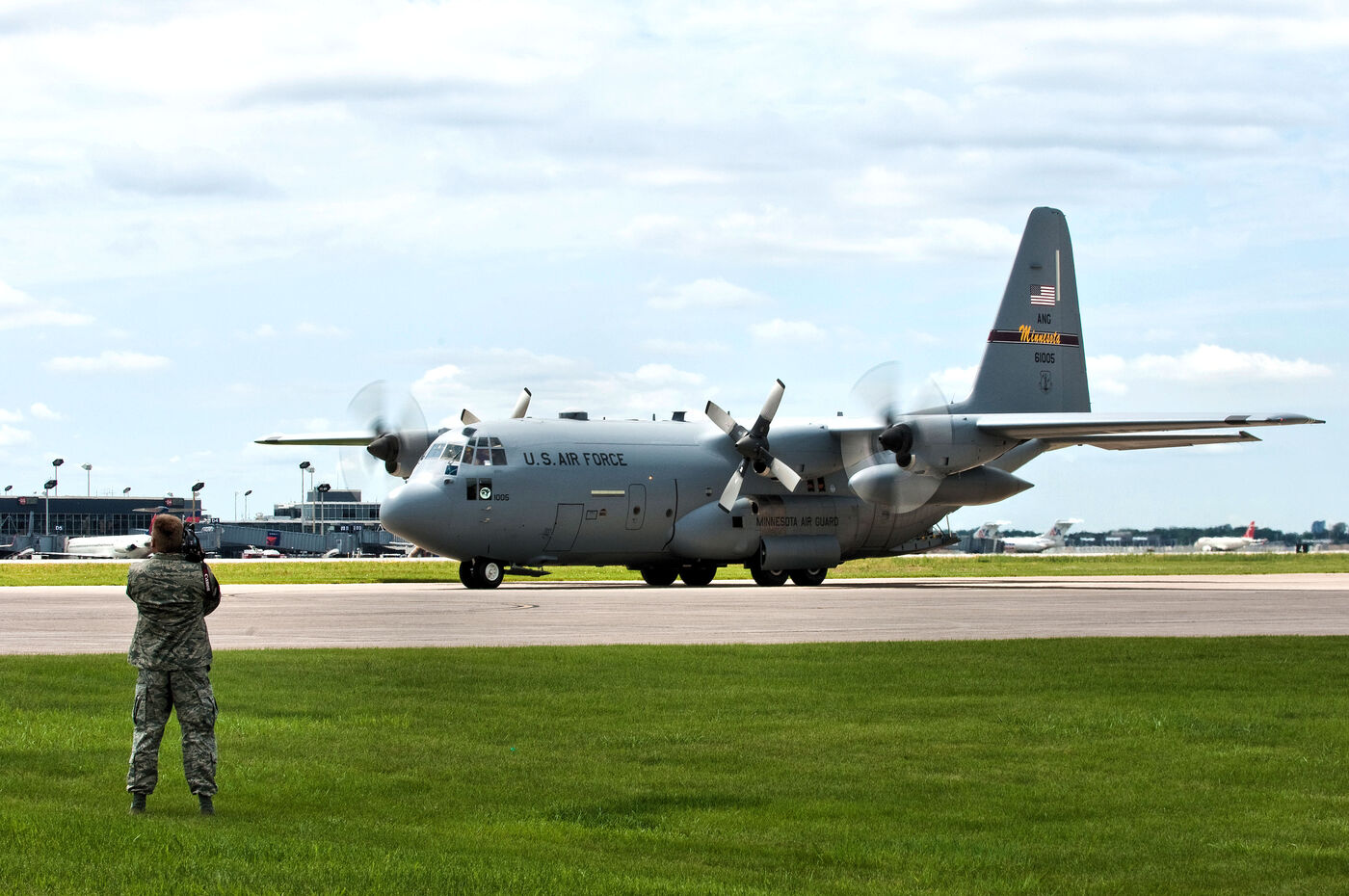
Minneapolis-Saint Paul Joint Air Reserve Station
Minneapolis-Saint Paul Joint Air Reserve Station is a military installation located at Minneapolis-Saint Paul International Airport in the Fort Snelling area near Minneapolis, Minnesota. Military aviation at this location traces back to the late 1920s, when a Naval Reserve aviation presence was established, and the installation took shape at the airport by around 1940. It later served roles under the Army Air Forces and Air Defense Command before the Air Force Reserve presence took shape. Today the installation is home to the 934th Airlift Wing, which is Minnesota's only Air Force Reserve unit and flies the C-130 Hercules transport aircraft. The 133rd Airlift Wing of the Minnesota Air National Guard, which also operates the C-130, shares the airfield, making this a joint reserve-component installation. The wings support airlift, training, and global transport missions from this Twin Cities location.
Like many installations where aircraft operations and fire training have taken place over the decades, Minneapolis-Saint Paul Joint Air Reserve Station has drawn attention over concerns about potential exposure to certain industrial chemicals. The Department of Defense has identified the installation as one of six sites in Minnesota included in its broader investigation of contamination tied to historic firefighting foam use, with the Air Force planning sampling work in the years following the discovery of related contamination at nearby reserve facilities.
- PFAS (per- and polyfluoroalkyl substances) are a large family of synthetic chemicals that resist breaking down in the environment and can accumulate in the body over time. At this installation, the primary documented pathway of concern is historic use of firefighting foam, and the DoD has placed the site on its list of locations being assessed for PFAS use or potential release. PFAS exposure has been associated in some studies with a range of health effects, including certain cancers, though findings vary across the scientific literature.
- PFOS (perfluorooctane sulfonate) is one of the individual PFAS compounds most commonly identified at military sites because it was a key ingredient in older firefighting foams. It is among the chemicals the Department of Defense screens for when evaluating drinking water and groundwater near affected installations, and it has been associated with potential health concerns in exposed populations.
- PFOA (perfluorooctanoic acid) is another individual PFAS compound frequently evaluated alongside PFOS at sites with a history of foam use. Federal and state agencies have studied combined PFOA and PFOS levels in water supplies, and researchers have raised concerns about possible links between exposure and certain adverse health outcomes.
- AFFF (aqueous film-forming foam) is the firefighting foam widely used by the military to suppress fuel fires during emergencies and training exercises. AFFF made with PFAS is generally regarded as the primary source of PFAS contamination at military installations, and repeated historic use during training is the activity that prompted the investigation at this site.
Minneapolis-Saint Paul Joint Air Reserve Station is not listed on the National Priorities List as a Superfund site. Instead, investigation and any resulting cleanup are being handled through the Department of Defense environmental program, in coordination with state agencies such as the Minnesota Pollution Control Agency and the Minnesota Department of Health. Reporting has noted that the Pentagon's PFAS investigation and cleanup timelines at many installations nationwide have faced delays, so the pace and findings at individual sites continue to evolve.
Veterans, current service members, and family members who lived or worked at this installation may wish to stay informed as sampling results and official findings become available. Those with questions about possible exposure are encouraged to keep records of their service history and to speak with the U.S. Department of Veterans Affairs about screening, benefits, and current guidance.
Were you stationed at a contaminated site?
The PACT Act of 2022 added more than 20 presumptive conditions for toxic exposure, including many cancers, and there is no deadline to file a VA claim.
This page is for informational purposes only and is not medical or legal advice. Consult a qualified professional about your health or benefits.
Discussion
No approved comments yet.