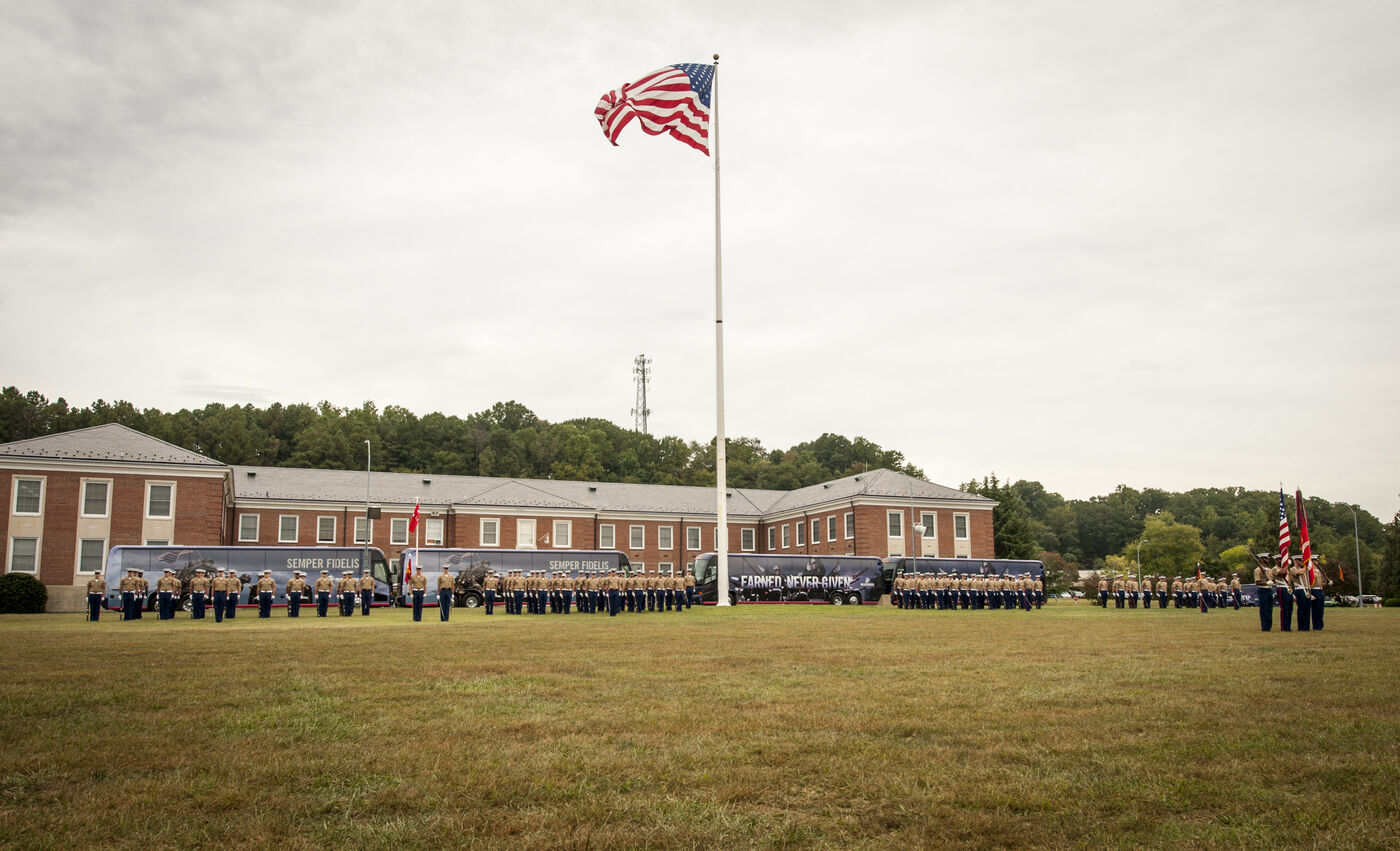
Marine Corps Base Quantico
Marine Corps Base Quantico is a major Marine Corps installation in northern Virginia, situated along the Potomac River roughly 35 miles south of Washington, D.C., and spanning approximately 56,000 acres across Prince William, Stafford, and Fauquier counties. The base was established as Marine Barracks, Quantico, on May 14, 1917, and has since grown into one of the most important training and development centers in the Corps. Often called the "Crossroads of the Marine Corps," it is home to The Basic School, Officer Candidates School, Marine Corps University, and the Marine Corps Combat Development Command, and it also hosts the FBI Academy. For more than a century, training, aviation, maintenance, and waste disposal activities have taken place across the installation. Some of those long term activities left a legacy of soil, sediment, and water contamination that is now being investigated and managed.
Because of decades of industrial operations and on base waste disposal, federal and Navy investigations have identified several areas of concern at Quantico. The base was added to the National Priorities List under the federal Superfund program, and environmental studies have documented a range of substances in soil, groundwater, river sediment, and nearby surface waters, including the Quantico Embayment and several creeks. The following contaminants have been associated with the installation.
- Polychlorinated biphenyls (PCBs): PCBs are a group of manufactured chemicals once widely used in electrical equipment, hydraulic systems, and other industrial applications before their U.S. manufacture was banned. At Quantico, extensive PCB contamination was identified at the Old Landfill, which served as the base's primary landfill from the 1920s until 1971, with PCBs found in soils, groundwater, and Potomac River sediments. Exposure to PCBs has been associated in some studies with a variety of health effects, and concerns about potential exposure remain part of the ongoing cleanup focus.
- Heavy metals (including lead): Heavy metals such as lead were detected in connection with landfill, range, and disposal areas at the base. Lead and other metals are persistent in the environment and can accumulate in soil and sediment. Long term exposure to certain heavy metals has been associated with potential effects on multiple body systems, which is why monitoring of affected media has continued.
- Solvents and other organic compounds: A later landfill that operated from 1971 to 1983 received wastes that included waste paints and solvents. Industrial solvents can migrate into soil and groundwater, and concerns about potential exposure to these compounds have been part of the investigations at the relevant sites. In addition, organochlorine pesticides have been documented among the contaminants affecting the embayment, the Potomac River, and area creeks.
Marine Corps Base Quantico, formerly identified in cleanup records as the Marine Corps Combat Development Command site, was placed on the National Priorities List on May 31, 1994. The Department of the Navy holds the lead role for cleanup, with the U.S. Environmental Protection Agency overseeing the work to ensure it follows federal Superfund law. A Federal Facility Agreement among the Navy and EPA became effective on February 4, 1999, and it has guided the identification and investigation of potential sites across the installation. Risk assessments and long term monitoring plans have been completed for affected areas, and remediation and monitoring activities are ongoing.
Veterans, family members, and others who lived or worked at Quantico and have questions about possible exposure are encouraged to stay informed as new information becomes available and to discuss any health concerns with their physician. The U.S. Department of Veterans Affairs maintains resources on military environmental exposures, and speaking with the VA can help individuals understand available healthcare and benefit options.
Were you stationed at a contaminated site?
The PACT Act of 2022 added more than 20 presumptive conditions for toxic exposure, including many cancers, and there is no deadline to file a VA claim.
This page is for informational purposes only and is not medical or legal advice. Consult a qualified professional about your health or benefits.
Discussion
No approved comments yet.