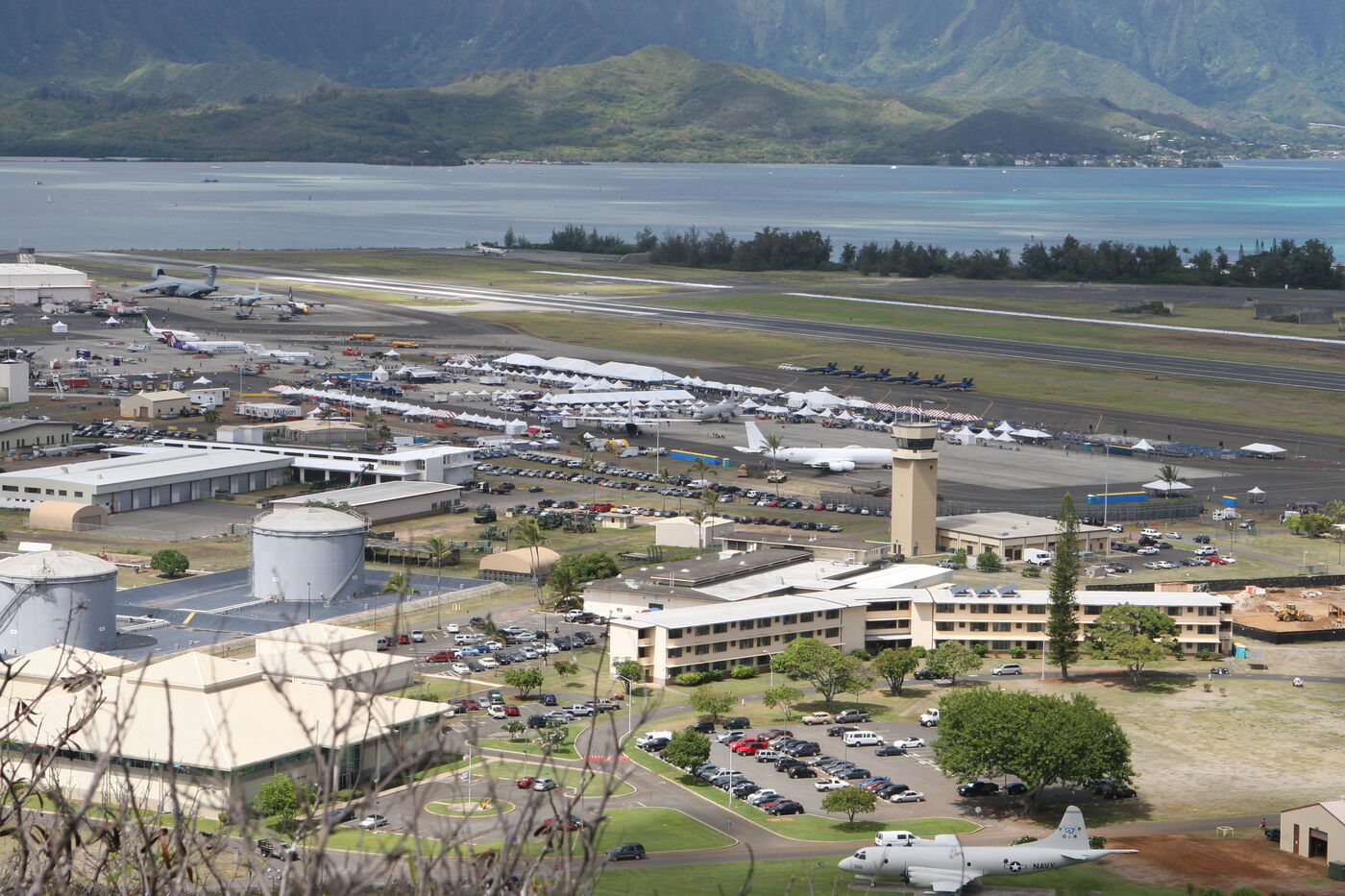
Marine Corps Base Hawaii
Marine Corps Base Hawaii (MCBH) is a Marine Corps installation located on the Mokapu Peninsula at Kaneohe Bay on the island of Oahu. The site traces its military use to 1918, when a portion of the peninsula was designated as a military reservation, and a Navy seaplane base was commissioned there as Naval Air Station Kaneohe Bay in February 1941. The station was among the locations attacked during the events of December 7, 1941. It became Marine Corps Air Station Kaneohe Bay in 1952 and was redesignated Marine Corps Base Hawaii in 1994. Today it supports aviation, ground, and logistics units along with thousands of service members, families, and civilian employees.
Like many long-operating military installations, MCBH has been the subject of environmental study, and concerns have been raised about potential exposure to contaminants associated with past industrial, fueling, and firefighting activities. The base maintains an EPA Superfund site profile and has an Environmental Restoration Program that has been active since the 1980s. It has also been identified as one of several Hawaii military sites with reported detections of per- and polyfluoroalkyl substances.
- PFAS. PFAS are a large family of synthetic "forever chemicals" valued for their resistance to heat, water, and grease. The Navy has identified multiple sites at MCBH for evaluation in connection with PFAS, and these compounds have been associated in some studies with concerns about certain cancers and other health effects, which is why investigation is ongoing.
- PFOS. PFOS is one of the most studied individual PFAS compounds and was a primary ingredient in older firefighting foams. Where it migrates into groundwater, it has been associated with potential long-term exposure concerns.
- PFOA. PFOA is another PFAS compound historically found in industrial products and firefighting materials. Like related substances, it has been the focus of health research and regulatory advisories.
- AFFF. AFFF, or aqueous film-forming foam, is the firefighting foam widely used by the U.S. military since the 1970s to suppress fuel fires. Its historical use at flight-line and training areas is a recognized pathway for PFAS reaching soil and groundwater, and that connection is part of why MCBH sites are being assessed.
- Solvents. Industrial solvents have commonly been used at military facilities for cleaning, degreasing, and aircraft maintenance. Past handling and disposal of such materials can be a focus of restoration investigations, and certain solvents have been associated with concerns about potential health effects following long-term exposure.
- Heavy metals. Heavy metals such as lead and other compounds can be linked to former firing ranges, fueling operations, and waste areas. These substances have been associated with a range of potential health concerns, and they are among the materials addressed under environmental cleanup programs.
Marine Corps Base Hawaii is not listed on the National Priorities List. Cleanup is instead carried out as a federal facility-lead effort, with the EPA Superfund profile and the long-running Environmental Restoration Program guiding the identification and remediation of past contamination. The EPA has separately entered into a Federal Facility Compliance Agreement with the base addressing stormwater discharges, and the Hawaii Department of Health has issued a Notice of Violation and Order to the base's water reclamation facility. Restoration work and PFAS evaluation remain ongoing.
Veterans, family members, and others who lived or worked at Marine Corps Base Hawaii may wish to stay informed as PFAS evaluations and restoration activities continue. Anyone with questions about possible exposure or related health concerns is encouraged to speak with the U.S. Department of Veterans Affairs and a personal healthcare provider, who can offer guidance based on individual circumstances.
Were you stationed at a contaminated site?
The PACT Act of 2022 added more than 20 presumptive conditions for toxic exposure, including many cancers, and there is no deadline to file a VA claim.
This page is for informational purposes only and is not medical or legal advice. Consult a qualified professional about your health or benefits.
Discussion
No approved comments yet.