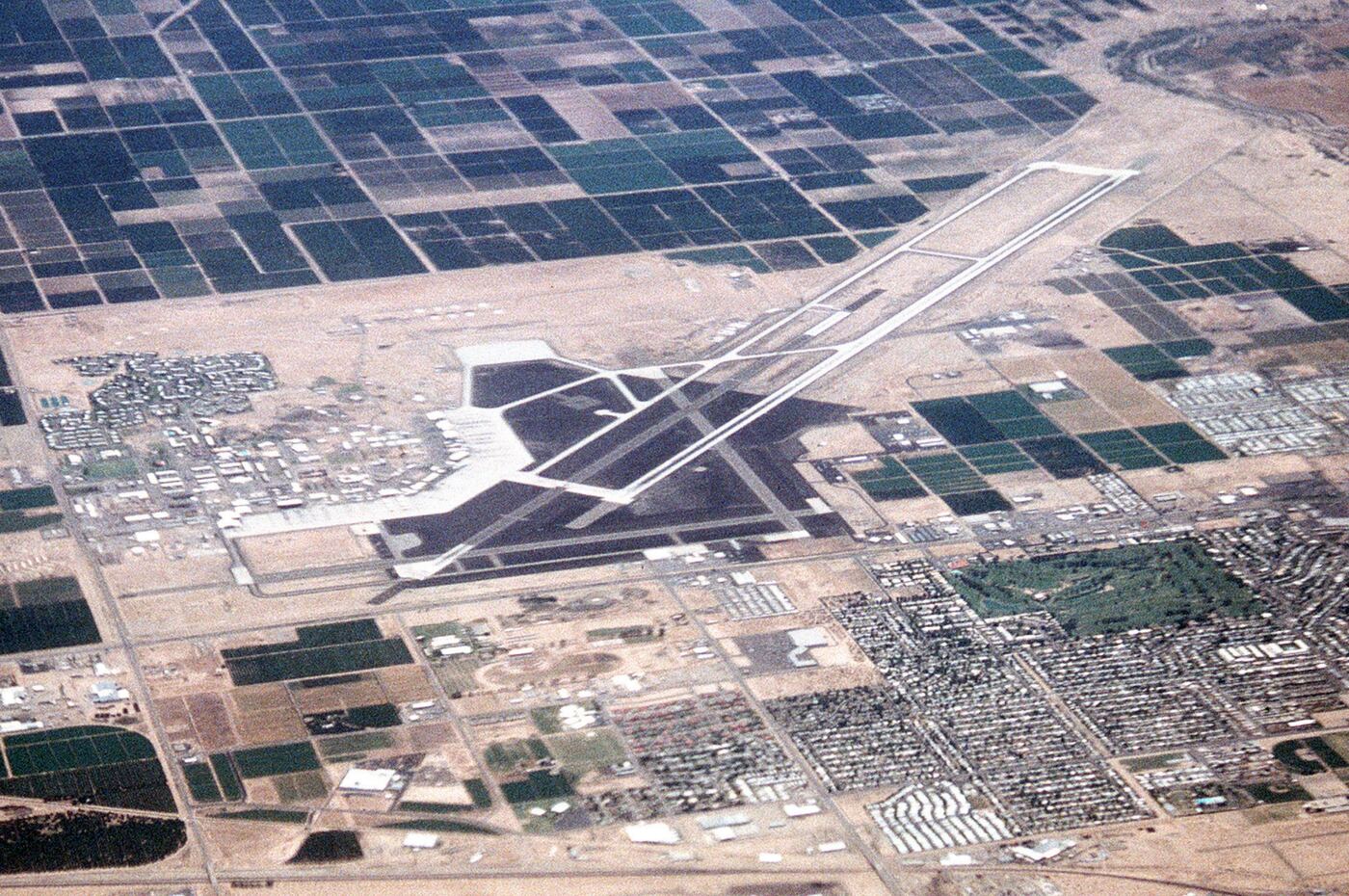
Marine Corps Air Station Yuma
Marine Corps Air Station (MCAS) Yuma sits on roughly 3,000 acres of desert in Yuma County, Arizona. The site began as a small federal airfield in 1928, served as Yuma Army Airfield during World War II, and was transferred to the Navy and then the Marine Corps in 1959 before being formally designated MCAS Yuma in 1962. Today it is one of the busiest air stations in the Marine Corps, hosting Marine Aviation Weapons and Tactics Squadron 1 (MAWTS-1), the Weapons and Tactics Instructor course, and F-35B squadrons of the 3rd Marine Aircraft Wing. Its year-round flying weather and access to vast desert ranges have made it a center of Marine aviation training for decades.
That long aviation history left an environmental legacy. Starting in the mid-1940s, waste fuels and solvents from aircraft servicing were reportedly dumped directly on the ground or into unlined pits. After chlorinated solvents were detected in a groundwater monitoring well on the station, EPA placed MCAS Yuma on the Superfund National Priorities List in 1990. Documented contaminants at the station include:
- TCE (trichloroethylene): A chlorinated solvent widely used to degrease aircraft parts. TCE is a contaminant of concern in the station's main groundwater plume, which has been described as roughly a mile long and 500 feet wide. Long-term TCE exposure has been associated with certain cancers and other health effects.
- PCE (tetrachloroethylene): A related cleaning and degreasing solvent identified alongside TCE in groundwater beneath the station. PCE exposure has been linked in studies to potential neurological and cancer concerns.
- Other solvents: DCE (dichloroethylene), a breakdown product of TCE and PCE, is also a documented contaminant of concern in station groundwater under the site's Record of Decision.
- Jet fuel and petroleum hydrocarbons: A jet fuel leak contributed petroleum hydrocarbons to groundwater. Components of fuel, such as benzene, have been associated with blood and bone marrow effects in some exposure studies.
- PCBs: Polychlorinated biphenyls, once common in electrical equipment, are among the historical wastes documented at the station. PCBs persist in the environment and have been classified as probable human carcinogens.
- Asbestos: Asbestos-containing materials were also among the wastes handled historically at the station. Inhaled asbestos fibers are an established cause of mesothelioma and other lung disease, though risk depends heavily on actual exposure.
Cleanup at MCAS Yuma has been underway for decades under Navy leadership with oversight from EPA and the Arizona Department of Environmental Quality. An air sparging and soil vapor extraction system operated in the source area from 1999 until 2019, and a vertical circulation treatment system ran for years in the leading edge of the plume. According to ADEQ, contaminant concentrations have been below federal drinking water standards in all leading edge plume wells since 2015, though levels above standards have lingered in a small number of wells near the original hot spot. ATSDR also completed a health consultation for the station in 2008, and long-term monitoring continues.
Veterans and civilian workers who spent time at MCAS Yuma may understandably have questions about potential exposure. While documented contamination does not mean any individual was harmed, those with concerns may find it worthwhile to review the public site records, keep copies of their service history, and discuss any health questions or potential VA claims with the Department of Veterans Affairs.
Were you stationed at a contaminated site?
The PACT Act of 2022 added more than 20 presumptive conditions for toxic exposure, including many cancers, and there is no deadline to file a VA claim.
This page is for informational purposes only and is not medical or legal advice. Consult a qualified professional about your health or benefits.
Discussion
No approved comments yet.