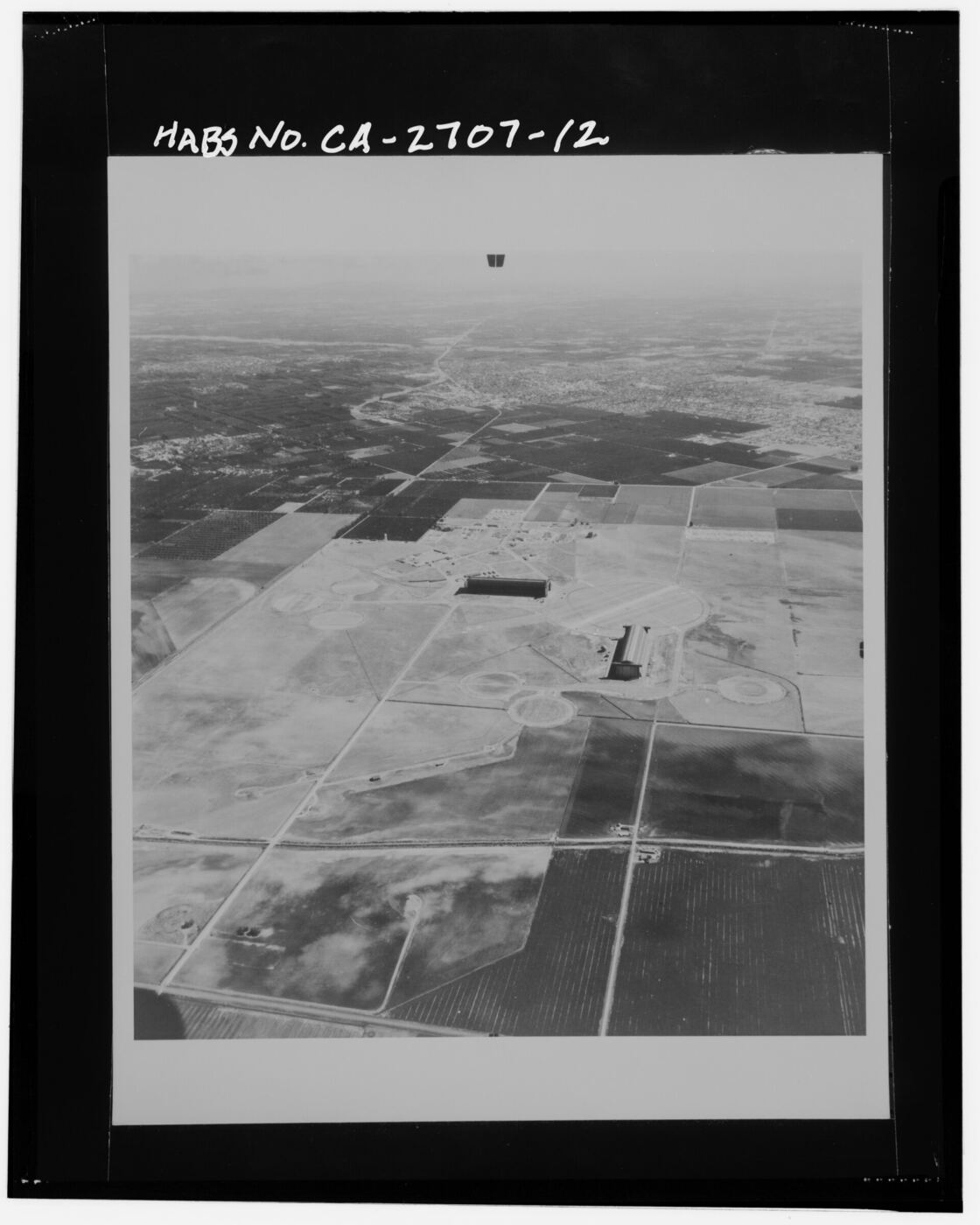
Marine Corps Air Station Tustin
Marine Corps Air Station Tustin was a military airfield located in Tustin, Orange County, California. The installation was commissioned in October 1942 as Naval Air Station Santa Ana, a lighter-than-air base supporting Navy blimp patrols along the Pacific coast during World War II, and its two enormous wooden blimp hangars remain local landmarks. Decommissioned in 1949, the base was reactivated in 1951 to support the Korean War and became the country's first air facility developed solely for helicopter operations. By the early 1990s it served as a major center for Marine Corps helicopter aviation on the West Coast. The station was selected for closure under the Base Realignment and Closure (BRAC) process and ceased operations in July 1999, and much of the property is now being redeveloped as Tustin Legacy.
There are concerns about potential carcinogenic health hazards at the former Marine Corps Air Station Tustin, due to exposure to various environmental contaminants that have been documented in soil and groundwater at the site:
- TCE (trichloroethylene): TCE is an industrial solvent that was widely used to degrease and clean aircraft parts, and it was associated with helicopter maintenance activities at Tustin. Environmental investigations found TCE in soil and groundwater at concentrations exceeding remedial goals, contributing to contaminated groundwater plumes beneath the base. TCE is classified as a human carcinogen, and exposure has been associated with kidney cancer, non-Hodgkin lymphoma, and other serious health conditions.
- Other chlorinated solvents and VOCs: In addition to TCE, sampling identified dichloroethene (a common breakdown product of TCE), 1,2,3-trichloropropane, and other volatile organic compounds in groundwater above cleanup levels. Long-term exposure to certain chlorinated VOCs has been associated with potential effects on the liver, kidneys, and nervous system, and some compounds in this group are considered possible or probable carcinogens.
- Jet fuel and petroleum products: Decades of aircraft fueling, storage, and maintenance operations resulted in fuel-related contamination in soil at portions of the base. Petroleum fuels contain components such as benzene, and prolonged exposure to these substances may potentially be linked to blood disorders and certain cancers.
According to EPA's site profile, the former air station was never placed on the National Priorities List, and cleanup proceeds instead as a federal facility-lead action under CERCLA. Environmental investigations identified 12 cleanup sites at the former air station, and the Department of the Navy continues remediation with oversight from EPA, the California Department of Toxic Substances Control, and the Santa Ana Regional Water Quality Control Board. While many individual sites have been investigated and closed out, groundwater plume treatment and land-use restrictions remain in place as the Tustin Legacy redevelopment moves forward.
Establishing definitive links between service at a particular installation and later illness is scientifically complex, and research into the health effects of these contaminants is ongoing. Veterans and family members who lived or worked at Marine Corps Air Station Tustin are encouraged to stay informed about the cleanup program, document their potential exposures, and consult the Department of Veterans Affairs about health registry evaluations and any benefits for which they may be eligible.
Were you stationed at a contaminated site?
The PACT Act of 2022 added more than 20 presumptive conditions for toxic exposure, including many cancers, and there is no deadline to file a VA claim.
This page is for informational purposes only and is not medical or legal advice. Consult a qualified professional about your health or benefits.
Discussion
No approved comments yet.