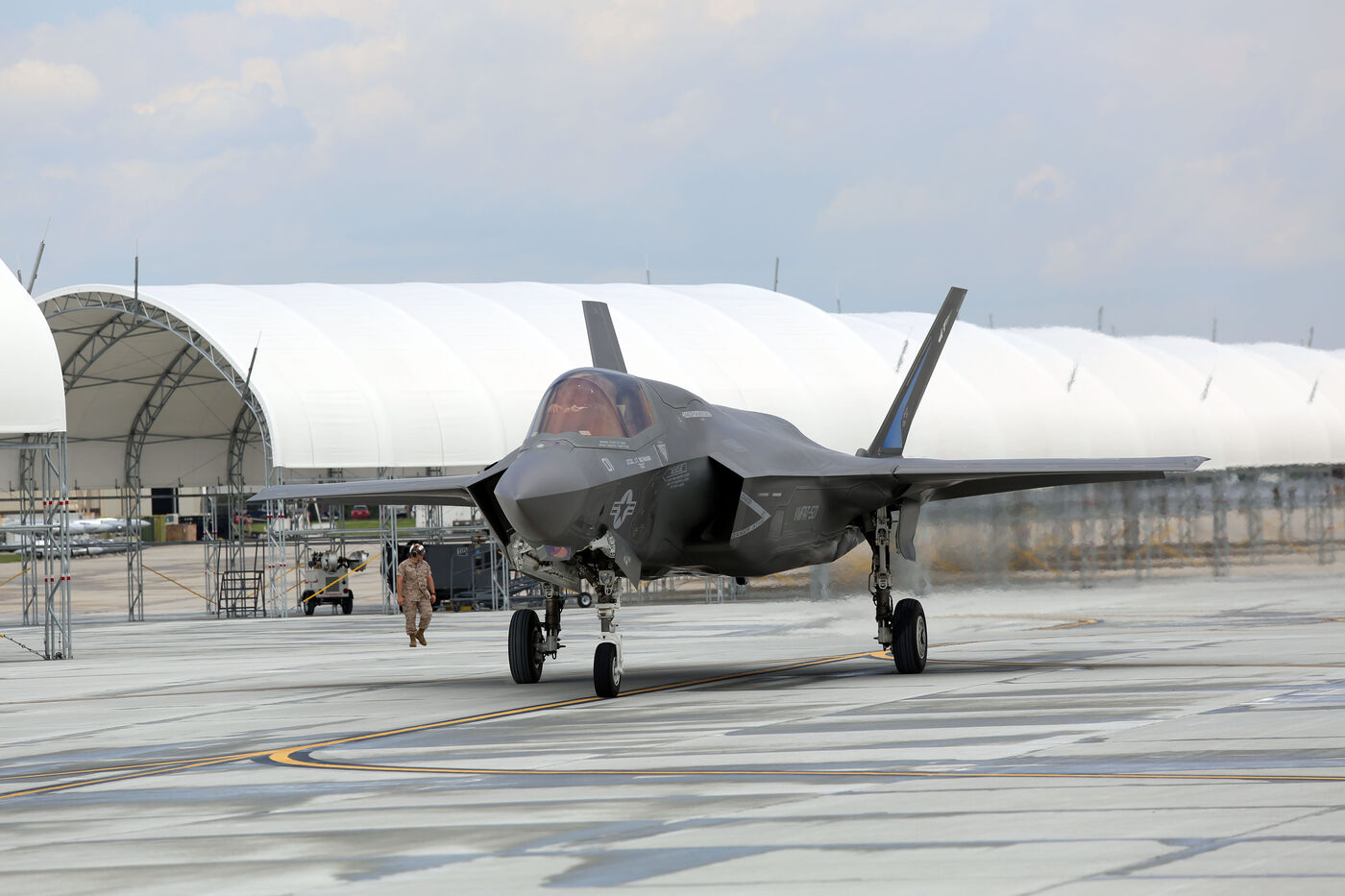
Marine Corps Air Station Beaufort
Marine Corps Air Station Beaufort (MCAS Beaufort) is an active Marine Corps air station in Beaufort County, South Carolina. The site traces its origins to June 1943, when it was established as a naval air station supporting advanced training for anti-submarine patrol squadrons during World War II. It was deactivated in 1946, reactivated as a Marine Corps auxiliary airfield in 1955, and redesignated Marine Corps Air Station Beaufort on March 1, 1960. Today, nicknamed "Fightertown East," the station is the operational home of Marine Aircraft Group 31 and its squadrons, including F/A-18 Hornet and F-35B Lightning II aircraft, under the 2nd Marine Aircraft Wing. Its long history of aviation and firefighting activity has prompted environmental review of soil and groundwater.
Environmental sampling by the Navy has raised concerns about potential exposure to certain man made chemicals associated with past operations at the installation. A preliminary assessment completed in 2020 identified numerous on-base areas, reported as 28 locations, where releases may have occurred, and follow up investigations confirmed their presence in groundwater. The contaminants below have been documented in connection with the station.
- PFAS: PFAS (per- and polyfluoroalkyl substances) are a large family of synthetic chemicals valued for their resistance to heat, water, and grease, and often called "forever chemicals" because they break down very slowly. At MCAS Beaufort, PFAS are attributed primarily to the historical use of firefighting foam at fire training and response areas. Exposure to certain PFAS has been associated in some studies with a range of potential health effects, part of why they remain under active investigation.
- PFOS: PFOS (perfluorooctane sulfonate) is one of the most studied members of the PFAS family. Navy sampling detected PFOS in shallow groundwater, in some areas above the federal lifetime health advisory level of 70 parts per trillion in effect at the time. PFOS has been associated in some research with potential effects on the immune system and other outcomes.
- PFOA: PFOA (perfluorooctanoic acid) is another individual PFAS compound historically present in firefighting foam and industrial products. It was detected alongside PFOS in groundwater at several areas of the installation during the Navy's investigations and continues to be monitored. PFOA has been studied for possible associations with various health conditions.
- AFFF: AFFF (aqueous film forming foam) is a firefighting agent widely used at military airfields to extinguish fuel fires and during training. Past use of AFFF is identified as the likely source of the PFOA and PFOS found in groundwater at MCAS Beaufort. Because legacy AFFF formulations contained PFAS, concerns about its historical use are tied to the broader review.
MCAS Beaufort is not listed on the National Priorities List as a federal Superfund site. The investigation and response are being carried out by the Navy and Marine Corps under the Department of Defense environmental restoration program. Most residents near the station receive drinking water from the Beaufort-Jasper Water and Sewer Authority rather than private wells, but because some nearby properties rely on wells, the military established a sampling area extending about one mile in the likely direction of groundwater flow and began testing private wells in 2022 and 2023. Officials reported at that time that the sampled wells did not exceed 70 parts per trillion, and testing was later expanded.
Veterans, family members, and others who lived or worked at Marine Corps Air Station Beaufort may wish to stay informed as testing and cleanup continue. Anyone with questions about possible exposure or related health concerns is encouraged to speak with the U.S. Department of Veterans Affairs and a personal health care provider, who can offer guidance based on individual circumstances.
Were you stationed at a contaminated site?
The PACT Act of 2022 added more than 20 presumptive conditions for toxic exposure, including many cancers, and there is no deadline to file a VA claim.
This page is for informational purposes only and is not medical or legal advice. Consult a qualified professional about your health or benefits.
Discussion
No approved comments yet.