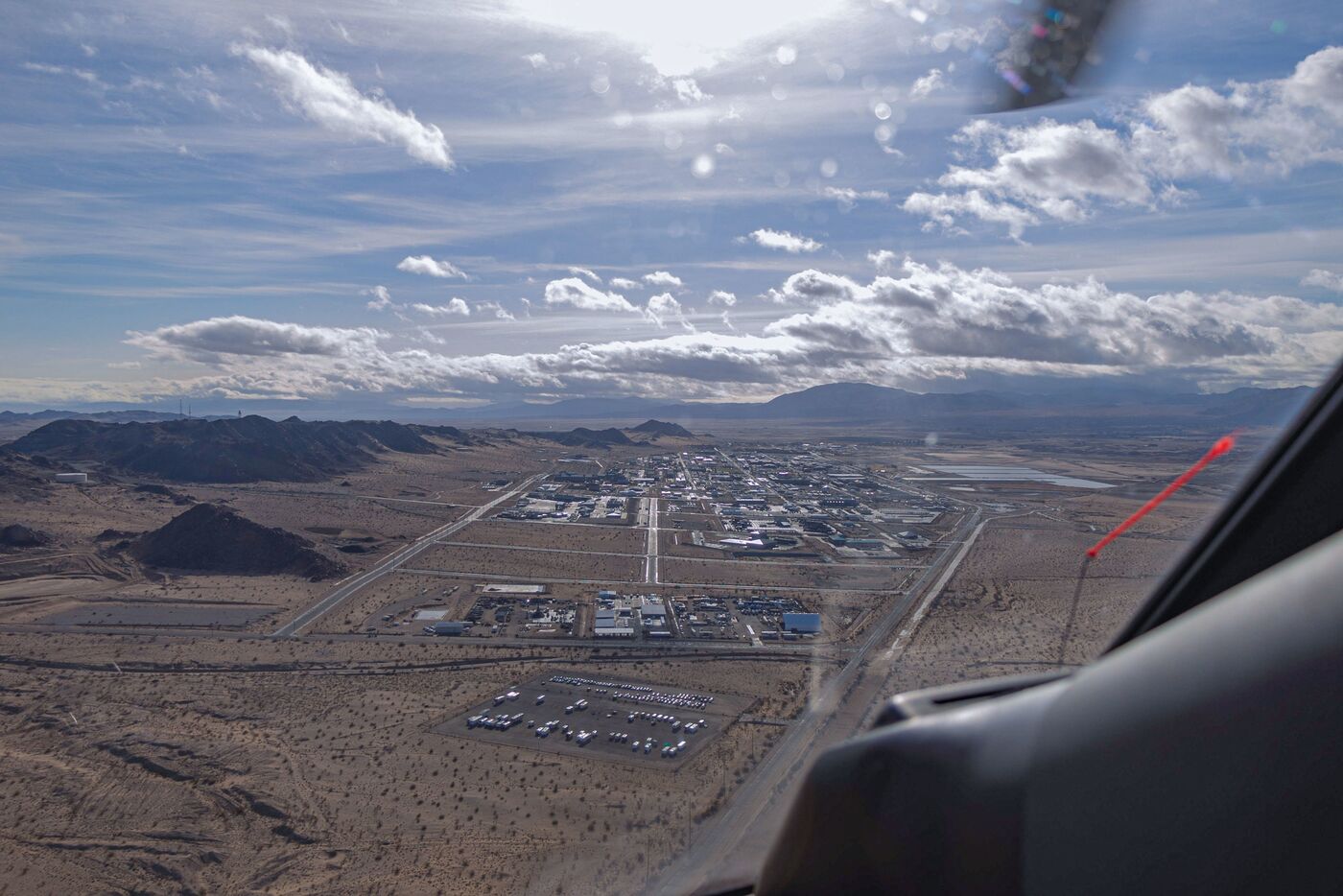
Marine Corps Air Ground Combat Center Twentynine Palms
Marine Corps Air Ground Combat Center (MCAGCC) Twentynine Palms is a United States Marine Corps installation in the Mojave Desert of southern California, widely described as the largest Marine Corps base in the world at roughly 1,100 square miles. The site traces its military use to the 1940s, and the modern installation was established on August 20, 1952, originally as a training center before evolving through several designations and becoming the Marine Corps Air Ground Combat Center in 1979. Its primary mission is large-scale, live-fire combined arms training, including major predeployment exercises that prepare ground and aviation units for overseas operations. Decades of industrial support activities, vehicle and aircraft maintenance, fuel handling, and firefighting training have occurred across the sprawling desert range. As at many older military installations, those operations are associated with environmental contamination that is now being investigated and addressed.
Investigations have identified concerns about potential exposure to several substances in soil and groundwater at multiple sites on the installation. The contaminants summarized below have been documented in connection with operations at the base, and each is described together with a carefully hedged note about the health concerns that have been associated with it.
- PFAS: PFAS are a large family of synthetic per- and polyfluoroalkyl substances used in many industrial and firefighting applications. At Twentynine Palms, sampling reported detections of these compounds in groundwater, and the installation is included on the California Water Board list of military sites with a known or suspected PFAS release. PFAS compounds are persistent in the environment and have been associated in some studies with a range of health concerns, prompting ongoing monitoring of affected areas.
- PFOS and PFOA: Two specific PFAS compounds, PFOS and PFOA, were reported in base wells at concentrations exceeding the EPA lifetime health advisory level that was in effect at the time of testing. These compounds were components of legacy firefighting foams. Both have been studied for possible associations with certain health effects, which is why their presence in drinking water sources draws particular attention.
- AFFF: AFFF, or aqueous film-forming foam, is a firefighting agent historically used to suppress fuel fires and was a primary source of PFAS at many installations. At Twentynine Palms, fire and crash-rescue training areas, where firefighters practiced extinguishing fuel and aircraft fires, are among the locations examined as potential PFAS sources. Concerns about potential exposure relate chiefly to the PFAS constituents that AFFF can leave behind in soil and groundwater.
- Solvents: Industrial solvents have been documented at the installation in connection with maintenance, degreasing, and related support activities. Such solvents can migrate into soil and groundwater, and some have been associated in research with various health concerns when exposure occurs over time. Affected sites are part of the ongoing investigation and remediation effort.
- Heavy metals: Heavy metals have been documented at the base as a result of industrial and training operations. These metals can persist in soil and, under some conditions, reach groundwater. Long-term exposure to certain heavy metals has been associated with a range of potential health effects, which is among the reasons the contaminated sites remain under study.
Environmental work at Twentynine Palms is managed under the Naval Facilities Engineering Systems Command (NAVFAC) environmental restoration program and proceeds under the federal cleanup framework of the Comprehensive Environmental Response, Compensation, and Liability Act (CERCLA). The installation is not listed as a National Priorities List (Superfund) site. Investigation, monitoring, and remediation of affected soil and groundwater sites are ongoing, and the Marine Corps has continued sampling and response activities in coordination with state and federal regulators.
Veterans, family members, and others who lived or worked at Twentynine Palms and who have questions about possible exposure are encouraged to stay informed as new findings are released and to speak with the U.S. Department of Veterans Affairs about available health resources, screenings, and benefits. The VA can offer guidance specific to individual service history, and keeping personal records up to date may be helpful when discussing potential exposure concerns.
Were you stationed at a contaminated site?
The PACT Act of 2022 added more than 20 presumptive conditions for toxic exposure, including many cancers, and there is no deadline to file a VA claim.
This page is for informational purposes only and is not medical or legal advice. Consult a qualified professional about your health or benefits.
Discussion
No approved comments yet.