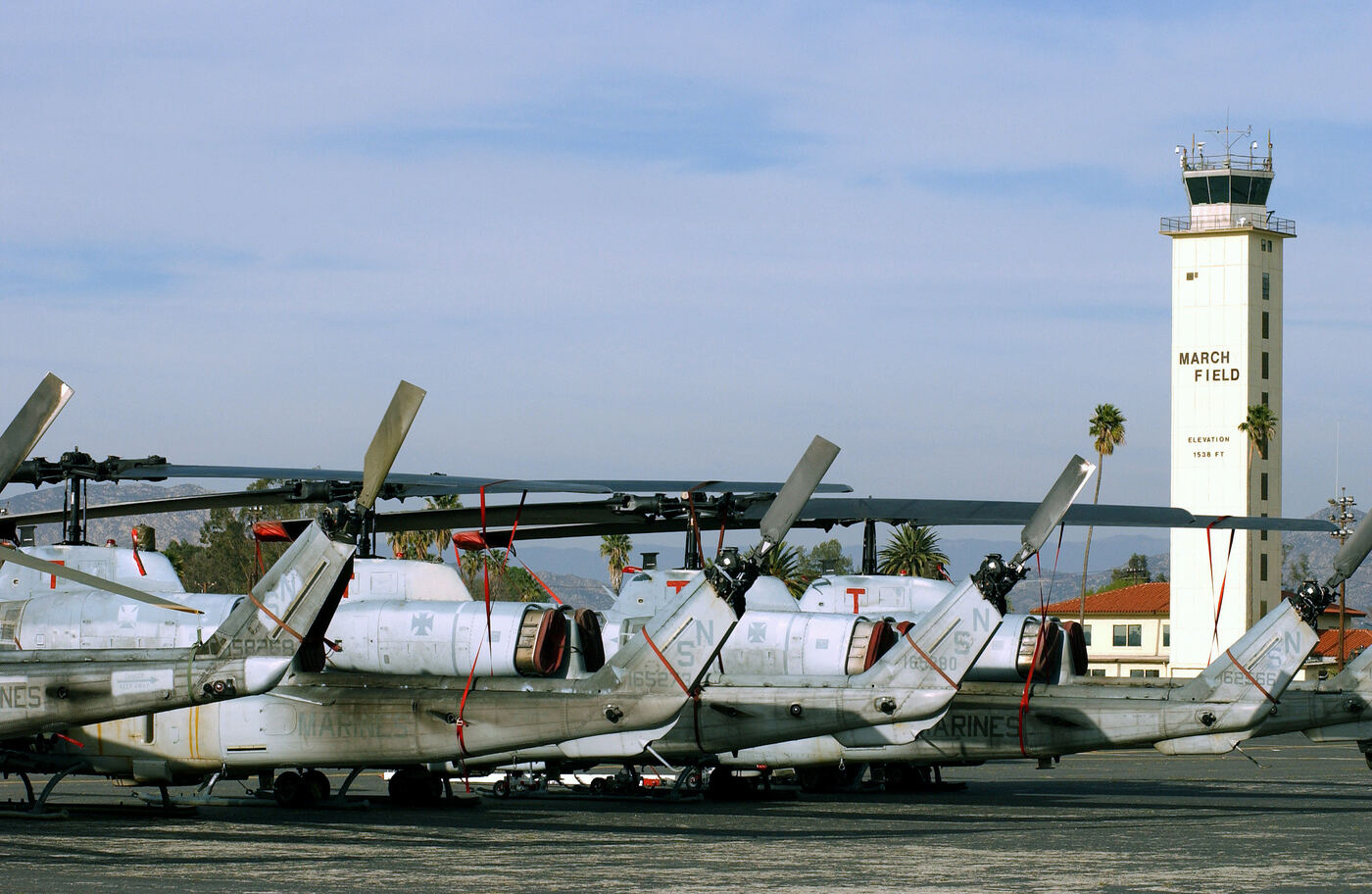
March Air Reserve Base
March Air Reserve Base is an Air Force installation in Riverside County, California, located between the cities of Riverside, Moreno Valley, and Perris. Established in February 1918 as Alessandro Flying Training Field and renamed March Field shortly afterward, it is one of the oldest airfields operated by the United States military. For more than a century the base has supported aircraft maintenance, repair, refueling, and flight training, and it served as a major Strategic Air Command installation during the Cold War. Following a 1993 Base Realignment and Closure decision, March Air Force Base was realigned and became March Air Reserve Base on April 1, 1996. Today it hosts the headquarters of the Air Force Reserve Command's Fourth Air Force and the 452nd Air Mobility Wing.
There are concerns about carcinogenic health hazards at March Air Reserve Base, due to documented exposure to several environmental contaminants:
- Trichloroethylene (TCE): TCE is a chlorinated solvent that was widely used at March for degreasing aircraft parts and other maintenance work. TCE was found in groundwater beneath the base, and according to the Agency for Toxic Substances and Disease Registry (ATSDR), contaminated groundwater migrated about three-quarters of a mile off base toward the City of Perris, where it reached some private wells. TCE is classified as a human carcinogen, and exposure has been associated with kidney cancer and other health concerns.
- Tetrachloroethylene (PCE): PCE, another chlorinated solvent used in cleaning and degreasing operations, was detected alongside TCE in on-base and off-base groundwater. PCE is considered a likely human carcinogen, and long-term exposure may potentially be linked to certain cancers.
- Jet fuel: Decades of refueling operations, including those associated with the Panero aircraft refueling system, resulted in fuel releases to soil and groundwater. The Air Force reports removing the equivalent of roughly 50,000 gallons of jet fuel during cleanup. Fuel components such as benzene have been associated with blood-related cancers.
- Industrial solvents and other VOCs: Waste solvents and other volatile organic compounds from maintenance shops and former disposal sites contaminated soil at multiple locations. More than 7,000 pounds of solvents have reportedly been removed through soil vapor extraction. Chronic exposure to certain VOCs has been associated with a range of potential health effects, including cancer.
The EPA added the 7,123-acre March Air Force Base to the Superfund National Priorities List in 1989 after three zones of groundwater contamination were identified beneath the base and contaminated wells were taken out of service in the 1980s. A 1990 Federal Facilities Agreement among the Air Force, EPA, and California agencies governs the cleanup, which is organized into five operable units, including OU-3 for the Panero refueling system. Groundwater extraction and treatment systems have operated since 1992, and ATSDR's 2001 public health assessment concluded that past consumption of the affected water posed no apparent public health hazard. Monitoring continues, and perfluorinated compounds (PFOA and PFOS) are being investigated as emerging contaminants.
Establishing definitive links between service at March Air Reserve Base and specific illnesses is scientifically complex, and research into these exposures is ongoing. Veterans and family members who lived or worked at the base are encouraged to stay informed about the cleanup, document their potential exposures, and consult the Department of Veterans Affairs about health screenings and any benefits for which they may be eligible.
Were you stationed at a contaminated site?
The PACT Act of 2022 added more than 20 presumptive conditions for toxic exposure, including many cancers, and there is no deadline to file a VA claim.
This page is for informational purposes only and is not medical or legal advice. Consult a qualified professional about your health or benefits.
Discussion
No approved comments yet.