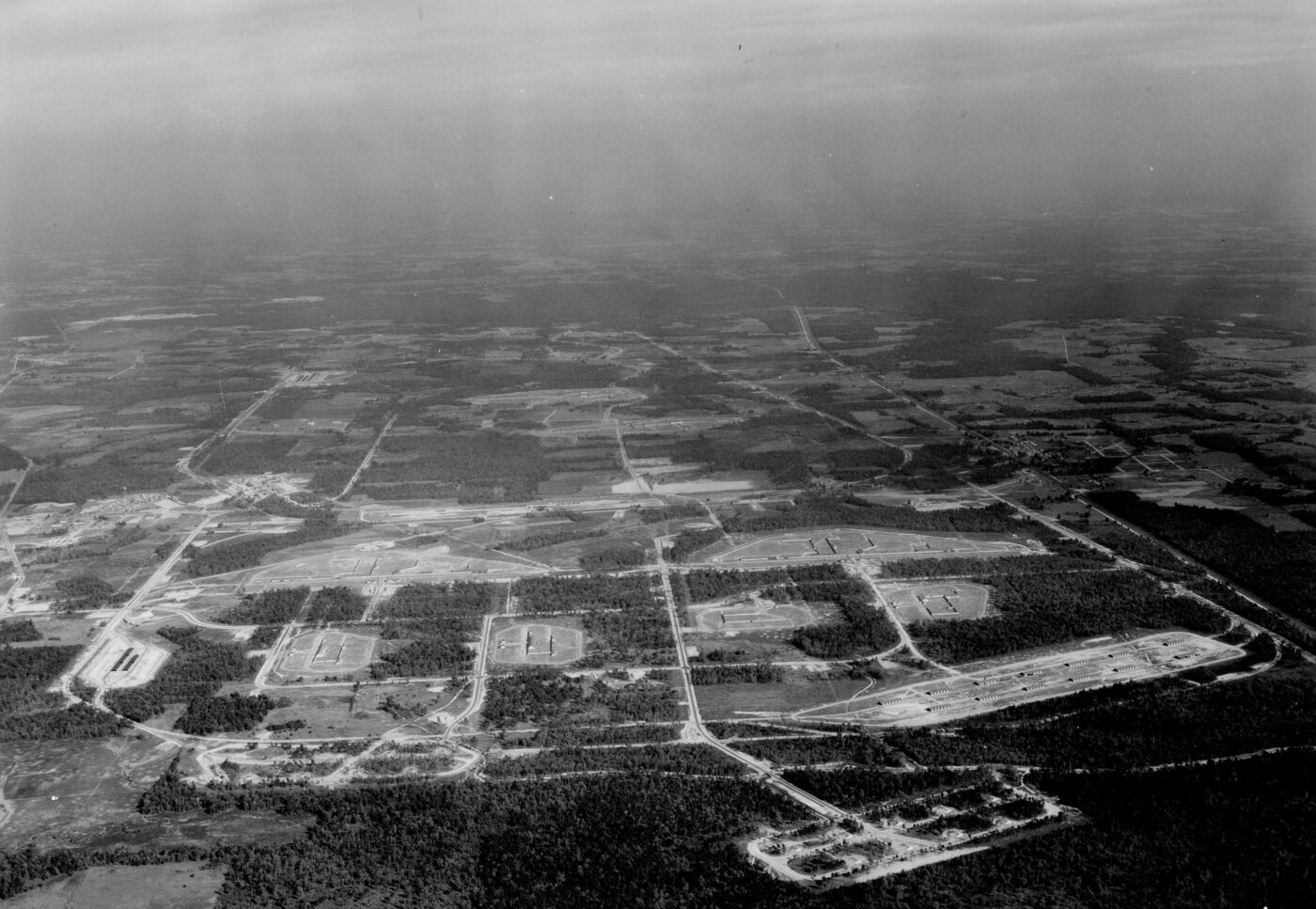
Louisiana Army Ammunition Plant
The Louisiana Army Ammunition Plant (LAAP) is a former Army munitions facility located in Webster Parish, near the communities of Doyline and Minden in northwest Louisiana, roughly 22 miles east of Shreveport. The federal government acquired the land in 1941, and the plant was constructed in 1941 and 1942 with the primary mission of loading, assembling, and packing ammunition items, along with manufacturing metal ammunition parts and providing related support functions. Production took place intermittently from 1942 to 1994 across several ammunition lines on the roughly 14,974 acre government-owned, contractor-operated installation. After operations ceased, the property was transferred from the federal government to the State of Louisiana in 2005 and is now known as the Camp Minden Training Site, used by the Louisiana Army National Guard.
Decades of munitions work left a legacy of environmental contamination at the site. During production, untreated explosives-laden wastewater was disposed of in on-site lagoons and pits, and these practices have been associated with the contamination of soil, sediment, surface water, and groundwater. Because some residents in the surrounding area have historically relied on private wells, there have been concerns about potential exposure to several categories of contaminants documented at the installation.
- Explosives (RDX and TNT): RDX (cyclotrimethylenetrinitramine) and TNT (trinitrotoluene) are energetic compounds used in military munitions. At LAAP, explosives-laden wastewater from load-assemble-pack operations settled in lagoons and pits, and the EPA found groundwater contaminated by these explosive wastes, along with related compounds such as dinitrotoluene and tetryl. Exposure to certain explosive residues has been associated in some studies with effects on the nervous system and other organs, which has prompted continued monitoring.
- Solvents and volatile organic compounds (VOCs): Industrial solvents, including trichloroethylene (TCE), were used in cleaning and maintenance activities common to ammunition production. A TCE groundwater plume was documented at the site and required further characterization under the installation's environmental program. TCE and similar VOCs have been associated in scientific literature with concerns about potential effects on the liver, kidneys, immune system, and other health outcomes.
- Heavy metals: Metals such as cadmium and chromium were identified among the chemicals of concern in site soils and groundwater, reflecting the materials and processes used in manufacturing and disposal. Long-term exposure to certain heavy metals has been associated with a range of health concerns, and metals were therefore included in the site's contaminants of concern and ongoing cleanup oversight.
The Louisiana Army Ammunition Plant was placed on the EPA National Priorities List (Superfund) on March 31, 1989. Remediation has been carried out under federal Superfund authority, and the incineration of contaminated soils, sludges, and explosive wastes was used to reduce the potential for exposure to hazardous substances and to support future reuse of the property. Groundwater monitoring and long-term controls remain in place, and EPA-required Five-Year Reviews continue to evaluate whether the remedies are protective over time.
Veterans, civilian workers, and others who spent time at the Louisiana Army Ammunition Plant or what is now Camp Minden may wish to stay informed about the site's environmental history and ongoing cleanup. Anyone with questions about possible exposures and their health is encouraged to speak with the U.S. Department of Veterans Affairs and a personal healthcare provider, who can offer guidance based on individual circumstances.
Were you stationed at a contaminated site?
The PACT Act of 2022 added more than 20 presumptive conditions for toxic exposure, including many cancers, and there is no deadline to file a VA claim.
This page is for informational purposes only and is not medical or legal advice. Consult a qualified professional about your health or benefits.
Discussion
No approved comments yet.